
Your security infrastructure relies on more than just installation. Consistent, professional care ensures your surveillance equipment performs reliably over time.
Viewing this regular upkeep as a necessary investment, not an optional cost, is crucial. Proactive care can reduce the risk of equipment failure by up to 30%.
This involves scheduled system checks, firmware updates, and cleaning of camera lenses. For businesses and properties across Singapore, this routine is vital.
It helps avoid costly emergency repairs and ensures compliance with local laws on monitoring and data protection.
Neglecting this process can lead to security gaps, loss of critical footage, and much higher long-term expenses.
This guide serves as your comprehensive resource. It provides actionable steps, best practices, and professional insights for keeping your security systems at their peak.
Key Takeaways
- Proactive maintenance is a critical investment for long-term security system reliability.
- Regular professional service can significantly reduce the risk of unexpected equipment failure.
- Adherence to Singapore’s specific surveillance and data regulations is a key benefit of scheduled upkeep.
- Neglect often results in security vulnerabilities, data loss, and inflated repair costs.
- A complete maintenance schedule covers hardware inspections, software updates, and performance reviews.
- Engaging expert maintenance services ensures optimal system operation and footage quality.
- Consistent care protects your investment and maintains a strong deterrent against threats.
What is CCTV Maintenance? The Foundation of Security
Surveillance equipment, like any critical asset, requires a dedicated program of care to remain effective. This ongoing regimen is the systematic process of inspecting, cleaning, updating, and repairing your entire monitoring setup.
Its goal is optimal operation. Think of it as preventive healthcare for your property’s eyes and ears. A detailed maintenance plan is essential to stop small issues from becoming major failures.
Defining Proactive System Care
Proactive care means acting before problems arise. It involves scheduled activities, not emergency fixes. This approach includes regular visual checks, firmware updates, and cleaning of camera lenses.
These actions are designed to prevent issues from impacting your security. Studies show a well-defined plan can prevent up to 30% of potential system malfunctions. This shifts your surveillance from a reactive cost to a strategic investment.
Core Objectives: Reliability, Clarity, and Compliance
Every upkeep task targets one of three core goals. First is reliability. Your system must operate 24/7. This depends on stable power supplies, secure connections, and healthy hardware.
Second is clarity. High-quality video is non-negotiable. Dusty lenses or poor positioning create blurry footage. Clear images are vital for identifying threats and providing evidence.
Third is compliance. In Singapore, surveillance must adhere to regulations like the PDPA. Proper care ensures data is recorded, stored, and handled correctly. It avoids legal risks.
This disciplined approach transforms a simple recorder into a reliable active tool. It becomes a strong deterrent and a trustworthy source for investigations.
Effective care involves several key components:
- Regular Cleaning: Removing dirt and spiders from housings and lenses.
- Angle Adjustments: Ensuring cameras cover critical areas without obstruction.
- Software Updates: Applying firmware patches for security and new features.
- Hardware Cycles: Planning for the eventual replacement of aging parts.
There’s a difference between basic user checks and professional maintenance services. Owners can do visual inspections. Complex diagnostics, intricate repairs, and comprehensive types of maintenance require expert technicians.
Engaging professionals guarantees your security systems receive the in-depth care they need. This ensures long-term performance and peace of mind.
Why Regular CCTV Maintenance is Non-Negotiable in Singapore
In Singapore’s security landscape, skipping scheduled upkeep is a gamble no property owner can afford. This routine is a direct shield for your safety and assets.
It moves beyond simple cleaning. Consistent professional care addresses unique local pressures.
Preventing Costly System Failures and Downtime
A sudden camera blackout creates a dangerous blind spot. Preventive care stops this.
Timely inspections catch small faults in cables or power supplies before they escalate. This avoids expensive emergency call-outs.
Data shows a proper schedule can cut malfunction risks by nearly one-third. Contrast this with the moderate annual cost of a service plan.
Leaving issues unchecked leads to total hardware replacement. That is a far heavier financial burden.
Ensuring Legal Compliance and Data Integrity
Singapore has strict rules for surveillance. The Personal Data Protection Act (PDPA) governs how footage is handled.
A faulty recorder or full storage drive can violate these laws. It may result in lost evidence or penalties.
Professional maintenance services verify your data is recorded and stored correctly. They ensure retention periods are met.
This protects your business from legal exposure. It guarantees your footage holds up if needed.
Combating Environmental Factors: Humidity and Heat
The local climate is tough on electronics. Persistent high humidity causes lens fogging and corrodes connectors.
Constant heat stresses internal components, leading to premature failure. Regular cleaning and sealed housing checks are vital.
These actions combat moisture and dust buildup. They preserve clear image quality and extend equipment life.
Without this focus, your security systems degrade rapidly. They become unreliable when you need them most.
Ultimately, this disciplined regimen is an operational necessity. It ensures both reliable threat monitoring and full regulatory adherence.
The Critical Role of CCTV in Modern Singaporean Security
Beyond physical locks and gates, a robust surveillance setup has become a fundamental expectation for safety across the island. These electronic networks serve as the vigilant, unblinking core of modern protection strategies for homes and commercial spaces alike.
Their value extends far beyond simple recording. A properly functioning setup delivers proactive deterrence and powerful operational intelligence. This dual capability makes it indispensable.
Deterrence and Crime Reduction
Visible cameras have a profound psychological impact. The knowledge that actions are being recorded significantly alters behavior. This is the principle of deterrence in action.
Studies consistently link increased camera coverage to lower crime rates in monitored zones. Potential offenders often seek easier targets without surveillance.
This effect protects both public areas and private property. For businesses, it safeguards assets and inventory. For homeowners, it creates a tangible sense of security.
A non-functional unit loses this power completely. It becomes a hollow symbol, offering no real protection against threats.
Remote Monitoring and Operational Benefits
Modern technology transforms surveillance from a passive recorder into an active management tool. Owners can access live feeds from smartphones or computers anywhere.
Real-time motion alerts and instant playback of recorded footage are key features. These provide immediate awareness of any unusual activity.
For business operators, this means overseeing multiple locations or after-hours operations without being physically present. It enhances efficiency and can inform management decisions.
Homeowners gain peace of mind. They can check on their property, family members, or pets remotely. This is especially valuable for those managing residences for elderly relatives.
All these advanced functionalities depend entirely on system health. A faulty camera or dead power supply breaks the chain. It fails to monitor, alert, or provide evidence.
Consistent professional upkeep ensures these sophisticated features work reliably. It protects your investment in modern security systems and guarantees they deliver their promised benefits every day.
Understanding the Different Types of CCTV Maintenance
Not all upkeep is created equal; different strategies apply based on timing and intent. Knowing which approach to use can transform your security from a reactive cost center into a proactive asset.
There are three primary methodologies: preventive, corrective, and predictive. Each serves a distinct purpose in the lifecycle of your surveillance equipment.
Selecting the right blend is key for reliability and budget management. A smart plan often combines these philosophies for optimal results.
Preventive Maintenance: The Scheduled Check-Up
This is the cornerstone of any robust care plan. It involves scheduled, routine activities designed to prevent failures before they occur.
Think of it as a regular health check for your security systems. Technicians perform inspections, clean camera lenses, and test connections.
These checks aim to catch minor wear on cables or early signs of power supply issues. Catching them early avoids major breakdowns.
Preventive maintenance is the most cost-effective model. It drastically reduces emergency service calls and unexpected downtime.
Many companies offer annual contracts for this regular maintenance. This ensures priority service and often lowers the overall lifetime cost of your setup.
“An ounce of prevention is worth a pound of cure. This old adage holds especially true for electronic surveillance, where a small, scheduled intervention can prevent a total system failure.”
Corrective Maintenance: Fixing Issues as They Arise
This is the reactive mode. It addresses problems only after a fault is detected, like a dead camera or corrupted footage.
While sometimes unavoidable, it is typically more expensive and urgent. You’re paying for emergency diagnostics and parts replacement.
Common triggers include sudden loss of image quality, complete camera failure, or storage drive errors. These issues create immediate security gaps.
Relying solely on this method turns your surveillance into a liability. It often leads to higher long-term costs and increased vulnerability to threats.
For businesses, this unplanned downtime can mean lost evidence during critical times. A blended strategy minimizes this reliance.
Predictive Maintenance: The Data-Driven Approach
This advanced strategy leverages technology and analytics. It uses system data and performance trends to forecast component failures.
Modern cctv systems can provide health metrics on hardware stress, temperature, and error logs. This information predicts when a part might fail.
It allows for precisely timed interventions. Technicians replace a failing hard drive or lens just before it impacts operation.
This method minimizes both downtime and resource use. It represents a shift from scheduled time-based checks to need-based service.
Implementing predictive care often requires more sophisticated monitoring software and expert analysis. However, the return on investment in system reliability is significant.
In practice, the most effective strategy combines preventive and predictive models. This proactive blend offers the best value and ensures your equipment operates at peak potential.
Corrective actions become rare, reserved for truly unforeseen events. Evaluating your setup’s complexity and budget will guide you toward the right maintenance services plan for lasting protection.
Key Components of Your CCTV System That Need Care
A reliable surveillance network is built from interconnected parts, each demanding specific attention to function as a whole.
Holistic protection fails if one element weakens. Your entire setup’s integrity depends on the condition of its core pieces.
Professional regular upkeep addresses every critical point. This prevents a single fault from creating a total blind spot.
Camera Lenses and Housings: Your System’s Eyes
The camera lenses are the primary sensors capturing all visual data. Even a thin layer of dust or moisture drastically reduces image quality.
Experts recommend cleaning each lens at least every three months. This removes grime, spider webs, and water spots.
Housings protect delicate internal electronics. You must check their environmental seals for cracks or gaps.
A compromised seal lets in humidity and insects. This leads to internal fogging and damage.
Physical misalignment is another common issue. Bumps or weather can shift a camera‘s angle away from critical areas.
Regular visual checks confirm each unit points correctly. Clear, unobstructed views are non-negotiable for effective monitoring.
Power Supplies and Cables: The Lifeline of Surveillance
These components form the hidden infrastructure. Stable electricity and secure data transmission are fundamental.
Loose connections are a frequent culprit for system failure. Vibration and thermal expansion can slowly disconnect plugs.
In Singapore’s humid climate, corrosion on connectors is a serious threat. It increases electrical resistance and causes intermittent faults.
Voltage fluctuations from a failing power supply can silently damage other equipment. A steady, clean power feed is essential.
“Damaged wiring and power issues account for nearly 65% of all repair costs. Investing in robust cables and periodic connection inspections is far cheaper than emergency fixes.”
Inspect all cables for fraying, cuts, or animal chew marks. Protect exterior runs with conduit where possible.
Recording Hardware (DVR/NVR) and Storage
The recorder is the brain of the operation. It processes and stores all incoming video streams.
Hard drives inside DVRs and NVRs have a finite lifespan. Constant read/write cycles cause mechanical wear over time.
Monitor your storage capacity closely. A full drive will either stop recording or overwrite old footage automatically.
Critical evidence could be lost if the system overwrites it. Manage retention settings and upgrade storage before it hits 90% full.
Ensure the recorder has proper ventilation. Overheating accelerates component failure and can corrupt data.
Dust buildup inside the unit acts as an insulator. Schedule internal cleaning during professional maintenance services.
Software and Firmware: The Digital Backbone
This is the often-overlooked layer that controls everything. Outdated software is a major security risk.
Manufacturers release firmware updates to patch vulnerabilities. Hackers can exploit unpatched systems to gain access.
Updates also introduce new features and improve performance. They ensure compatibility with modern browsers and mobile apps.
Set a quarterly schedule to check for and apply these digital patches. Automate this process if your system allows it.
Review user permissions and password policies. Former employees or weak passwords can create backdoors.
Your surveillance systems are only as strong as their latest update. Neglecting the digital backbone leaves your physical security exposed.
Remember, effective care is comprehensive. A failure in any single component—lens, cable, hard drive, or software—can compromise the entire network’s integrity.
Common CCTV Maintenance Issues and How to Spot Them
Even the most advanced surveillance networks are vulnerable to a predictable set of common failures. Early detection is your best defense against security gaps and costly repairs.
This guide helps you diagnose frequent problems. Learn to recognize the signs before they lead to system downtime or lost evidence.
Blurry Footage and Camera Lens Problems
Hazy or distorted video is a primary complaint. It directly compromises the evidential quality of your recordings.
The main culprit is often a dirty lens. Dust, pollen, and spider webs accumulate quickly. A simple, gentle cleaning can restore clarity.
Condensation inside the housing is another cause. It points to a broken environmental seal. This is common in Singapore’s humid climate.
Physical damage to the camera lenses or misalignment from wind or impact can also blur the view. Regularly check each unit’s sightline.
Connectivity Loss and Wiring Faults
When a camera drops off the network, it creates a blind spot. This is often a wiring or connection issue.
Inspect all cables for visible damage like cuts or chew marks. Corrosion on connectors, especially outdoors, disrupts the signal.
Loose terminations at the recorder or power source are frequent culprits. Vibration can slowly work plugs free over time.
For IP systems, network configuration errors or switch failures can also cause dropouts. Check the device’s status lights first.
Storage Failures and Overwritten Recordings
Your recorder’s hard drive is a mechanical device with a finite lifespan. Failure means total loss of footage.
Listen for unusual clicking sounds from the DVR/NVR. This often signals imminent drive failure. Review system logs for read/write errors.
A more silent threat is a full storage drive. When capacity hits 100%, most systems automatically overwrite the oldest data.
Critical evidence could be erased without warning. Monitor your available storage percentage monthly.
Power Fluctuations and Supply Issues
Unstable electricity is a fundamental threat to all electronic equipment. It’s a leading cause of premature failure.
Industry data indicates that nearly 72% of surveillance downtime incidents originate from power supply failures or fluctuations.
Symptoms include cameras rebooting randomly, flickering images, or complete blackouts. These signs point to a failing adapter or bad wiring.
Voltage spikes can silently damage circuits. Using quality surge protectors is a critical, yet often overlooked, step.
Perform these quick checks at the first sign of trouble:
- Visual Feed Test: Log in to view each camera. Look for blurriness, discoloration, or a frozen image.
- Status Light Verification: Ensure each device has a solid power and network LED indicator.
- Storage Health Check: Navigate to your recorder’s menu to view hard drive capacity and error logs.
- Connection Inspection: Physically check cable connections at both the camera and recorder ends for security.
- Power Source Test: Verify wall outlets and power adapters are functioning, possibly by testing with another device.
Catching these issues early allows for scheduled repairs. It prevents minor glitches from becoming major problems for your security systems.
Creating Your Custom CCTV Maintenance Schedule
Implementing a customized maintenance calendar is the most direct way to safeguard your security investment. A robust plan translates best practices into specific, timed actions.
This structured approach prevents tasks from being forgotten or delayed. It ensures every part of your setup receives attention at the right interval.
Your schedule should be based on camera count, environmental exposure, and how critical continuous monitoring is to your operations. A busy retail outlet needs more frequent attention than a residential property.
Daily and Weekly Visual Checks
These are quick, user-performed tasks that take just minutes. Their goal is to confirm basic operation and catch obvious problems early.
Log into your system daily to view each live feed. Make sure every camera is online and providing a clear image.
Verify that critical areas like entrances, cash points, or storage rooms remain in view. Look for any new obstructions like overgrown plants.
A weekly check can include a quick review of recorded footage. Ensure clips from motion events are saving correctly. This routine vigilance is your first line of defense.
Monthly Cleaning and Basic Testing Tasks
This is a hands-on session you should perform each month. Regular cleaning is the single most effective user task for preserving image quality.
Gently wipe camera lenses and housings with a microfiber cloth. Remove dust, spider webs, and water spots. Check housing seals for cracks.
Test the playback function for each cctv camera to verify data integrity. Confirm your storage drive has ample free space.
Inspect the immediate area around each unit. Trim back any foliage that could block the view or cause physical damage during storms.
Quarterly Comprehensive Inspections
Every three months, conduct a more thorough review. This often benefits from a technician’s eye, especially for commercial security systems.
Examine all cables and connections for wear, corrosion, or looseness. This is vital in Singapore’s humid climate to prevent connectivity loss.
Check the power supply units and voltage readings for stability. Assess the physical mounting brackets for rust or weakness.
Industry guidance for businesses in tropical regions recommends at least quarterly professional checks. This frequency directly combats accelerated wear from heat and moisture.
This interval is also ideal for reviewing user access logs and checking for any software alerts from your recorder.
The Annual Professional Service
This is the non-negotiable cornerstone of your plan. An annual professional service provides a deep, technical health assessment.
Certified technicians perform diagnostics beyond user capability. They conduct internal cleaning of DVRs or NVRs to remove dust buildup.
All firmware and software updates are applied to patch security vulnerabilities. They perform comprehensive performance tests on each component.
The service concludes with a detailed health report. This document outlines the system‘s condition, any minor issues found, and recommendations for future care.
Engaging a reputable provider for this annual maintenance ensures your entire network operates at its designed potential.
Customizing your calendar is key. A high-count commercial setup in a coastal zone may need professional maintenance services every quarter. A smaller indoor residential system might follow the standard user schedule with one annual pro visit.
Stick to your tailored plan. This disciplined, time-based action is what guarantees long-term reliability and protects your property from threats.
Your Essential CCTV Maintenance Checklist
A practical checklist transforms routine upkeep from a vague concept into clear, actionable steps. This tool guides your monthly and quarterly checks, ensuring no critical component is missed.
Following this list prevents minor issues from becoming major problems. It turns intention into disciplined action for your security systems.
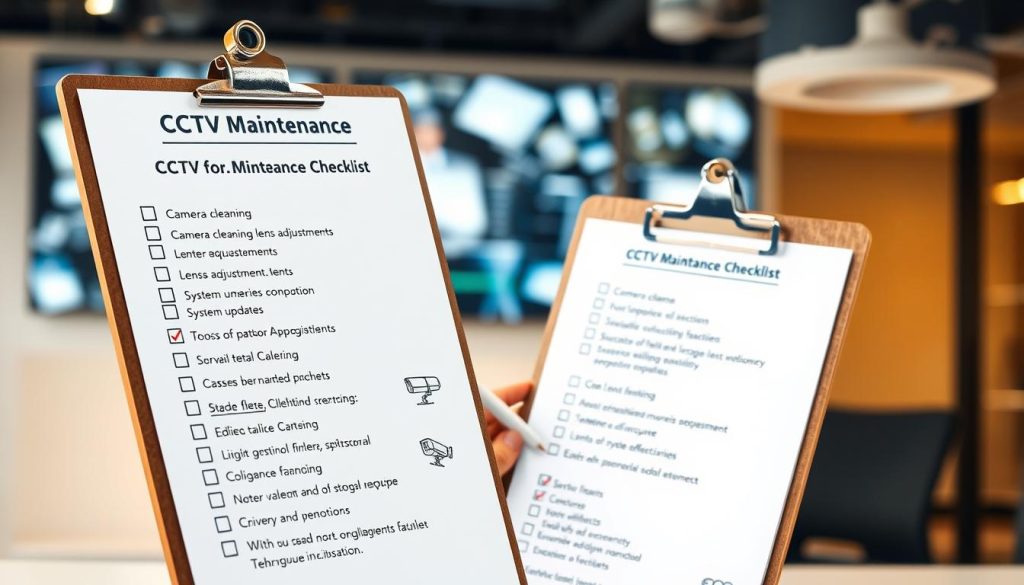
Document each completed task in a log. This record is valuable for tracking performance trends and for insurance purposes.
Visual Inspection Points for Cameras
Begin with a physical review of each unit. This quick process catches obvious signs of wear or damage.
Make sure every camera lens is clean and free of debris. Use a soft microfiber cloth for regular cleaning to avoid scratches.
Check the housing for cracks or gaps in environmental seals. A compromised seal allows humidity inside, fogging the view.
Verify there are no obstructions in the field of view. Trim back any overgrown plants or remove new objects blocking critical areas.
Look for spider webs or insect nests on and around the housing. These can quickly degrade image quality.
Confirm each unit remains properly aligned. Wind or vibration can shift a camera away from its intended monitoring zone.
Hardware and Connection Verification Steps
Reliable operation depends on solid physical connections. This part of your schedule focuses on the infrastructure.
Make sure all cables are securely connected at both ends. Gently perform a tug-test to verify they are not loose.
Inspect cable jackets for cuts, fraying, or animal chew marks. Outdoor runs are especially vulnerable to damage.
Check for corrosion on metal connectors, particularly BNC or Ethernet plugs. Singapore’s humid climate accelerates this threat.
“A loose connection is often the simplest fix for a ‘dead’ camera. Systematic verification of every termination point resolves many common failures before they impact surveillance.”
Verify your power supply units are functioning. Use a multimeter to check for correct voltage output if possible.
Ensure your DVR or NVR recorder has adequate ventilation. Clear any dust buildup from its vents to prevent overheating.
Listen to the recording device. Unusual clicking sounds from the hard drive can be an early warning of storage failure.
Software and Data Management Reviews
The digital backbone of your system requires regular attention. These steps protect your data and close security gaps.
Log into your monitoring software or mobile app. Make sure all camera feeds are displaying live without lag or freezing.
Check the available storage capacity on your recorder. Ensure it is not above 90% full to prevent automatic overwriting of critical footage.
Verify the date and time stamp on your recordings is accurate. Incorrect timestamps can render evidence useless.
Review and apply any pending firmware updates for your cameras and recorder. These patches fix vulnerabilities and improve performance.
Audit user permissions and passwords. Remove access for former employees and ensure passwords are strong.
Test motion detection settings and alert configurations. Confirm they are triggering correctly for the zones you need to monitor.
Following this comprehensive checklist ensures your surveillance systems receive the regular upkeep they require. It provides peace of mind and operational reliability for businesses and homeowners alike.
Best Practices for Effective CCTV Camera Upkeep
The difference between a functioning camera and a high-performing one often lies in the details of its care. Adopting expert-level practices ensures your surveillance equipment delivers maximum longevity and reliability.
These methods go beyond basic regular upkeep. They are the disciplined routines that separate adequate security systems from exceptional ones.
Applying them transforms your setup into a consistently reliable asset. It protects your investment and guarantees clear footage when it matters most.
Proper Cleaning Techniques for Lenses and Housings
Clear video starts with a spotless lens. Using the correct tools prevents scratches and damage to delicate optics.
Always use a soft, lint-free microfiber cloth. For stubborn grime, apply a small amount of isopropyl alcohol solution. Spray the cleaner onto the cloth, never directly onto the camera lenses.
Avoid all abrasive materials like paper towels or rough fabrics. They can permanently mar the surface and degrade image quality.
Gently wipe the housing to remove dust, salt, and spider webs. Check the rubber environmental seals around the edges for any cracks or gaps.
“A clean lens is the most cost-effective upgrade for any surveillance system. It’s a simple five-minute task that directly translates to evidential clarity.”
Compromised seals allow Singapore’s high humidity inside. This causes internal fogging that no external wiping can fix. Inspect these seals during every regular cleaning session.
Optimal Camera Positioning and Adjustment
Initial installation is just the starting point. Optimal camera positioning requires periodic review and fine-tuning.
Seasonal changes in sunlight or new construction can create blind spots. Walk the perimeter quarterly to verify each unit’s field of view.
Eliminate areas where critical zones are obscured. Adjust angles to minimize backlight from windows or bright signs at night.
For dome cameras, ensure the transparent cover is clean and not causing glare. For bullet cctv cameras, check that mounting brackets remain tight and haven’t sagged.
This proactive adjustment ensures complete coverage. It stops security gaps from forming over time.
Environmental Management Around Cameras
The surroundings of your equipment greatly impact its performance. Proactive management reduces false alarms and physical wear.
Regularly trim back tree branches and shrubs. Moving foliage triggers motion alerts and can scratch housings during storms.
Make sure external lights for night vision cameras are operational. A burned-out lamp can render an infrared unit nearly useless.
Clean areas prone to dust buildup or cobwebs. For units under eaves, check for bird nests or insect activity that could block the view.
Where possible, use protective shrouds to shield cameras from direct rain and harsh sun. This simple step can double the service life of outdoor units.
These environmental controls are a critical, often neglected part of regular maintenance. They preserve both the hardware and the integrity of your monitoring.
Implementing these best practices turns routine checks into a powerful strategy. Your system will operate at its peak, providing peace of mind and lasting protection for your property.
Choosing a Professional CCTV Maintenance Company in Singapore
A professional maintenance contract transforms sporadic repairs into a structured, proactive security strategy. Your choice of partner determines the long-term health and reliability of your entire surveillance network.
This decision requires careful evaluation, not just a price comparison. The right provider acts as an extension of your security team.
What to Look for in a Service Provider
Begin your search by vetting a company’s foundational credentials. A strong track record in Singapore’s unique environment is essential.
Look for established companies with several years of local operation. Verify they hold relevant licenses, such as being a licensed security service provider.
Technician certifications from major equipment manufacturers are a major plus. They indicate trained expertise with specific security systems.
Check online reviews and ask for client references. A reputable provider will demonstrate familiarity with local regulations like the PDPA.
Finally, assess their range of maintenance services. Do they offer both on-site visits and remote diagnostics? A full-spectrum approach is ideal for modern setups.
Understanding Service Plans and Maintenance Contracts
Clarity in the service agreement prevents misunderstandings later. Most reputable companies offer tiered plans, such as basic, comprehensive, or platinum packages.
A basic plan may include quarterly inspections and software updates. Comprehensive plans often add bi-annual deep cleans and priority support.
Make sure your contract explicitly states the schedule, scope of work, and all included parts. It should detail what is extra, like replacement lens modules or new hard drives.
Understand the pricing structure. Is it a fixed annual fee or pay-per-service call? Fixed fees aid budgeting and often provide better long-term value.
“A transparent contract is the bedrock of a successful partnership. It aligns expectations, defines responsibilities, and ensures your surveillance investment receives consistent, professional care.”
Local firms like Huntaway and Prowler set good benchmarks. They offer tailored monthly, quarterly, or yearly plans with clear terms.
Evaluating Response Times and Emergency Support
When a system fails, minutes matter. A camera outage creates an immediate security gap that demands swift action.
Inquire about standard and emergency response times during your evaluation. A reliable provider should guarantee a specific window for urgent problems.
True 24/7 emergency hotline support is non-negotiable for businesses and critical sites. Test this line before signing any agreement.
Ask if they offer online client portals. These platforms allow you to track service history, upcoming visits, and report issues directly.
This level of support ensures your monitoring capabilities are restored quickly. It minimizes exposure to potential threats.
Always request and compare detailed quotes from multiple companies. Look beyond the price to the value of coverage and peace of mind.
The goal is to secure a long-term partner for your security systems. A good maintenance services company proactively safeguards your equipment, data, and property.
Navigating CCTV Maintenance Costs and Budgeting
Budgeting for your property’s electronic eyes is a strategic exercise in balancing upfront costs with long-term value. A clear financial plan turns sporadic expenses into a predictable operational line item.
This approach protects your capital investment and ensures continuous protection. In Singapore, understanding local market rates is the first step toward smart security management.
Factors Influencing Service Pricing
Costs for professional maintenance services are not one-size-fits-all. Several key variables determine your final quote from a provider.
The scale of your setup is a primary driver. A network with 30 cctv cameras costs more to service than one with just four units.
System complexity and age also matter. Older analog systems or hybrid setups require more diagnostic time. Newer IP-based cctv systems might need specialized software expertise.
Environmental factors in Singapore directly impact price. Cameras in hard-to-reach areas or exposed to harsh coastal salt air need more labor.
Common pricing factors include:
- Camera Count and Type: More cameras and advanced models like PTZ increase service time.
- System Accessibility: Units on high ceilings or exterior walls require special equipment.
- Service Frequency: Quarterly visits cost more per year than a single annual schedule.
- Included Scope: Does the plan cover firmware updates, lens cleaning, and power supply checks?
As a benchmark, basic installation in Singapore ranges from SGD 500 to SGD 1,500. Annual maintenance contracts typically fall between SGD 300 and SGD 600.
This investment guarantees your surveillance systems receive expert care. It avoids the higher cost of neglect.
Comparing Service Plan Value
Providers usually offer tiered plans. Understanding the difference between pay-per-call and contract models is crucial for value.
A comprehensive annual contract has a higher upfront cost. It often includes multiple scheduled visits, priority support, and discounted parts.
The per-service rate under this model is significantly lower. You also get proactive checks that prevent problems.
In contrast, a reactive pay-as-you-go model seems cheaper initially. Each emergency call-out for a cctv camera failure or footage issue incurs a premium fee.
“An annual maintenance contract is like insurance for your security footage. You pay a known, manageable premium to avoid a catastrophic, unpredictable loss when you need evidence the most.”
Local companies like Huntaway and Prowler structure plans this way. Their contracts provide clarity and better long-term economics for businesses.
Always review what is included. Does the plan cover data integrity verification and monitoring software health? These details define true value.
The Long-Term Savings of Proactive Maintenance
Viewing professional care as a cost-avoidance strategy reveals its real worth. Proactive regular upkeep prevents far larger expenses down the line.
Data shows it can reduce equipment failure rates by up to 75%. It also extends the lifespan of your security systems by 50% or more.
This represents a substantial return on investment. You delay the capital outlay for a full system replacement.
Emergency repairs are expensive. A midnight call-out to fix a critical power or quality issue can cost triple a scheduled visit.
Non-compliance with Singapore’s PDPA carries financial penalties. Proper maintenance ensures your data handling meets legal standards, avoiding fines.
Make sure to integrate these budgeting tips:
- Allocate a fixed annual budget line for security system upkeep.
- Treat this as a standard operational cost, not a discretionary expense.
- Compare provider quotes on coverage, not just price.
- Factor in the cost of potential downtime from threats when evaluating plans.
The most sustainable approach frames cctv maintenance as an essential operational cost. This mindset protects your property, performance, and peace of mind for years to come.
The Future of CCTV Maintenance and Your Lasting Security
The next generation of electronic monitoring integrates artificial intelligence for unprecedented reliability. AI enables predictive maintenance, where your system can self-diagnose potential issues before they cause failure.
Cloud storage and mobile apps are becoming standard. These platforms allow for remote health checks and seamless software updates. This trend makes ongoing care more efficient.
Automation will also reduce manual tasks. Self-cleaning camera lenses and auto-adjusting angles enhance long-term performance. Your security becomes more resilient with less effort.
These advancements underscore a core truth. Consistent, professional upkeep is the bedrock of all surveillance benefits. It ensures clear data, reliable deterrence, and peace of mind.
Protect your investment. Assess your current service posture and implement a robust plan today. This proactive step guarantees lasting protection for your property.