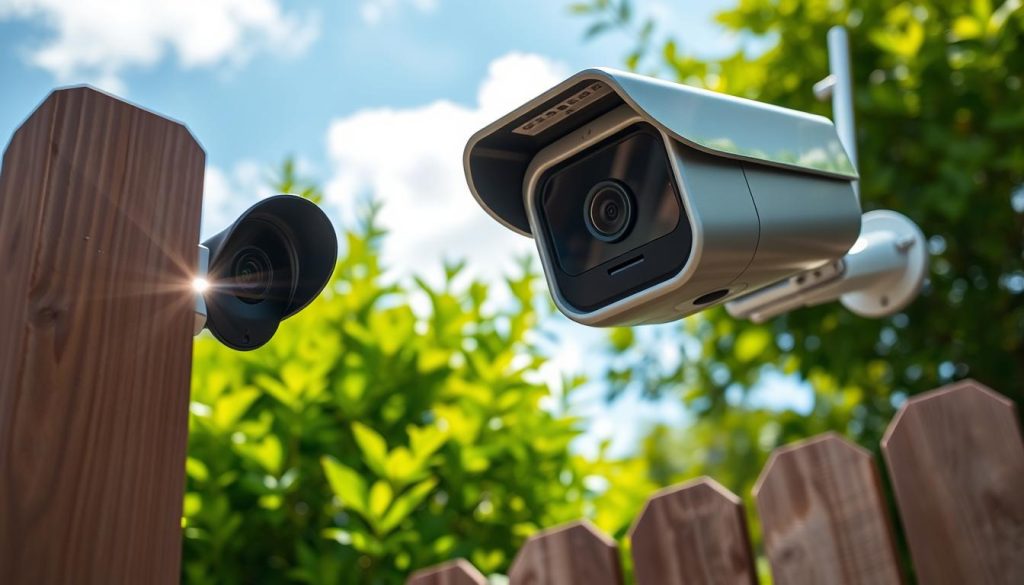
Welcome to your complete resource for modern, off-grid property protection. This guide explores a revolutionary security solution that combines sustainable energy with cellular connectivity.
These innovative devices offer true independence. They eliminate complex wiring and reliance on your local electricity grid. Over 80% of new security systems now harness the sun’s power, showing this technology is mainstream.
Singapore’s climate is perfect for this. With about 2,500 hours of sunlight annually, the photovoltaic panel keeps the internal battery charged for reliable performance. This ensures continuous operation, day and night.
This article will walk you through everything. We cover basic principles, key features, top brands, and installation tips. Our goal is to give you factual, data-driven insights for an informed purchase.
Key Takeaways
- This guide provides a comprehensive overview of standalone, cellular-based surveillance systems.
- These units offer complete energy independence, requiring no electrical wiring for installation.
- They are ideal for locations without WiFi or grid power, like remote properties and farms.
- Singapore’s abundant sunlight makes it an excellent environment for solar-powered devices.
- Key features to consider include battery life, video quality, motion detection, and storage options.
- The market for this technology is rapidly growing, indicating its effectiveness and reliability.
What is a Solar-Powered SIM Card Security Camera?
At its core, this system is a self-sufficient guardian for locations beyond the reach of traditional utilities. It is an integrated security solution that harvests energy from the sun, stores it, and transmits data via a mobile network.
This eliminates any need for electrical wiring or a local WiFi connection. The unit is a complete, standalone package designed for true independence.
The Perfect Fusion of Solar Energy and Cellular Connectivity
This technology represents a powerful synergy. Renewable solar power provides a continuous, clean energy source. The photovoltaic panel converts sunlight into electricity throughout the day.
That energy is stored in a high-capacity battery for use at night or during cloudy periods. Simultaneously, a built-in 4G LTE cellular modem handles all data transmission.
It connects directly to the mobile network, just like a smartphone. This dual-system design ensures reliable performance for non-stop surveillance.
You get live video streaming and alerts, regardless of power outages or poor broadband infrastructure. It is the definition of uninterrupted monitoring.
Why This Solution is Ideal for Singapore’s Landscape
Singapore’s environment is uniquely suited for this innovative technology. The nation enjoys about 2,500 hours of bright sunlight each year. This abundant exposure guarantees consistent charging for the photovoltaic panel.
Furthermore, Singapore boasts a robust and reliable nationwide 4G LTE network. This cellular backbone provides the strong connectivity required for smooth remote video access.
The solution fits a wide range of property types. From high-rise HDB flats with limited wiring options to sprawling rural farms and active construction sites, its wireless design is a major advantage.
In urban settings, it addresses common challenges like aesthetic concerns and strict installation rules. There are no unsightly cables to manage or complex permits for electrical work.
Industry leaders like Hikvision design these setups as all-in-one kits. They consolidate the panel, battery, and camera for streamlined deployment in difficult locations.
For Singapore’s unique mix of urban density and remote areas, this technology offers a tailored, efficient answer. It delivers robust security where it’s needed most.
Top Advantages of Choosing a Solar Security Camera with SIM
What sets these systems apart from traditional setups is a powerful combination of independence, flexibility, and unwavering reliability.
They deliver concrete benefits that directly impact your budget, installation process, and overall peace of mind.
Complete Energy Independence and Cost Savings
This technology operates entirely on renewable energy. It harvests sunlight, eliminating ongoing electricity costs for your security system.
You also make a positive environmental impact by reducing your property’s carbon footprint. The financial benefits extend far beyond the monthly bill.
Installation costs plummet because there’s no need for expensive electrical work. You avoid trenching for cables, installing conduits, or setting up WiFi extenders.
It’s primarily a one-time investment. The only recurring cost is typically the cellular data plan for your device’s connectivity.
System efficiency is impressive. For example, a 40W photovoltaic panel can fully charge a 15Ah battery in roughly 7.5 hours of good sun.
This provides about 15 hours of power, ensuring the unit functions through the night and cloudy periods.
Unmatched Installation Flexibility for Remote Locations
The wireless design grants incredible freedom. You can deploy a unit literally anywhere it receives sunlight.
Think of a fence post on a rural farm, a temporary pole at a festival site, or a remote construction yard. Traditional wired options can’t reach these areas.
This flexibility allows for quick setup, easy repositioning, and simple scalability. Your security setup can evolve as your needs change.
Many professional kits are designed for this. They integrate all components into a single, manageable unit.
The ability to secure a perimeter without infrastructure is a game-changer for off-grid management.
Some all-in-one kits have a net weight around 14kg. This makes mounting on various surfaces straightforward and fast.
Reliable, Uninterrupted Surveillance Without WiFi
Dependence on a local WiFi network is a common point of failure. These systems bypass that entirely.
They use robust cellular connectivity for data transmission. A built-in 4G LTE modem ensures a direct link to the mobile network.
This means live video streaming and instant alerts work anywhere with cellular coverage. Network congestion or a router reboot at home won’t interrupt your monitoring.
The internal battery provides a substantial backup. Leading models can deliver up to seven days of continuous operation without any sunlight.
This guarantees performance during extended grid outages or severe weather. You maintain watch when it’s needed most.
Furthermore, these devices are built for harsh conditions. An IP67 rating guarantees protection against tropical rain and high humidity.
This solution offers true all-weather, all-day reliability for your property.
Together, these advantages translate into significant operational savings, effortless deployment, and a future-proof security infrastructure that just works.
Key Features to Look for in Your Solar CCTV Camera
To make a smart purchase, you must understand the specific features that dictate real-world performance. Not all standalone units are created equal. The right combination of hardware and software ensures your property remains protected under all conditions.
This section breaks down the essential specifications. We will examine power systems, video clarity, physical durability, and intelligent software. These elements work together to deliver a reliable security solution.
Solar Panel Efficiency and Extended Battery Life
The heart of any off-grid system is its energy harvesting and storage. Look closely at the photovoltaic panel’s wattage and the battery’s capacity.
Panel output is measured in watts (W). Common ratings include 7W, 40W, 50W, and 60W. A higher wattage means faster charging under the same sunlight conditions.
Battery capacity is listed in ampere-hours (Ah) or milliampere-hours (mAh). For example, a 15Ah or 15600mAh battery stores a substantial amount of energy.
These two numbers determine operational endurance. A 40W panel can fully charge a 15Ah battery in about 7.5 hours of good sun. This setup can then provide power for approximately 15 hours.
Manufacturers make various battery life claims. Some premium models boast up to 12 months on a single charge under ideal conditions. A more conservative and critical benchmark is the number of days it can run without any sunlight.
Many reliable units guarantee at least seven days of continuous operation. This is a key figure for Singapore’s occasional cloudy periods.
Prioritize systems where the panel wattage and battery capacity are matched to your local light levels. This ensures your device never loses power.
High-Resolution Video and All-Day Color Imaging
Video quality is non-negotiable for effective surveillance. Footage must be clear enough to identify people, license plates, and other details.
A minimum resolution of 1080P (Full HD) is recommended. For superior detail, look for 4MP (2560×1440) or even 4K UHD options.
Higher resolution provides a clearer picture, especially when you digitally zoom into a recording. It makes a significant difference during investigations.
Traditional night vision uses infrared (IR) LEDs to create grainy black-and-white images. Modern technology offers a major upgrade: all-day color imaging.
This feature uses advanced image sensors and white LED spotlights. It delivers full-color footage in low-light conditions, not just pitch darkness.
You can see the actual color of a car or clothing at night. This provides much more useful evidence than a monochrome silhouette.
Effective night vision should offer clarity at distances of at least 30 meters. This covers a standard driveway or backyard with ease.
Robust Weatherproofing and Durable Design
Singapore’s tropical climate demands a tough exterior. Your device will face heavy rain, high humidity, and intense sun.
The international Ingress Protection (IP) rating is crucial. Look for a rating of IP66 or IP67.
- IP66: Protects against powerful water jets and dust ingress.
- IP67: Can be temporarily immersed in water up to 1 meter deep.
This rating ensures the unit survives monsoon rains and dusty construction sites. For long-term reliability, also check for anti-corrosion coatings on metal parts.
Durable design extends beyond weather sealing. Consider these elements:
- Vandal-Resistant Housing: A tough casing deters tampering or theft.
- Wind Resistance: A stable mount prevents swaying in strong gusts, which can trigger false motion alerts.
- Lightning Protection: Some professional models include 4KV surge protection for added safety during storms.
A well-built device is an investment that lasts for years without failure.
Smart AI Detection and Real-Time Alert Systems
Basic motion detection is outdated. It triggers alerts for everything from a passing cat to moving shadows. This leads to alert fatigue.
Smart AI detection solves this. It analyzes the video feed to distinguish between humans, vehicles, and animals.
You can set the system to only notify you when a person is detected. This drastically reduces false alarms and saves cellular data.
These systems often combine AI with Passive Infrared (PIR) sensors. PIR detects body heat, adding another layer of accuracy.
When a valid event occurs, you receive an instant push notification on your smartphone. The best apps allow you to view live footage immediately.
Some models feature two-way audio. You can listen in and speak directly through the device’s speaker. This allows for immediate communication with a visitor or deterrence of an intruder.
Finally, consider your storage options. Each has pros and cons:
- Local MicroSD Card: Affordable and private, with cards supporting up to 256GB. Footage stays on-site.
- Cloud Storage: Requires a subscription but keeps footage safe even if the device is stolen. Enables easy remote playback.
- Built-in SSD/eMMC: Offered in some professional kits for high-capacity, reliable onboard storage.
Choosing the right mix of these smart features turns a simple recording device into an active monitoring partner.
Understanding 4G LTE Connectivity for Remote Monitoring
For a property protection system to be truly independent, it requires a robust and reliable data connection. The 4G LTE cellular network provides this essential link. It is the digital backbone that brings live video and alerts from your remote unit directly to you.
This technology completes the promise of off-grid security. You gain real-time oversight without any physical ties to your home or office network.
How 4G Ensures Live Streaming Anywhere, Anytime
A built-in 4G modem is the heart of this capability. It connects directly to local cellular towers, creating a dedicated data pathway.
This connection is more secure and stable than public WiFi. It isn’t affected by router reboots or signal interference from other home devices.
The result is the “anywhere, anytime” access guarantee. As long as a cellular signal is present, you can view live feeds.
You can also review recordings and get instant push notifications on your smartphone. This works from anywhere in the world.
4G speeds are more than sufficient for high-definition video. You can stream crisp 1080p or even 4K footage without noticeable lag.
This ensures responsive monitoring. Your live view updates in near real-time, making two-way audio conversations practical and clear.
This reliable link transforms a standalone recorder into an active guardian. You are always in the loop, no matter your location.
Evaluating Data Plans and Network Coverage in Singapore
Your system’s performance depends on strong signal reception. In Singapore, major providers like Singtel, StarHub, and M1 offer extensive 4G coverage.
It is crucial to check their online coverage maps before installation. Pay special attention to remote or rural site predictions.
Next, consider your data plan. Monthly consumption depends on several factors:
- Video Quality: Higher resolution streams use more data.
- Recording Mode: Event-based recording saves significant data versus continuous recording.
- Feature Use: Frequent two-way audio and live viewing increase usage.
For most security applications, IoT or M2M data plans are ideal. Singaporean telcos offer these cost-effective plans for devices with moderate data needs.
They are often cheaper than standard mobile plans. An unlimited data plan for a device can range from a few dollars to over a hundred monthly.
The ongoing cost of a data plan is frequently offset by the major installation savings. Avoiding electrical conduit work to remote areas can save upwards of $4,500.
Some devices are optimized for efficient 4G use. Models like the Reolink Go stream in 1080p and may offer partnerships for favorable data plans.
They also provide options like free basic cloud storage. This simplifies the overall solution.
Choosing the right network and plan ensures uninterrupted monitoring. It also keeps long-term operating costs predictable and low.
Robust 4G connectivity is the final, critical piece. It turns a self-powered unit into a smart, globally accessible security node for your property.
Leading Solar CCTV Camera with SIM Card Brands in Singapore
From industrial-grade kits to consumer-friendly devices, the landscape of providers in Singapore is rich and varied. Your choice of manufacturer directly influences system reliability, feature set, and long-term support.
Industry reviews and user ratings provide valuable guidance. Brands like Hikvision, Reolink, and Arlo lead the market, each with a distinct philosophy.
Understanding their strengths helps you match the right security solution to your specific property and needs.
Hikvision: Integrated Kits for Professional-Grade Security
Hikvision is a global leader in professional surveillance. It earns a high 9.4 rating for its robust, integrated approach.
The company specializes in all-in-one solar security kits. These are designed for easy deployment in demanding environments.
Key advantages include a modular design. You can customize the solar panel and battery capacity for different products.
Performance is a hallmark. Their systems offer extended battery life, often providing up to seven days of operation without sunlight.
Durability is ensured with an IP67 rating for complete weather resistance. This is critical for outdoor use in Singapore’s climate.
Beyond basic monitoring, Hikvision kits support advanced analytics. Features like ANPR for license plates and AcuSense for accurate person detection are available.
This makes them the go-to security camera for farms, construction sites, and large commercial areas.
Reolink and Arlo: User-Friendly Options for Homeowners
For residential and small business users, Reolink and Arlo offer excellent, user-centric alternatives.
Reolink is a strong contender for prosumers. The Argus 4 Pro model is a standout, delivering 4K UHD video quality.
It boasts impressive battery longevity, with claims of up to six months on a single charge. This reduces maintenance frequency significantly.
The brand provides great value, balancing high-resolution imaging with accessible pricing. It’s a top pick for those who prioritize crystal-clear footage.
Arlo focuses on a premium user experience and sleek design. The Essential XL model is famous for its ultra-long battery life, potentially lasting up to twelve months.
Arlo devices integrate seamlessly with popular smart home ecosystems. Setup is straightforward through their intuitive mobile app.
This brand is ideal for homeowners seeking a discreet, powerful security camera that works effortlessly with other smart devices.
Comparing Value and Performance Across Top Brands
Other notable names include Lorex and Revlight. Lorex scores a 9.6 rating for cost-effective reliability.
Revlight, rated 9.3, is praised for its advanced motion detection algorithms. This reduces false alerts.
Evaluating brands involves weighing several key metrics:
- Price Point: Hikvision sits at the professional investment level. Reolink offers high-end features at a mid-range cost. Arlo commands a premium for its ecosystem.
- Video Resolution: Options range from 1080p to 4K UHD. Reolink leads in sheer pixel count for the price.
- Battery & Solar Performance: Arlo leads in claimed life, Hikvision in guaranteed uptime during dark days.
- Weatherproofing: Most offer IP65 or IP66 ratings. Hikvision’s IP67 is the benchmark for harsh conditions.
- Smart Features: AI person detection, color night vision, and two-way audio are common. Hikvision adds professional analytics.
- Storage & Connectivity: Choices include local microSD, cloud storage subscriptions, or built-in SSD. All use 4G LTE for the sim card connectivity.
The ongoing cost of a data plan is frequently offset by the major installation savings. Avoiding electrical conduit work to remote areas can save upwards of $4,500.
Match brand strengths to your scenario. Hikvision’s robustness suits large, remote properties without electricity.
Reolink and Arlo are perfect for homes and small businesses. They provide high-quality surveillance without complex setup.
Your brand choice impacts long-term satisfaction, software support, and system compatibility. Investing in a reputable maker ensures reliable performance for years.
This turns your independent power source into a truly smart security asset.
Step-by-Step Guide to Installation and Setup
Your journey to autonomous surveillance begins with strategic positioning and ends with smart app settings. Modern solar security systems are engineered for do-it-yourself installation. Most users complete the entire process in under an hour, without needing professional help.
This sequential guide walks you through each critical phase. We cover site selection, physical mounting, cellular activation, and software configuration. Following these steps ensures your security solution delivers reliable performance from day one.
Selecting the Optimal Location for Sun Exposure
The first and most crucial step is choosing the right spot. Your photovoltaic panel requires direct, unobstructed sunlight to charge the internal battery effectively.
In Singapore, a south-facing orientation typically captures the most sun year-round. Assess the sun’s path across your property. Avoid areas shaded by trees, buildings, or other structures.
Consider seasonal variations in the sun’s angle. The panel should be tilted between 15 to 30 degrees for optimal energy harvesting. This angle helps shed rainwater and maximizes exposure.
Also, ensure the camera itself has a clear field of view for monitoring. The location should cover all entry points and vulnerable zones. Balance solar needs with surveillance goals for the best outcome.
Mounting Your Camera and Connecting the Solar Panel
Once the site is chosen, proceed with secure mounting. Use the provided bracket to attach the unit to a wall, pole, or roof. Ensure the mounting surface is stable and can support the weight, which can be around 14kg for some kits.
Tighten all screws and bolts firmly. This prevents swaying in strong winds, which can cause false motion detection alerts. The camera should be positioned to cover the desired surveillance zone.
Next, connect the photovoltaic panel to the main unit. This is usually done with a waterproof cable. Follow the manufacturer’s instructions for plugging it into the designated port.
Use the supplied cable glands to seal the connection against rain and humidity. Proper cable management prevents damage and ensures long-term durability for outdoor use.
Angle the panel according to your earlier assessment. Many brackets allow for adjustment. Secure it so it remains fixed in the optimal position for charging.
Activating Your SIM Card and Configuring the Mobile App
With the hardware installed, focus on connectivity. Purchase a data-only plan from a local Singapore telco like Singtel, StarHub, or M1. Ensure the plan is compatible with IoT devices and offers sufficient monthly data.
Insert the nano or micro SIM card into the slot on your security camera. Power on the device. Indicator lights will show when it successfully registers on the 4G network.
Now, move to software setup. Download the manufacturer’s mobile application, such as Hik-Connect or Reolink. Create a new account using a strong, unique password.
Enable two-factor authentication in the app settings for an added layer of account security. This prevents unauthorized access to your live video feed.
Add your new device to the app. This typically involves scanning a QR code on the unit or entering a unique UID. Follow the on-screen prompts to connect it to your account.
Once connected, dive into essential configurations. Set your preferred video quality and resolution. Enable smart detection zones to focus on specific areas.
Adjust motion sensitivity and set a recording schedule. Customize alert types to receive push notifications or emails. You can also configure cloud storage or local microSD storage options here.
Finally, conduct a comprehensive system test. Verify live streaming works on your phone. Walk in front of the unit to test motion detection alerts.
After dark, confirm that the night vision or all-day color imaging functions properly. This end-to-end check ensures your independent power source is fully operational.
You now have a fully functional, off-grid security solution. Regular maintenance will keep it performing for years, providing peace of mind for your home or business.
Ideal Applications: Where These Cameras Shine
From sprawling farmlands to temporary event sites, autonomous security units provide protection where it was once impractical. Their independence from grid power and wired internet unlocks a world of possibilities.
Industry leader Hikvision specifically highlights farmlands, festivals, highways, and forests as prime scenarios. This versatility makes them a powerful solution for both permanent and temporary needs.
Securing Farms, Rural Properties, and Construction Sites
Agricultural operations present unique challenges. Vast, open property with no electrical infrastructure is common.
A standalone security camera is ideal for monitoring boundary-less farms. It deters trespassers and tracks the movement of livestock or expensive equipment.
For rural homesteads, these devices secure outbuildings, gates, and perimeter fencing far from the main house. They provide a security presence without the cost of trenching cables.
Construction sites are another perfect fit. They protect valuable machinery and materials after hours. The system documents site progress without needing temporary power hookups.
Any location lacking easy access to electricity and stable internet is a prime candidate for this technology.
Remote infrastructure like utility substations or telecom towers also benefits. Traditional CCTV installation here is prohibitively expensive.
Providing Temporary Security for Events and Festivals
Pop-up markets, fairs, and public gatherings need rapid, mobile security. Running cables across these areas is often impossible and unsafe.
These units deploy in minutes. Their all-in-one design means no generators or network cables are required. You get instant surveillance coverage.
After the event, teardown is just as quick. The same features that make them perfect for festivals also suit seasonal uses. Think of monitoring a holiday pop-up shop or a coastal property during the monsoon.
This temporary application showcases the ultimate flexibility of the solution. It provides peace of mind where permanent installation isn’t needed or allowed.
Enhancing Protection for Homes and Businesses Off-Grid
Many homes and businesses operate away from reliable utilities. Off-grid cabins, eco-resorts, and remote warehouses are classic examples.
Here, a solar panel and internal battery become the sole power source. Cellular connectivity handles all data transmission. This allows for comprehensive guest or asset monitoring.
For vacation or rental property owners, it’s a game-changer. You can check in remotely without relying on a tenant’s WiFi password. This ensures consistent oversight.
The technology also excels as supplementary security. Adding coverage to a garden shed, driveway, or boat dock is simple. You avoid the challenge of extending network cables.
In essence, if an area is hard to wire, it’s an ideal candidate. This security approach turns logistical challenges into simple, reliable protection.
How to Choose the Best Model for Your Specific Needs
Choosing the right model transforms a generic security tool into a tailored solution for your specific situation. This decision requires a methodical self-assessment. You must evaluate your physical space, operational goals, and financial constraints.
The perfect unit for a sprawling farm differs greatly from one for a compact porch. This guide walks you through the critical evaluation steps. We focus on practical trade-offs and local Singaporean factors.
Assessing Your Property Size and Surveillance Goals
Begin by mapping your property’s layout on paper. Identify all vulnerable entry points like gates, doors, and first-floor windows. Define your primary surveillance goals clearly.
Are you aiming for deterrence, evidence capture, or live remote monitoring? Your answer shapes the feature set you require. A device for evidence needs high-resolution video.
One for live viewing needs stable cellular connectivity. Property size directly influences your choice. Large, open areas may require a pan-tilt-zoom (PTZ) device or multiple fixed units.
A small balcony might only need a single, wide-angle model. Consider the field of view each device offers. Ensure it covers the zones you care about most.
For locations like farms or construction sites, durability is paramount. Look for a robust design built for outdoor use. This ensures reliable performance in tough conditions.
Balancing Your Budget with Required Features
Next, separate your “needs” from your “wants”. Essential features include weatherproofing (IP67 rating) and smart motion detection. Nice-to-haves might be two-way audio or a built-in siren.
Create a budget framework that looks beyond the purchase price. Factor in the ongoing cost of the cellular data plan. Also, consider potential cloud storage subscription fees.
Local storage, like a 128GB microSD card, costs around SGD 25 upfront. Cloud storage offers convenience and off-site backup but adds a monthly fee. Calculate which option is more cost-effective for your usage.
Remember the significant installation savings. Avoiding electrical work to remote areas can save over $4,500. This often offsets the recurring data plan cost.
For Singapore’s climate, a high IP rating is non-negotiable. High humidity demands excellent sealing. Frequent cloud cover means your battery must last several days without full sun.
Prioritizing Battery Life vs. Video Resolution
This is a key technical trade-off. Higher-resolution video consumes more power. A 4MP model may have a shorter battery life than a 1080p unit, all else being equal.
Frequent live streaming also drains the battery faster. You need a larger solar panel or more efficient power management to compensate. Analyze your location’s sunlight exposure.
If your installation spot gets abundant, direct sunlight, you can prioritize video quality. If the area is partially shaded, prioritize a larger battery and a high-efficiency panel.
This ensures continuous operation through the night and during cloudy periods. Aim for a system that guarantees at least seven days of operation without sunlight.
Make a final checklist before buying. List non-negotiable features like human detection and IP67 rating. Add desirable features like 4K resolution or color night vision.
Use this list to narrow down models from top brands. Read user reviews from other Singaporeans to gauge real-world performance. Consult with local security experts for their insights.
Finally, think about future scalability. Will you need to add more units later? Choose a system and brand that allows for easy expansion. This protects your investment as your needs evolve.
Essential Maintenance for Long-Term Performance
To keep your independent security solution performing flawlessly, a simple maintenance routine is essential. A small amount of care safeguards your investment and guarantees continuous protection for years.
Establishing a basic schedule ensures peak system efficiency. Minimal, infrequent upkeep yields maximum reliable performance.
Routine Cleaning of Solar Panels and Camera Lens
Dust, pollen, and bird droppings can block sunlight. This reduces your photovoltaic panel‘s charging efficiency by up to 30%.
Clean it every three to six months. Use a soft microfiber cloth and mild, soapy water. Gently wipe the surface to remove all debris.
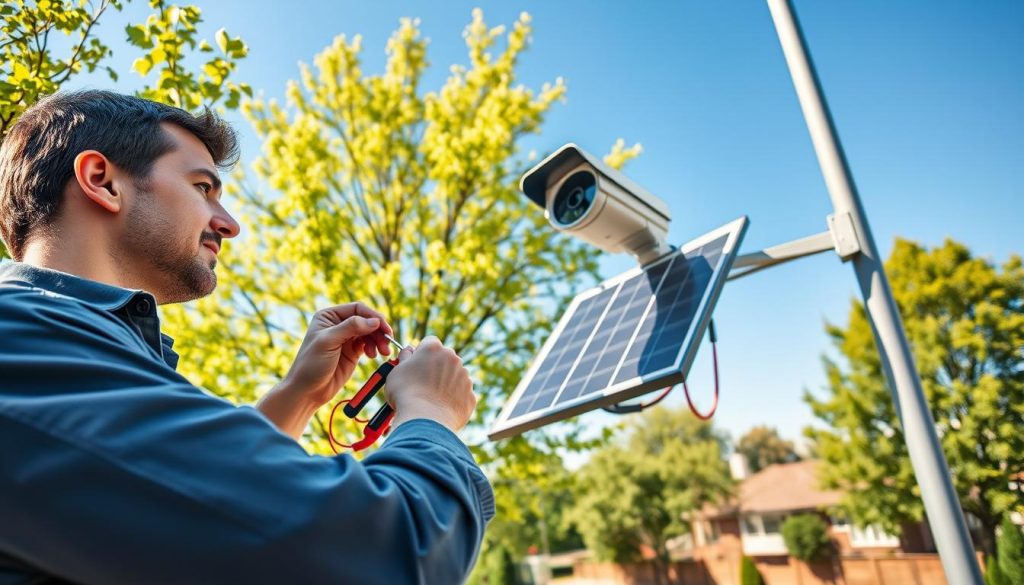
Also, clean the camera lens and housing. Do this gently to prevent scratches. Clear optics are vital for sharp video quality.
This is especially important after heavy rain or in dusty environments. A clear view is the foundation of effective surveillance.
Monitoring Battery Health and Software Updates
Check your system’s battery status through the companion mobile app. Most apps display charge levels and estimated remaining operation time.
Set up low-battery alerts if the feature is available. This proactive step helps you avoid unexpected shutdowns. It is key for maintaining operation during several cloudy days.
Regularly update the device firmware. These updates fix bugs, improve performance, and patch security vulnerabilities.
Updates are typically initiated with one tap in the app. Keeping software current ensures your unit has the latest features and protections.
Ensuring Uninterrupted 4G SIM Card Service
Your SIM card is the lifeline for remote monitoring. Manage its data plan actively to prevent service interruption.
Set calendar reminders for plan renewals. Check data usage in your telco account or the device app. Enable automatic top-ups if your provider offers them.
Also, verify signal strength at the installation site. A weak signal can cause a poor video feed. Ensure the card is properly seated in the slot.
A few minutes of seasonal checking can prevent days of downtime, ensuring your property is always watched.
Be prepared to troubleshoot common issues. For false motion detection alerts, adjust the sensitivity in the app.
If the unit goes offline, first verify the solar charging and SIM connectivity. These are the two most common points of failure.
Before Singapore’s monsoon season, perform a seasonal check. Ensure all mounts are tight and cables are sealed against moisture.
Consider optimizing the panel angle for the lower winter sun if applicable. This maximizes energy harvest during less sunny periods.
Proper maintenance extends component lifespan. A well-cared-for battery can last up to a decade.
It avoids costly service disruptions and keeps your security system ready. This small task protects a significant investment in your property‘s safety.
The Future of Security is Wireless, Solar, and Smart
Tomorrow’s security guardians will be defined by their smart, sustainable, and seamless operation. The evolution from wired, grid-dependent systems to autonomous, wireless solutions is accelerating. These devices harness renewable energy and cellular networks for true independence.
Artificial intelligence will advance further, enabling recognition of specific individuals and detection of unusual behavior. Integration with broader smart home and city ecosystems allows for coordinated responses with lighting and alarms.
5G connectivity will enable higher-resolution video streaming and near real-time interaction. Improvements in photovoltaic panel efficiency and battery technology will yield smaller form factors and longer operation. This aligns with Singapore’s sustainability goals.
Professional-grade features are becoming democratized. Investing in this technology builds a future-proof, resilient infrastructure. Apply the knowledge from this guide to select a system for your unique needs.
The future of protection is about intelligent, sustainable, and unlimited surveillance.