
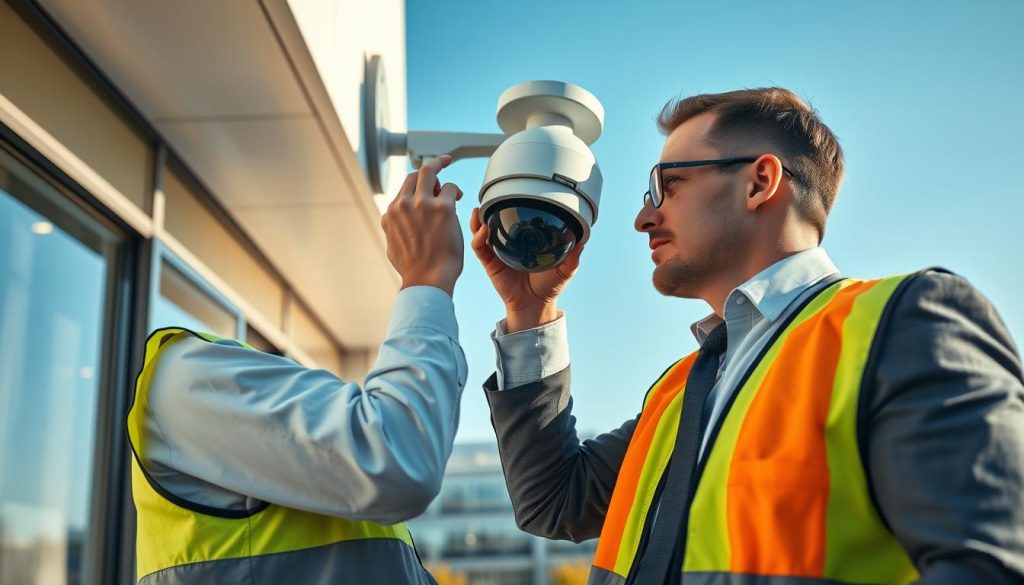
In Singapore’s fast-paced commercial landscape, protecting your assets is non-negotiable. A robust surveillance solution does more than just record events. It acts as a foundational layer for comprehensive safety and operational intelligence.
Modern technology has transformed simple recording devices. Today’s networked video systems offer remote access, analytics, and real-time alerts. This evolution turns reactive monitoring into proactive management.
These units serve a dual purpose. They are a powerful deterrent against theft and vandalism. Simultaneously, they provide invaluable oversight for daily operations and liability protection.
A successful deployment hinges on expert planning and precise setup. Choosing the right hardware is only the first step. Professional configuration and ongoing support ensure your investment delivers lasting value.
This guide empowers you to navigate the entire process. You will learn to assess needs, select appropriate products, and collaborate effectively with technicians. Our goal is to give you the knowledge for informed decisions and true peace of mind.
Key Takeaways
- A professionally installed surveillance system is critical for asset protection in competitive environments like Singapore.
- Modern video technology offers remote access, intelligent analytics, and real-time alerts.
- These systems act as both a crime deterrent and a tool for operational oversight.
- Expert planning, configuration, and support are essential for long-term success.
- This guide provides a clear roadmap from initial assessment to final commissioning.
- Understanding the process helps you communicate effectively with service providers.
- A correctly deployed system offers significant return on investment through loss prevention and efficiency gains.
Why Business Security Cameras Are Essential in Singapore
The rising trend of property-related incidents worldwide underscores the need for robust visual monitoring in urban centers. In Singapore’s dense commercial environment, a well-planned surveillance network is a cornerstone of operational integrity. It addresses several critical needs beyond basic recording.
Deterring Theft and Enhancing Safety
Visible CCTV units act as a powerful psychological barrier. They make any premises a far less attractive target for criminal activity. This is crucial as theft concerns have increased globally.
An obvious camera system does more than scare off external threats. It also helps mitigate internal issues like shrinkage or employee misconduct. The mere presence of recording devices encourages proper behavior.
As one source notes, “Theft has increased all over the globe which means that surveillance and CCTV in Singapore is more important than ever before.” This reality makes proactive measures non-negotiable for asset protection.
Providing Peace of Mind for Business Owners
The ability to monitor your premises remotely transforms management. Owners can view live feeds from any mobile device, 24 hours a day. This capability offers immense reassurance.
You can check on multiple locations after hours or respond to real-time alerts instantly. This constant access reduces anxiety and supports a better work-life balance. It turns worry into informed oversight.
Studies highlight that a CCTV installation provides people with a greater sense of protection. This is especially true in higher-risk areas. That intangible peace of mind is a key benefit of modern systems.
Compliance and Liability Protection
Video footage serves as an unbiased witness in many situations. It can clarify disputes involving staff, customers, or third-party vendors. Clear records protect against false claims.
Certain industries may have specific regulatory requirements for surveillance. A properly installed system helps ensure you meet these standards. It also provides documented evidence if needed.
There are financial advantages too. Aside from reducing your property insurance cost due to additional security measures, you are also making your property worth more with CCTV installation. This direct impact on value and ongoing costs makes a strong case for investment.
Understanding Different Types of Security Cameras for Business
A modern surveillance setup is not one-size-fits-all. It’s built from specialized devices, each designed for specific tasks and environments.
Choosing the correct hardware is crucial for effective coverage. This guide breaks down the primary categories to help you make an informed decision.
Dome Cameras for Discrete Surveillance
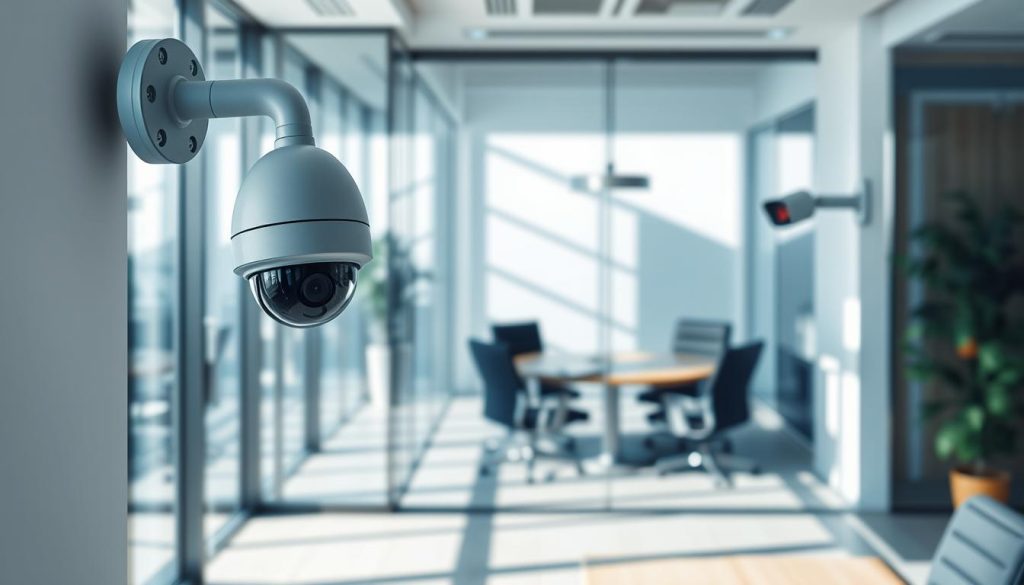
These units feature a compact, dome-shaped housing. Their design is subtle and often blends into ceilings.
This makes them perfect for indoor spaces like retail shops and office lobbies. A discrete presence is preferred where aesthetics matter.
The casing is typically vandal-resistant. Wide-angle lenses provide broad coverage of general areas without being obtrusive.
As noted, “Dome cameras are discrete and may go unnoticed.” They are a strong choice for internal monitoring where a visible deterrent is not the primary goal.
Bullet Cameras for Outdoor and Long-Range Use
This type is built for durability and visibility. Its cylindrical, sturdy housing is designed for exterior applications.
Features often include built-in sunshades and robust weatherproofing, like an IP66 rating. This protects against dust and heavy rain.
They excel at long-range identification. With longer focal lengths, they can capture details like license plates or faces from a distance.
For example, some HD models offer an infrared effective distance up to 25 meters. This ensures clear night visibility across parking lots or building perimeters.
PTZ Cameras for Flexible Coverage
Pan-Tilt-Zoom (PTZ) units offer unmatched flexibility. A single device can cover a vast area by moving and zooming remotely.
Operators can pan 360 degrees endlessly, tilt vertically, and use powerful digital zoom. Advanced features like 3D intelligent positioning automate tracking.
“Scheduled PTZ movement” allows pre-set patrols of a site. This is ideal for monitoring large warehouses, car parks, or open perimeters.
Experts state that adjustable, remote-monitored cameras grant “the ability to adjust for multiple views using a single camera.” This maximizes coverage efficiency.
IP vs. Analog Systems: Choosing the Right Technology
The core technology behind your video system is a major decision. Internet Protocol (IP) cameras send digital data over a network.
They offer higher resolution, easier scalability, and support for advanced analytics. This is the modern choice for new, scalable networks.
Traditional analog systems use coaxial cables. They are often lower in cost and simpler to maintain on existing infrastructure.
Hybrid options like HDCVI or TVI offer high-definition video over coaxial cable. Your choice should balance budget, current wiring, and future expansion needs.
A professional assessment can determine the best fit. The right technology foundation ensures your investment remains effective for years.
Key Features to Look for in a Business Security System
A modern commercial surveillance network is defined by its core technological capabilities, not just its physical presence. The right specifications transform a basic recording setup into an intelligent operational tool.
Focusing on these essential characteristics ensures your investment delivers clear evidence and proactive oversight.
High Resolution and Image Clarity
Image detail is paramount. High-resolution sensors, such as 4MP, 5MP, or 1080p, capture fine specifics like facial features or license plates.
This clarity is critical for post-event investigation. It also provides the clean data feed needed for advanced video analytics to function accurately.
A blurry video clip is often useless. Prioritizing resolution from the start guarantees your footage serves its intended purpose.
Night Vision and Low-Light Performance
Monitoring must not stop at sunset. Effective night operation relies on Infrared (IR) LEDs or highly sensitive image sensors.
Look for low “lux” ratings. A unit with a 0.1 Lux sensitivity performs well in very dim light. Some models, like certain PTZ devices, achieve 0.05Lux in color mode and 0 Lux with IR illumination active.
This technology enables true 24/7 visibility across parking lots and perimeters. It ensures your system is always watching.
Remote Access and Mobile Monitoring
Modern management demands mobility. The ability to view live feeds and recorded footage from a smartphone is now standard.
Technologies like P2P (Peer-to-Peer) cloud networking simplify this access. They allow for easy remote setup without complex router configuration.
This feature puts control in your pocket. You can check on your premises anytime, from anywhere, providing immediate peace of mind.
Motion Detection and Video Analytics
Basic motion-triggered recording saves storage space and review time. Advanced analytics, however, are transformative.
These intelligent features can identify specific events. They include virtual line crossing, intrusion detection in defined areas, and people counting.
Cameras with built-in video analytics to help teams accurately identify and locate potential incidents, rather than having to sift through hours and hours of footage.
This shifts your video system from reactive to proactive. It filters out false alarms from leaves or shadows, focusing only on relevant activity.
When combined with a security camera that can pan, tilt, and zoom, analytics can even automate tracking of a person or vehicle across a site.
The Process of Professional Security Cameras for Business Installation
The journey from purchasing hardware to achieving a fully operational visual monitoring network follows a clear, professional workflow. This structured approach ensures every component works in harmony to meet your specific objectives.
Skilled technicians manage each phase, from initial evaluation to final handover. Their expertise transforms individual products into a cohesive, reliable asset for your premises.
Initial Site Assessment and Security Audit
A professional installer begins with a thorough site visit. They walk your property to understand its unique layout and daily operational flow.
This audit identifies vulnerabilities like blind spots or unprotected access points. It also includes a detailed discussion of your specific safety goals and compliance needs.
As noted by experts, a good installer helps prioritize certain requirements. This foundational step ensures the final design aligns perfectly with your commercial security priorities.
Planning Camera Placement and System Design
Next, a detailed blueprint is created. This plan specifies the exact type and location of each unit for optimal coverage.
Technicians map fields of view to eliminate blind spots. They design wiring paths for a clean, efficient setup.
Key zones like entry points, cash registers, and stock rooms receive special attention. The goal is a design that monitors all critical areas effectively.
Cabling, Mounting, and Hardware Setup
The physical installation phase then begins. Technicians run cables—Cat6 for IP networks or coaxial for analog systems—using secure, neat trunking.
Units are mounted firmly at designated heights and angles. A common baseline, as seen in standard packages, includes cable runs of up to 10 meters and mounting heights around 3 meters.
The recording device, such as an NVR or DVR, is also configured during this stage. Proper setup here is crucial for a stable and durable system.
Testing, Commissioning, and User Training
Before handover, the entire network undergoes rigorous testing. Every camera feed is verified for clarity and correct angle.
Technicians configure recording schedules, motion detection, and alerts. A critical task is internet setup for remote viewing, enabling mobile access.
The final, essential step is comprehensive user training. Installers ensure your team can confidently operate the software, review footage, and manage settings.
This knowledge transfer, as highlighted in service agreements, empowers your staff. It turns a new installation into a self-sufficient tool for daily oversight.
Evaluating CCTV Packages and Costs in Singapore
Navigating the market for surveillance solutions in Singapore involves evaluating bundled offers and long-term value. The upfront price is just one part of the total cost of ownership.
A smart investment balances initial expenditure with reliable performance and ongoing support. Understanding common package structures helps you compare providers effectively.
Standard Installation Packages from Local Providers
Many suppliers offer tiered, all-in-one bundles. These simplify the purchasing process for small and medium enterprises.
Common examples include setups with one, two, or four cameras. Brands like HIKVISION and TP-Link provide such ready-made CCTV packages.
A typical bundle includes a digital video recorder (DVR or NVR), the specified number of camera units, a hard drive for storage, and all necessary cabling. Professional installation, system commissioning, and basic user training are usually part of the deal.
As seen with local offers, these packages provide a cost-effective starting point. They are designed for standard premises like small offices or retail shops.
Customized Solutions for Specific Business Needs
Larger or complex sites often need a bespoke approach. Factories, warehouses, and multi-story buildings require tailored designs.
A customized system selects specific products for the job. This might include PTZ units for wide areas, thermal imaging for perimeter detection, or specialized recording hardware.
Higher-channel recorders, like 8CH or 16CH DVRs, accommodate more cameras. Advanced software features for analytics and management are also key components.
This process ensures every part of your commercial security network is purpose-built. It addresses unique operational risks and layout challenges.
Understanding Warranty and Service Agreements
The protection plan for your investment is crucial. Clear terms prevent unexpected costs down the line.
In Singapore, a one-year on-site warranty is a common standard. This means a technician will visit your premises to fix covered issues.
Look for providers offering a minimum of a one year installation warranty… 3 or more year for hardware warranty.
This highlights an important distinction. The installation warranty often covers labor and setup for one year. The hardware warranty for products like CCTV cameras can extend to three years or more.
Beyond the initial period, ongoing service agreements provide great value. They offer preventive maintenance, software updates, and priority support.
This proactive support helps maintain your business security over time. It ensures your system remains a reliable asset for your operations.
Strategic Camera Placement for Maximum Coverage
Expert placement strategy transforms a collection of individual devices into a cohesive, gap-free observation network. This is a strategic discipline, not a task of random mounting.
It demands a deep understanding of your premises’ layout and daily operational flow. The goal is to create layers of visual defense that protect people and assets.
Covering Entry Points and High-Risk Areas
A layered approach starts with all visual choke points. These are the primary paths people use to enter, exit, and move within your property.
A professional checklist for comprehensive surveillance includes several critical zones. Technicians will map out every exterior door, window, and secondary access point.
Inside, focus shifts to high-traffic and high-value areas. Reception desks, cash handling locations, and stockrooms are top priorities.
Server rooms, parking lots, and loading bays also require vigilant monitoring. Overlapping fields of view between units are essential here.
This overlap eliminates blind spots where activity could go unseen. It ensures continuous tracking across the entire monitored space.
Indoor vs. Outdoor Camera Considerations
The design philosophy differs drastically between interior and exterior spaces. Indoor units often prioritize discretion and seamless integration.
Wide-angle lenses provide broad coverage of rooms and hallways. Placement examples include a corner of a living room or a ceiling position aligned with existing downlights.
This subtle approach maintains aesthetics while providing oversight. For a home security scenario, this is often the preferred method.
Exterior deployment faces harsher conditions. Devices here must have robust weatherproofing, typically an IP66 or IP67 rating.
Vandal-resistant housing is crucial for units at ground level. Powerful infrared illumination is non-negotiable for clear night visibility across a dark parking lot or alley.
A common example is a sturdy unit mounted directly above a main door entrance. This provides a clear view of everyone approaching the building.
Accounting for Lighting and Environmental Factors
Light is the most common technical challenge for any visual system. A professional installer will conduct a detailed lighting audit.
They assess natural sunlight patterns and all artificial light sources. A critical rule is to avoid pointing a lens directly at a bright light.
This prevents glare and image washout, which ruins surveillance footage. Storefronts with large windows present a classic dynamic lighting challenge.
The interior can be dark while the outside is brightly lit. For such scenes, devices with Wide Dynamic Range (WDR) technology are recommended.
Your CCTV camera installer will… review access points and where key assets are located. They will also assess lighting and HVAC systems… account for how much sunlight there is during the day, as well as any artificial light sources at night.
WDR balances the light levels to deliver a clear image in both the shadows and highlights. For pitch-black areas with no ambient light, strong infrared (IR) illumination is the solution.
This ensures identification is possible at any time. Environmental factors like HVAC vents should also be considered to prevent condensation or obstructions.
Ongoing Maintenance and Support for Your Security System
The true value of a commercial surveillance investment is realized through diligent upkeep and responsive technical assistance. A visual monitoring network is not a set-and-forget asset.
Proactive care ensures it performs reliably for many years. This ongoing partnership with your provider safeguards your operational continuity.
Regular System Checks and Software Updates
Establish a simple monthly routine. Check each camera view for obstructions like spider webs or shifted focus.
Verify that recording is active and review a short clip of footage. Gently clean external housings to maintain clear image quality.
Software management is equally critical. Manufacturers release firmware updates to patch vulnerabilities and add new features.
CCTV camera installers can also issue upgrades and regular system updates to ensure that your camera firmware and hardware is running the most recent versions.
Applying these updates closes security gaps. It also unlocks improved analytics and performance from your existing products.
Troubleshooting Common Issues
Even robust systems can encounter occasional glitches. A lost video feed often points to a loose cable or power supply issue.
Poor image quality may require lens cleaning or a focus adjustment. Failed remote access typically relates to router or internet service changes.
A full hard drive will stop new recordings. Managing motion-activated settings or archive schedules usually solves this.
For complex network problems or physical repairs, contact your professional commercial security camera installer. Their technical support can offer remote diagnostics or an on-site evaluation.
Scaling and Upgrading Your System Over Time
Modern IP-based networks are designed for growth. You can often add more units to an existing recorder if channels are available.
This modular approach supports business expansion. It allows you to monitor new areas or locations seamlessly.
Component upgrades future-proof your investment. Swapping older analog devices for high-resolution 4K IP cameras dramatically improves detail.
Adding a video management software (VMS) license can enable advanced analytics. This transforms raw video into actionable business intelligence.
Discuss scalability plans with your provider during the initial design. A forward-thinking strategy ensures your commercial security measures evolve with your needs.
Making an Informed Decision for Your Business Security
A well-planned observation network represents a strategic investment in your enterprise’s resilience and operational continuity. This holistic approach merges advanced technology with professional configuration and dependable long-term support.
Start by conducting a detailed site assessment. Identify your specific oversight goals and high-risk areas. Then, research established local installers in Singapore, such as those located at Sim Lim Square. Obtain and compare several quotes.
During consultations, ask essential questions. Inquire about the length and coverage of the warranty, ongoing technical assistance, and options for future expansion. A provider’s willingness to discuss these topics signals a commitment to partnership.
The result is a robust video system that delivers lasting peace of mind and tangible property protection. Armed with this guide, you can proceed with confidence to safeguard your premises.