
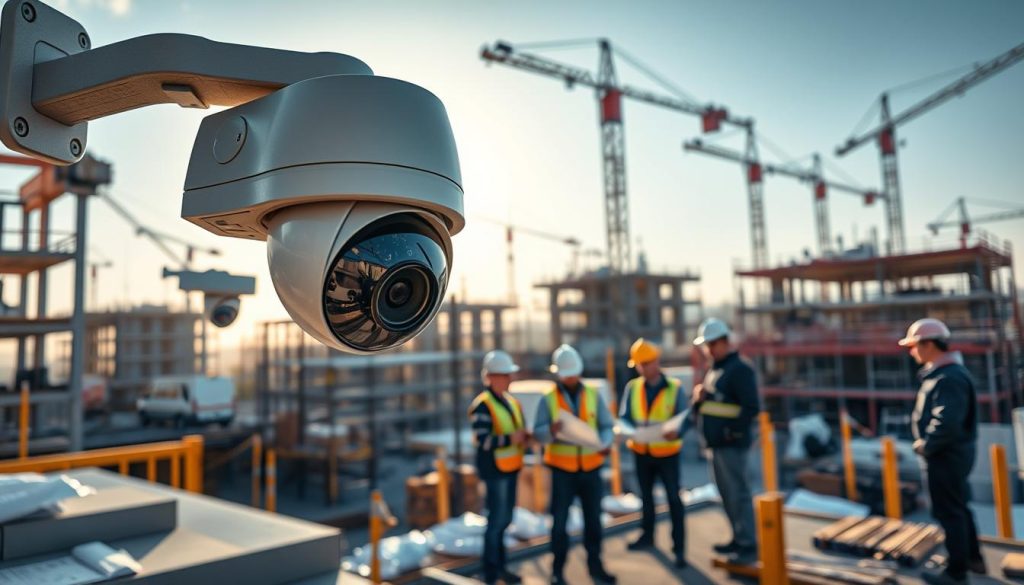
Modern construction projects face significant security challenges. Protecting valuable assets and ensuring worker safety are top priorities for any project manager. Advanced surveillance has become a cornerstone of effective site management.
The financial stakes are high. Industry reports show a 25% rise in theft incidents. Average losses can approach $500,000 per location annually. This stark reality makes robust protection systems non-negotiable.
Implementing the right video solution is a powerful deterrent. Studies indicate it can prevent up to 40% of burglary attempts. Furthermore, it can reduce theft-related losses by as much as 80%.
For professionals in Singapore, new regulations add urgency. Starting June 2024, projects valued over $5 million must install compliant Video Surveillance Systems (VSS). This mandate underscores the critical role of visual monitoring.
Beyond theft prevention, these tools boost operational efficiency. Remote access allows managers to oversee progress and safety from anywhere. This can lead to efficiency improvements of up to 60%.
This roundup will guide you through the latest technologies available in 2024. We will compare features, installation best practices, and help you select the optimal system for your needs.
Key Takeaways
- Theft and vandalism cause major financial losses, nearing $500,000 per project site each year.
- Effective visual monitoring can deter a significant portion of criminal activity and cut losses dramatically.
- New regulations in Singapore require specific surveillance systems for large projects starting mid-2024.
- Remote access to live video feeds can improve operational efficiency by up to 60%.
- Choosing the right technology is essential for comprehensive asset protection and safety compliance.
- This evaluation will cover the top systems, features, and implementation strategies for the current year.
Why Construction Site Security is a Top Priority in Singapore
Project managers across Singapore are confronting a dual challenge: rampant theft and stringent new compliance mandates. Addressing these issues is not just about loss prevention; it’s about ensuring project viability and legal adherence.
The High Cost of Theft and Vandalism
The financial toll on local projects is staggering. Recent data shows theft incidents have risen by 25%. Annual losses can approach $500,000 per location.
These projects are 400% more likely to be targeted than other commercial properties. A shocking 80% of construction firms report experiencing theft.
Industry analysts estimate the total annual cost of theft on these projects ranges between $300 million and $1 billion nationally.
Vandalism compounds the problem. It can consume up to 25% of a project’s budget. However, implementing a visual monitoring system has been shown to cut vandalism rates by 70% over time.
Without robust protection, theft rates can near 60%. This makes a strong deterrent system essential for financial control.
Beyond Security: Management and Compliance Benefits
Modern construction security cameras deliver value far beyond crime prevention. They are powerful tools for operational efficiency and regulatory compliance.
Firms using integrated surveillance systems report significant savings. They can reduce physical security guard costs by up to 80%. Furthermore, the presence of monitoring often leads to a 25% increase in worker productivity.
These systems provide irrefutable evidence. This is crucial for insurance claims and reducing legal disputes. Without such evidence, legal claims can increase by 20%.
Remote access allows for real-time project tracking. Managers can oversee resource allocation and safety protocols from anywhere. This enhances overall project management and accountability.
Compliance is another major benefit. Adherence to workplace safety regulations is simplified with recorded footage. More importantly, projects valued over $5 million must prepare for the upcoming Video Surveillance System (VSS) mandate.
Investing in a comprehensive camera system is a strategic move. It protects assets, streamlines operations, and ensures your project meets all legal requirements in Singapore.
Current Trends Shaping Surveillance for Singapore Job Sites
Surveillance for local projects is no longer just about recording footage. It’s about intelligent, proactive oversight. The latest advancements are making protection systems smarter and far more efficient.
Two powerful trends are leading this transformation. They focus on artificial intelligence and seamless connectivity.
The Shift to AI-Powered Analytics and Real-Time Alerts
Modern security systems have moved far beyond simple recording. They now use machine learning to understand what they see. This technology can identify suspicious loitering or detect unauthorized entry after hours.
It can even spot safety protocol violations. For example, Pelco’s AI-powered video analytics can alert managers when workers are not wearing required PPE.
When an anomaly is detected, the system sends instant alerts directly to a manager’s smartphone. This allows for immediate response, potentially stopping an incident before loss occurs.
Visible CCTV cameras can cut crime by 65% on construction sites, but AI analytics boost incident detection by up to 40% over older systems.
This proactive approach is a game-changer. Drones and wireless perimeter sensors are also emerging. They provide comprehensive aerial and ground-level coverage for tough locations.
Integration of Live-Streaming and Remote Monitoring
The second major trend is the seamless integration of live video feeds. High-definition streams are now accessible 24/7 from any internet-connected device. A project manager can oversee multiple job sites simultaneously from the office or home.
This capability transforms operational management. Managers can verify material deliveries in real-time. They can monitor subcontractor progress and ensure safety protocols are followed daily.
The financial benefit is substantial. Sites can save up to 80% on security costs by reducing the need for constant on-site guards. Remote monitoring enhances responsiveness while slashing overhead.
Open-platform surveillance systems, like those mentioned earlier, integrate easily with existing management software. This makes the entire security and oversight workflow intelligent and interconnected. It turns a video surveillance setup into a central nervous system for the entire project.
Key Features to Demand from Your Building Site Cameras
Not all video monitoring equipment is created equal, especially for the demanding conditions of a construction zone. The right features turn a basic recorder into a powerful guardian for assets and personnel.
This checklist highlights the core technical specifications that define a top-tier protective solution. Prioritizing these elements ensures long-term reliability and comprehensive oversight.
High-Definition Video and Night Vision Capabilities
Clarity is non-negotiable. Your security camera must capture crisp, detailed footage for identification and evidence. Aim for a minimum of 1080p resolution.
High-definition recording is proven to greatly reduce theft-related financial losses. It provides undeniable proof for investigations and insurance claims.
Round-the-clock security demands excellent low-light performance. Infrared or thermal imaging technology enables clear video in total darkness.
This day night capability is essential for monitoring unlit storage yards and perimeter areas. It helps stop crimes before they escalate.
AI Analytics for Proactive Threat Detection
Modern surveillance goes beyond passive recording. Intelligent analytics transform your system into an active sentry.
Features like advanced motion detection, people counting, and object recognition filter out false alerts. They focus attention on genuine threats.
This technology can identify unauthorized entry after hours or spot safety protocol violations. It boosts incident detection by up to 40% compared to older setups.
Pelco’s intelligent units, for example, offer sophisticated low-light and bad-weather capabilities. They deliver reliable 24/7 live video feeds.
Real-time notifications sent to a manager’s phone enable immediate response. This proactive approach is a cornerstone of effective construction security.
Rugged, Weatherproof, and Vandal-Resistant Design
The physical housing of your equipment is as important as its internal electronics. A harsh project environment requires a rugged design.
Look for a high Ingress Protection (IP) rating, such as IP66 or higher. This certifies resistance to dust and powerful water jets from any direction.
For physical durability, an IK10 rating is the benchmark. It means the housing can withstand impacts equivalent to a 5kg weight dropped from 40cm.
This vandal-resistant design ensures uninterrupted monitoring. It protects your investment from tampering and the elements.
Together, these features create a security camera system built for endurance. They guarantee consistent coverage and performance, meeting the toughest security needs of any project.
Understanding Singapore’s Video Surveillance System (VSS) Regulations
A new era of mandatory visual oversight has begun for major construction projects across Singapore. This regulatory shift moves video surveillance from a recommended best practice to a legal requirement. Understanding these rules is essential for compliance and avoiding significant penalties.
Mandatory Requirements for Projects Over $5 Million
Effective June 1, 2024, a pivotal mandate takes effect. All construction projects valued at S$5 million and above must implement a certified Video Surveillance System (VSS). The primary goal is to enhance workplace safety and provide undeniable evidence for incident investigations.
The technical specifications are precise. The system must record in high definition, with a minimum 1080p resolution at 12 frames per second. Recorded data must be retained for at least 30 days. For any reportable workplace incident, footage must be kept for 180 days.
Authorities require footage to be exportable in standard formats like .avi or .mp4. This ensures evidence can be easily shared during official inquiries. Strategic placement is also regulated.
The VSS must provide clear coverage of all designated high-risk areas. These include work at heights exceeding two meters, scaffolding zones, deep excavations, and locations with active vehicular traffic. Proper placement addresses core security needs and safety oversight.
Data Retention and Personal Data Protection Act (PDPA) Compliance
Operating a VSS creates a dual compliance responsibility. Firms must meet the VSS technical rules while fully adhering to the Personal Data Protection Act (PDPA). Video footage contains personal data, and its handling is strictly governed.
Transparency is the first rule. Companies must notify individuals, including workers and visitors, that monitoring is in operation through clear signage. This fulfills a key PDPA obligation.
Non-compliance with either the VSS mandate or PDPA can result in heavy fines, project delays, and increased liability, making a structured approach to data governance non-negotiable.
Protecting captured identities is crucial. Access to stored video must be controlled and logged. Secure storage solutions, whether on-premise or cloud-based, must prevent unauthorized access or data breaches.
Implementing a robust security camera system is only half the solution. A clear policy for data access, retention, and deletion is the other. This integrated approach ensures your construction site cctv serves its purpose while fully respecting privacy laws.
Ultimately, a compliant surveillance system is a powerful asset. It deters misconduct, provides evidence, and demonstrates a company’s commitment to lawful and safe operations. For project managers, mastering these regulations is as vital as choosing the right security cameras.
How Modern Surveillance Cuts Losses and Improves Operational Efficiency
Concrete statistics now prove that intelligent security systems are powerful profit-protection tools. For project managers, the decision to invest goes beyond basic deterrence. It directly impacts the financial health and timely completion of every project.
This analysis presents the hard evidence. We will examine the dramatic reductions in criminal activity and the simultaneous gains in workflow productivity. The data makes a compelling case for modern construction security as a core component of strategic project management.
Quantifiable Reductions in Theft and Vandalism
The most immediate benefit is a steep drop in losses. Effective security camera systems act as a powerful deterrent. Visible units alone can cut overall crime by 65% on project locations.
The impact on theft is even more striking. Studies show that using dedicated job site monitoring can reduce theft incidents by up to 90%. On average, comprehensive security setups cut theft-related losses by 80%.
Mobile surveillance units have demonstrated some of the strongest results, cutting crime rates by more than 90% at temporary project locations.
Vandalism, a costly and disruptive problem, also plummets. Historical data indicates that consistent video surveillance can reduce vandalism by 70% over time. This protects not only materials but also critical infrastructure from senseless damage.
These figures translate directly to preserved capital. They protect high-value equipment and bulk materials from walking off the site. The return on investment is clear and rapid.
Enhancing Worker Accountability and Project Management
The benefits of visual monitoring extend deep into daily operations. It fosters a culture of accountability and enhances managerial oversight. Knowing that activities are recorded encourages adherence to safety protocols and productivity standards.
AI-enabled systems take this further. They can monitor site activity and automatically identify inefficient processes or unsafe behavior. This allows for immediate corrective action.
Operational improvements are substantial. Managers gain the ability to remotely verify material deliveries as they happen. They can optimize staffing levels based on observed activity and track project progress in real-time from any device.
This remote oversight capability delivers massive efficiency gains. Companies utilizing remote camera feeds report up to 60% better operational efficiency. Downtime and delays are minimized because managers can make informed decisions quickly.
Live video feeds become a dynamic management dashboard. They allow for swift resolution of logistical bottlenecks and safety concerns. This proactive approach keeps projects on schedule and within budget.
Ultimately, modern construction site surveillance is a dual-force multiplier. It slashes external threats while streamlining internal operations. This makes it an indispensable tool for any manager focused on financial control and project success.
A Roundup of Essential Construction Security Camera Types
The market offers a diverse toolkit of visual monitoring devices, from fixed sentinels to intelligent tracking systems. Matching the right technology to each zone of your project is critical for comprehensive protection.
This guide breaks down the primary categories available. We will explore their unique strengths and ideal applications.
Fixed Cameras: Dome, Bullet, and Turret for Constant Coverage
Stationary units form the backbone of most surveillance systems. They provide unwavering oversight of specific locations.
Dome cameras are designed for general wide-area observation. Their discreet, hemispheric housing makes it difficult for subjects to tell which way the lens is pointing. This uncertainty acts as a strong deterrent.
They are ideal for monitoring open storage yards or busy common areas.
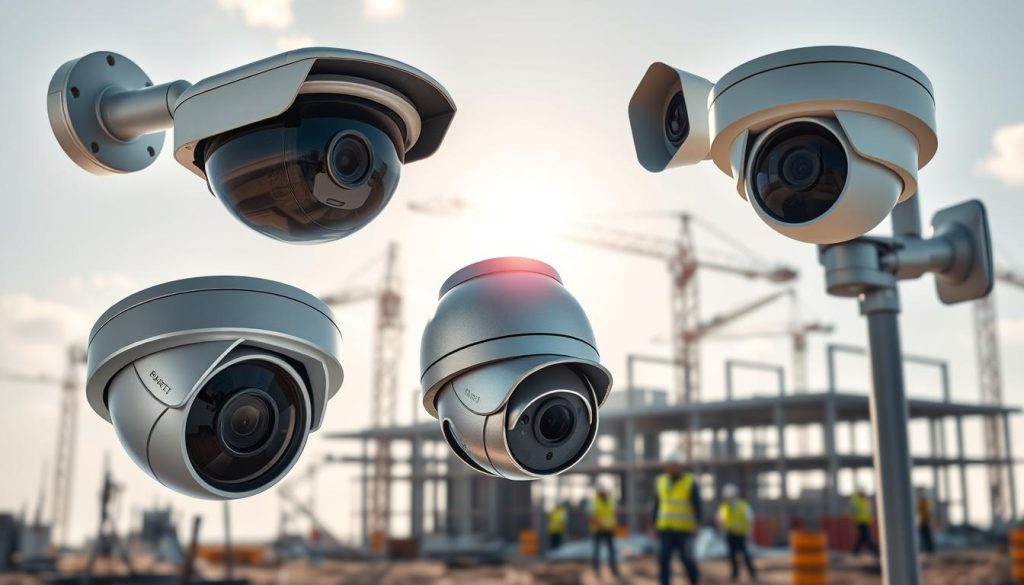
Bullet cameras deliver long-range, focused coverage. Their cylindrical design often includes built-in sunshades for clearer images in bright light.
These are perfect for guarding perimeter fences or watching distant entry points. Manufacturers like Pelco offer robust, vandal-resistant bullet models suited for harsh environments.
Turret cameras offer a middle ground with flexible placement. Their ball-and-socket joint allows manual adjustment of the viewing angle during installation.
This makes them a versatile choice for both indoor and outdoor mounting where the exact field of view needs fine-tuning.
PTZ (Pan-Tilt-Zoom) Cameras for Dynamic, Wide-Area Monitoring
When you need to cover a vast or changing area with fewer devices, PTZ units are the answer. Operators can control them remotely to pan horizontally, tilt vertically, and zoom in optically.
This dynamic capability allows one PTZ camera to survey a large yard, zoom in on a license plate, or follow a person moving across the location.
Advanced models can be programmed to run automated patrol patterns. They can also integrate with video analytics to track motion automatically.
For large, active projects, a combination of fixed and PTZ cameras creates a layered defense—constant coverage plus the ability to investigate incidents in detail.
This technology is invaluable for monitoring multiple high-risk areas without requiring a physical guard presence at each one.
Specialized Cameras: Thermal, Low-Light, and ANPR Systems
Some scenarios demand equipment with extraordinary capabilities. Specialized devices address specific, high-risk challenges.
Thermal imaging cameras detect heat signatures rather than visible light. They can spot an intruder in complete darkness, through light fog, or even behind sparse foliage.
This makes them perfect for protecting unlit perimeters after hours.
Low-light cameras are engineered for detailed imaging in challenging lighting. They use advanced sensors to produce clear, color video in near-darkness.
Pelco and other leaders offer models that excel in these conditions, ensuring reliable evidence capture day and night.
Automatic Number Plate Recognition (ANPR) systems are dedicated to managing vehicle access. They automatically read license plates, log entries, and can alert managers to unauthorized vehicles.
Integrating an ANPR system at your main gate automates access control and creates a digital log of all traffic.
Choosing the right mix from these categories allows you to build a security camera system that is both comprehensive and cost-effective.
Temporary vs. Permanent Surveillance Solutions: Choosing Your Fit
Selecting the optimal surveillance framework requires a clear match between project duration and protective technology. This decision directly impacts your budget, operational flexibility, and overall effectiveness.
A short-term renovation demands a different approach than a multi-year development. Understanding the core strengths of each solution type is the first step toward a cost-effective investment.
The right choice safeguards assets without overspending. It also ensures your security measures evolve alongside the project’s phases.
Mobile and Wireless Systems for Short-Term Projects
For projects with a defined end date or constantly changing layouts, mobile units are ideal. These include trailer-mounted, wireless, and solar-powered security camera systems.
Their primary advantage is rapid deployment. You can have a fully operational surveillance system in place within hours, not weeks. This agility is perfect for sudden security needs.
Scalability is another major benefit. You can easily add or relocate units as the work area expands or shifts. This ensures continuous coverage without costly rewiring.
Upfront costs are typically lower compared to permanent installations. There’s no need for extensive trenching or complex infrastructure. The financial barrier to robust construction security is significantly reduced.
Data confirms that mobile surveillance units are exceptionally effective, cutting crime rates by more than 90% at temporary locations.
This makes them a powerful deterrent even for fleeting projects. Modern units from providers like Pelco feature open-platform designs. They integrate seamlessly with existing management software for a unified view.
These temporary solutions offer high adaptability for dynamic job sites. They provide professional-grade monitoring where and when you need it most.
Fixed, Wired Systems for Long-Term Site Security
For developments spanning years or facilities requiring ongoing protection, a permanent installation is the wiser choice. Fixed, wired camera systems offer unmatched reliability and integration.
These systems provide structured installation with consistent, fixed features. Once positioned, they deliver unwavering oversight of designated high-risk zones. This consistency is crucial for evidence collection and compliance.
The advantages are clear. Wired connections offer superior stability and bandwidth for high-definition video streams. They are less susceptible to interference than wireless signals.
Better integration with other security infrastructure is a key benefit. Permanent surveillance can be hardwired into access control, alarms, and lighting systems. This creates a cohesive, automated defense network.
While the initial investment is higher, the long-term cost savings are substantial. You eliminate recurring rental fees and benefit from a system built to last the project’s entire lifespan.
For a professional and compliant construction site security setup, consider a professional construction CCTV installation. Experts can design a security camera system that meets both your protective and regulatory needs.
Permanent solutions are engineered for endurance. They are the foundation for reliable construction site surveillance and sustained safety over many years.
Your choice ultimately hinges on timeline and risk. Temporary technology offers flexibility and speed. Permanent infrastructure delivers depth and durability for long-haul operations.
Best Practices for Installing Cameras on a Construction Site
Proper installation transforms surveillance hardware into a formidable security asset. Following proven guidelines ensures your investment delivers maximum protective value and operational insight.
This process involves two critical phases. First, strategic positioning for optimal visibility and deterrence. Second, securing the technical backbone for reliable, uninterrupted operation.
Strategic Placement for Maximum Coverage and Deterrence
Thoughtful positioning is the foundation of effective construction site security. Your goal is to eliminate blind spots and create a visible presence that discourages misconduct.
Focus coverage on these critical zones:
- All access points: Main gates, secondary entrances, and perimeter breaches.
- High-value asset storage: Tool cribs, material yards, and equipment parking.
- High-risk work areas: Scaffolding zones, excavations, and crane operation spots.
Visibility is a powerful psychological tool. Clearly mounted units signal that activities are recorded.
Data confirms that visible CCTV cameras can reduce criminal activity by up to 65% on project locations.
Mounting height is crucial for clear views and tamper resistance. Install units approximately 9 feet high. This level provides a broad field of view while keeping them out of easy reach.
Angle the lens slightly downward. This improves facial recognition and minimizes sky glare that can wash out the video image.
For complex layouts, consider a professional security camera installation. Experts avoid common mistakes like obstructions and poor lighting. They ensure your system meets all technical and legal needs from day one.
Compliance with privacy laws is non-negotiable. In Singapore, the Personal Data Protection Act (PDPA) governs surveillance.
You must post clear signage at all monitored entrances. This informs workers and visitors that monitoring is active, fulfilling a key legal obligation.
Ensuring Power, Connectivity, and Cybersecurity
A camera system is only as good as its uptime. Securing continuous power and a stable data connection is essential, especially in remote or temporary areas.
Evaluate your power options based on location logistics:
- Wired AC power: Most reliable for permanent installations.
- Solar panels with battery backup: Ideal for off-grid sites without existing infrastructure.
- PoE (Power over Ethernet): Simplifies wiring by delivering both power and data through one cable.
Network connectivity dictates how you access live video feeds. For wired sites, Ethernet provides the fastest, most stable link.
Wireless solutions offer flexibility. Use industrial-grade Wi-Fi bridges for medium distances. For truly remote locations, 4G LTE cellular routers create a dedicated, always-on connection.
Always have a backup plan. Uninterruptible power supplies (UPS) guard against blackouts. Cellular failover routers automatically switch if the primary internet line fails.
Cybersecurity protects your surveillance system from digital threats. An unprotected network is a vulnerability.
Implement these essential practices:
- Change all default usernames and passwords immediately.
- Use encrypted connections (HTTPS, SSL/TLS) for accessing the security camera systems.
- Regularly update device firmware to patch known security flaws.
- Segment your network to isolate camera systems from core business data.
Choosing security cameras with built-in security features is wise. Brands like Pelco design products that are ONVIF-conformant and include robust cyber capabilities.
This layered approach—strategic placement plus resilient infrastructure—creates a construction security solution that is both a powerful deterrent and a reliable management tool.
Selecting the Right Security System for Your Project’s Needs
Your final step is to select a surveillance solution that aligns perfectly with your project’s unique demands and risks. Begin by assessing its scale, duration, and specific security needs. Match the technology and features from our roundup to these factors.
Consider cost carefully. A higher initial investment in quality equipment pays off. It leads to long-term savings from theft prevention and potential insurance discounts. This protects your budget and boosts overall project efficiency.
Consulting with security experts, like Pelco, is invaluable. They ensure proper system design, integration, and compliance with regulations like Singapore’s VSS. Their guidance future-proofs your investment.
The right construction security approach combines robust hardware with professional installation and ongoing maintenance. Take action today to secure your operations. Contact a specialist for personalized advice on implementing your ideal system.