
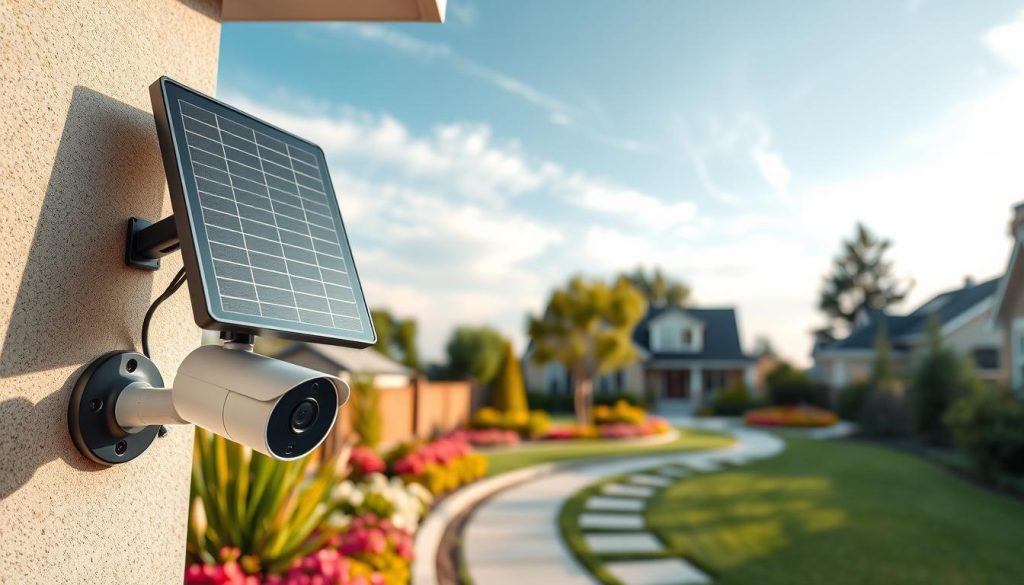
Keeping an eye on your property has never been easier. Modern outdoor monitoring devices use the sun’s energy to operate. This innovative approach removes the hassle of frequent battery swaps and messy electrical wires.
These eco-friendly options are gaining massive popularity. Advancements in photovoltaic technology make panels more efficient than ever. Homeowners are increasingly choosing sustainable solutions for their peace of mind.
This guide is designed to help you navigate the 2024 market. We focus on products that perform well in Singapore’s unique climate. You’ll find options that thrive in both bright sunlight and occasional heavy rain.
A reliable system includes a robust onboard battery. This provides essential backup during cloudy days or at night. Your surveillance remains continuous, no matter the weather.
Choosing the right unit requires looking at several factors. Consider the solar panel efficiency and how long the battery lasts. Video quality and smart home integration are also crucial for a complete setup.
We will cover top brands and their key features. Our review includes practical installation tips and important buying considerations. This information will help you make a confident and informed decision.
Our analysis is based on hands-on testing and research from trusted industry experts. We provide clear, factual information to cut through the marketing noise.
Using the sun’s power offers tangible benefits. You can save on energy bills over time. It’s also a step toward reducing your household’s carbon footprint.
We’ll start by exploring the core advantages of this technology. Then, we’ll dive into detailed reviews and final recommendations. Let’s begin your journey to smarter, greener property protection.
Key Takeaways
- Solar-powered options provide a wire-free, sustainable solution for outdoor surveillance.
- An efficient solar panel paired with a strong battery ensures operation day and night.
- Key selection factors include video resolution, weather resistance, and smart features.
- These systems can lead to long-term cost savings on electricity.
- Proper placement of the panel for maximum sun exposure is critical for performance.
- Modern units often include cloud or local storage options for recorded footage.
- This technology is ideal for locations where running electrical wires is difficult or expensive.
Introduction to Solar-Powered Home Security
Forget about climbing ladders to swap out dead batteries or hiring an electrician to run cables through your walls. A significant shift is happening in how we protect our property. Homeowners are now choosing sustainable and convenient tech for their peace of mind.
This move isn’t just about being green. It’s about solving real headaches. Traditional setups often fail when you need them most or create a messy installation process.
Why Solar Power is a Game-Changer for Outdoor Cameras
The core advantage is simplicity. By using a solar panel, you eliminate frequent battery changes and complex wiring. This creates a truly wire-free setup that you can place almost anywhere.
Modern photovoltaic cells are a marvel. They are smaller and far more efficient than older models. Even with limited direct sunlight, these panels can harvest enough energy to keep a unit running.
Reliability is the true benefit. The panel provides a constant trickle-charge to the device’s battery. This built-in battery then acts as a backup during cloudy days or at night. Your surveillance has no downtime.
In a place like Singapore, this technology shines. Ample year-round sun makes these units particularly effective. You do need to consider seasonal monsoon rains and potential shading from structures. Proper placement is key.
The Goal of This Roundup
Our mission is clear. We’ve curated a list of top-performing solar-powered security cameras for 2024. Our selections are based on rigorous evaluation and real-world testing, focusing on suitability for local homes.
We aim to help you navigate a crowded market. We’ll compare leading brands on crucial factors. These include video quality, storage options, smart features, and solar panel performance.
You’ll get actionable advice to choose a device that fits your specific needs. We consider your budget, security requirements, and property layout. Our goal is a perfect match for your situation.
For each model we review, expect in-depth information. We cover the pros and cons, detailed specifications, and practical installation tips. This gives you everything needed for a confident decision.
Key Benefits of Solar-Powered Security Cameras
Transforming sunlight into constant vigilance offers a practical upgrade to property protection. These innovative systems move beyond simple convenience. They deliver tangible advantages that affect your daily life and long-term planning.
Understanding these perks helps you see the true value of your investment. Let’s explore the core reasons homeowners are making the switch.
Eliminate Frequent Battery Changes and Downtime
The primary advantage is automated charging. A photovoltaic panel continuously feeds energy into the device’s internal battery. This drastically cuts down on manual maintenance.
You no longer need to schedule risky climbs on ladders. There’s no more anxiety about a unit going offline at a crucial moment. For a device mounted high on a wall or tree, this is a game-changer.
Manufacturers often use a stand-alone solar panel accessory. When attached, it can extend a single charge for months. Battery-only models might require a recharge every few weeks by comparison.
This means your surveillance remains active without your constant input. It provides true peace of mind for monitoring remote sheds, gates, or holiday homes.
Flexible, Wire-Free Installation Anywhere
Without the need for an electrical outlet, placement options become almost limitless. You can position a unit wherever the view is optimal, not just where a cable can reach.
This enables maximum coverage for your entire property. Think about garden areas, perimeter fences, or detached garages. Running wires to these spots is often difficult or very expensive.
The setup process itself is simpler and cleaner. There are no holes to drill for cables or unsightly wires to hide. You can often complete the installation yourself in under an hour.
Eco-Friendly and Cost-Effective Operation
Using renewable sunlight directly reduces your reliance on the electrical grid. It lowers the carbon footprint of your home monitoring system. This is a meaningful step toward a more sustainable household.
While the initial price may be higher, the long-term savings are clear. You eliminate ongoing electricity costs for powering the device. You also avoid the recurring expense of replacing disposable batteries.
Over several years, these savings can offset the upfront investment. It’s a financially smart choice that also benefits the environment.
Reliable Power with Battery Backup
A robust onboard battery is the heart of a reliable setup. It stores energy harvested during the day for use after dark. This ensures continuous operation through the night.
During extended cloudy periods or monsoon rains, this backup is essential. The unit’s internal battery takes over seamlessly. Your monitoring doesn’t skip a beat, regardless of the weather.
This feature also provides crucial resilience during a power outage. While other systems may fail, your solar-charged unit keeps working independently. In Singapore’s climate, with high sun exposure most of the year, the panel keeps the battery topped up efficiently.
The combination of solar charging and battery storage creates an incredibly dependable solution. It guarantees that your property is always watched.
How We Selected the Top Solar Security Cameras
Choosing the right equipment requires a methodical approach grounded in real-world testing. Our team didn’t rely on manufacturer claims alone. We combined hands-on evaluation with data from trusted industry sources.
Publications like SafeWise provided additional expert perspectives. This multi-source strategy ensures our recommendations are balanced and credible. You get advice based on actual performance, not just specs.
Our Evaluation Criteria: From Power to Performance
We established a clear set of benchmarks for each unit. The goal was to identify devices that deliver reliable, continuous operation. Every model was assessed across several critical categories.
Solar panel efficiency was a primary focus. We looked at power output in watts and charging speed. The length of the connecting cord was also noted for flexible placement.
A robust battery is the heart of any wire-free system. We examined both built-in and removable types. Longevity during cloudy periods was a key metric.
Video quality directly impacts your ability to see details. We evaluated resolution, field of view, and night vision capabilities. Color imagery after dark received extra attention.
Storage options influence cost and convenience. Units with local video storage earned higher marks. This helps avoid ongoing cloud subscription fees.
Smart features enhance usability. We tested motion detection accuracy and AI recognition. The companion app‘s interface and reliability were also reviewed.
Finally, we considered the overall setup process. Installation should be straightforward for most homeowners. Value for money balanced upfront cost with long-term expenses.
Considering the Singaporean Context: Climate and Sun Exposure
Singapore’s environment presents unique challenges for outdoor tech. High humidity and frequent rain are constant factors. We prioritized devices with strong weatherproofing, indicated by high IP ratings.
The equatorial location guarantees ample sunlight year-round. However, shading from buildings or trees can reduce exposure. We favored panels with high efficiency to compensate.
These panels must perform well in both intense sun and overcast conditions. A unit that charges quickly during bright daylight hours is ideal. This ensures the battery has enough energy for the night.
Smart home compatibility was another consideration. Integration with ecosystems like Alexa or Google Home is valuable here. It allows for a more connected property monitoring system.
Our final selections are devices that thrive in this specific climate. They offer minimal maintenance and maximum reliability. This gives you peace of mind through every season.
The Best Solar Powered Security Camera Models for 2024
This year’s selection of photovoltaic monitoring devices offers solutions for every homeowner’s priority. We combined findings from multiple expert tests and reviews. Our goal is to present a clear, actionable list for 2024.
You will find a diverse range catering to different needs and budgets. Whether you want top value, seamless smart home links, or pro-grade imagery, an option exists.
An Overview of Our Top Picks
Our curated list includes both all-in-one units and systems where the panel is a separate accessory. This gives you flexibility for your property layout and sun exposure.
After testing, the Reolink Argus 3 Pro stands out for overall value. It balances affordability, an included solar panel, and reliable performance. This makes it a strong contender for many households.
Brands like Ring, Arlo, and Eufy provide extensive ecosystems. They offer multiple solar panel options for their devices. Other brands, such as ADT and SimpliSafe, include photovoltaic power within broader professional monitoring plans.
Here is a high-level look at key models from our synthesis:
- Reolink Argus 3 Pro: Excellent value. Includes panel, good video resolution, and local storage.
- Arlo Pro Models: Great for DIY fans. Easy installation and removable battery packs.
- EufyCam 3: Features built-in panels for a clean setup. No monthly subscription fees.
- Ring Outdoor Cam Plus Solar: Integrates deeply with the Ring ecosystem. User-friendly app.
- Wyze Cam Battery Pro: A budget-friendly choice. Requires separate panel purchase.
- ADT & SimpliSafe: Best for integrated security systems with professional monitoring.
As you review these options, consider your specific priorities. Is upfront cost, video quality, storage type, or smart features most important? Your answer will guide your choice.
The following sections provide detailed reviews of each recommended model. We cover ADT, Lorex, Ring, Google Nest, Arlo, SimpliSafe, Reolink, Eufy, and Wyze.
ADT: Best Integrated Security System with Solar Options
For homeowners seeking a comprehensive, professionally monitored solution, ADT represents a top-tier choice. This provider focuses on a complete home security ecosystem rather than standalone gadgets.
Their strength lies in seamless integration and human-backed response. While ADT’s own website may not list photovoltaic accessories, their system works perfectly with compatible third-party panels.
Pros of Choosing ADT’s Ecosystem
The standout feature is 24/7 professional monitoring with video verification. When an alarm triggers, a live agent views the feed to confirm a threat. This drastically cuts down false alarms and ensures a swift emergency response.
Smart features are deeply integrated, especially when using Google Nest devices. Facial recognition alerts allow for personalized notifications. You can also automate routines through the Google Assistant.
ADT often includes high-quality Nest cameras in their package deals. This provides a cost-effective entry point into a robust monitored system. The outdoor options are built to withstand harsh weather.
Cons and Considerations
The primary drawback is the commitment required. Professionally installed systems typically need a long-term contract. Monthly monitoring fees are also higher than most DIY alternatives.
Your selection of camera models directly from ADT is limited. However, compatibility with the broader Nest lineup expands your choices. You must be comfortable with the ongoing subscription model for full cloud storage and advanced features.
Key Specifications and Compatibility
Devices like the Nest Cam used with ADT offer strong performance. You get 1080p resolution and a wide 135-degree field of view. They support both battery and wired power for flexible setup.
Storage includes limited local history, but full access requires a cloud plan. The app provides clear live feeds and smart detection logs. Night vision ensures clear imagery after dark.
For sustainable operation, a third-party solar panel like the Wasserstein model is compatible. It trickle-charges the camera‘s battery using sunlight. This extends operational hours significantly.
Note: The Wasserstein panel has a stated operational limit in freezing temperatures. This is rarely a concern for use in Singapore’s climate.
This system is ideal for those who value a hands-off, professionally managed approach. It suits property owners wanting maximum security with the option to add sustainable power for extended coverage. Proper panel placement for good sun exposure is still key for optimal energy harvest.
Lorex: Best for High Resolution and Professional-Grade Options
When crystal-clear imagery is your top priority, one brand consistently delivers professional-grade results. Lorex focuses on providing exceptional video quality and durable construction for demanding environments.
Their products cater to users who need to see fine details, like license plates or facial features. This makes them a standout choice for property monitoring where identification is crucial.
Pros: Unmatched Video Quality and Durability
Lorex units are renowned for their stunning resolution. Many models offer up to 4K ultra-high definition. This clarity ensures you capture every detail, both during the day and after dark.
Advanced night vision technology is a key strength. Some devices feature long-range color infrared capabilities. This provides usable footage even in very low-light conditions.
Build quality is another major advantage. These devices are constructed to withstand harsh weather and physical tampering. They offer flexible power options, including wired, battery, or Power over Ethernet (PoE).
A significant benefit is free local storage. You can record footage directly to an on-site microSD card or network video recorder. This avoids monthly cloud subscription fees and keeps your data private.
Cons: Overwhelming Choices and Installation
The primary drawback is the extensive product catalog. Lorex offers a vast array of models, features, and system configurations. This can be overwhelming for beginners trying to choose the right camera.
Installation complexity varies. Wire-free models with a battery are relatively simple to setup. However, wired or PoE units often require more technical skill and tools for proper mounting and cable routing.
These devices are designed for self-monitoring. Lorex does not offer professional monitoring services for their security cameras. You are responsible for watching alerts and reviewing footage through their app.
Some users report occasional false motion detection alarms. Fine-tuning the sensitivity settings in the app can help mitigate this issue.
Key Specifications and Solar Panel Details
Lorex devices support multiple connectivity methods. You can choose Wi-Fi, Ethernet, or PoE depending on the model. This flexibility helps adapt to different home network setups.
Key technical specs include:
- Field of view: Up to 180 degrees for wide-area coverage.
- Video resolution: Ranges from 1080p to 4K UHD.
- Storage: Free local recording; optional paid cloud plans available.
- Smart integration: Works with Alexa and Google Assistant for voice control.
For sustainable operation, Lorex offers a dedicated weatherproof solar panel accessory. Priced at $79.99, it is compatible with specific wire-free series like the LWB4850 and LWB6850.
This panel is built to perform in extreme temperatures, from -22°F to 122°F. It continuously harvests sunlight to charge the camera‘s internal battery.
The panel’s robust design and efficient energy conversion make it well-suited for Singapore’s climate. Consistent sun exposure ensures the battery remains charged for round-the-clock use.
Proper placement is still essential. Mount the solar panel where it receives direct sun for several hours each day. This guarantees optimal charging and eliminates downtime.
Lorex is an ideal choice for tech-savvy homeowners in Singapore. It suits those who prioritize top-tier video quality and prefer the cost-saving, private nature of local storage. Pairing a compatible model with their solar panel creates a reliable, high-performance monitoring solution.
Ring: Best for Ecosystem and DIY Solar Equipment
For do-it-yourself enthusiasts, one name stands out in the home security market. Ring has built a reputation for creating an extensive, interconnected suite of devices. Their ecosystem includes video doorbells, indoor and outdoor monitoring units, and complete alarm systems.
All these products work seamlessly together through a single, intuitive application. This approach simplifies managing your entire property’s defense. A major advantage is the compatibility with photovoltaic accessories, which can keep devices running for months.
Pros: Vast Product Range and User-Friendly App
The selection of devices is impressive. You can find a model for nearly every need and location. The companion software is designed for clarity, making live viewing and reviewing alerts straightforward.
Installation is typically a simple, tool-free process. Most units are designed for both indoor and outdoor use. They offer versatile power sources, including rechargeable battery packs, wired connections, or direct solar charging.
Video quality ranges from solid 1080p HD to sharp 4K resolution on newer outdoor models. Helpful features include built-in, motion-activated spotlights and enhanced two-way audio. This allows for clear communication with anyone at your door or on your property.
Cons: Subscription Model and Privacy History
To unlock the system’s full potential, a monthly plan is required. The Ring Protect Plan is needed for video recording history and advanced motion detection zones. Without it, you only get live viewing and basic alerts.
The company has faced scrutiny over data handling practices in the past. In response, they have added features like end-to-end encryption for increased user privacy. Premium models also carry a higher upfront cost, often exceeding $250.
It’s worth noting that 4K resolution is not currently available in their indoor camera lineup. This may be a consideration for users seeking ultra-high definition throughout their home.
Key Specifications: Standard vs. Super Solar Panel
Ring offers two primary photovoltaic accessories to eliminate manual recharging. The Standard Solar Panel costs $49.99 and requires about three to four hours of direct sunlight daily. The Super Solar Panel, at $99.99, is far more efficient.
This high-performance panel needs just one to two hours of partial sun exposure. It’s an ideal solution for shadier spots around your property. Both options feature adjustable mounting arms for optimal alignment with the sun.
These accessories are compatible with Stick Up Cams (3rd and 4th generation) and Spotlight Cams. They connect via a USB-C port for reliable energy transfer.
Key technical specs for the cameras include Wi-Fi and Ethernet connectivity. The field of view can reach up to 140 degrees. Storage is primarily through the cloud via a subscription, and integration with Alexa and Google Home enables robust smart home routines.
Ring is an excellent choice for homeowners in Singapore who desire an expandable, DIY security system. Its flexible solar charging options work well in the local climate, provided the panel gets sufficient daily exposure. The convenience of a unified app for all devices is a significant advantage.
Google Nest with Wasserstein Panel: Best Smart Home Integration
For those deeply invested in a connected home, seamless integration is non-negotiable. Google Nest devices are premium choices known for sleek design and advanced artificial intelligence. They work perfectly within the Google ecosystem for a unified experience.
These units focus on intelligent monitoring rather than just recording. The deep link with Google Assistant and the Home app provides effortless control. You can manage your entire property’s defense with simple voice commands.
Pros: AI Features and Seamless Google Home Use
The AI detection capabilities are a major strength. These cameras can distinguish between people, animals, and vehicles. This smart filtering drastically cuts down on false alerts from passing leaves or shadows.
Facial recognition takes it a step further for familiar faces. You can create activity zones to focus on specific areas of your view. Notifications become meaningful and actionable.
Setup and installation are designed to be simple for anyone. Both battery-powered and wired models offer flexibility. The app guides you through each step clearly.
Long battery life is another key advantage on battery models. When paired correctly with a solar panel, you may never need to manually recharge. This creates a truly hands-off security system.
Cons: Premium Pricing and Cold Weather Limits
The main drawback is the cost. Google Nest cameras command a premium price, starting around $99.99. You are paying for the brand, design, and sophisticated AI.
They do not offer a 4K resolution model. Video quality tops out at 2K, which is still very good. Full color night vision is only available on the floodlight model.
A third-party solar panel is required for sustainable power. Nest does not manufacture its own. The compatible Wasserstein panel has an operational limit in freezing temperatures.
This cold weather limitation is rarely a concern in Singapore’s tropical climate. Consistent sun exposure throughout the year ensures reliable charging.
Key Specifications and Setup Notes
Google Nest devices offer strong technical specs. Resolution is typically 1080p HD or 2K. The field of view can reach up to 130 degrees for wide coverage.
Storage is handled through the cloud via an optional Nest Aware subscription. This plan unlocks video history and advanced detection logs. Local storage options are not available.
For sustainable operation, Wasserstein is the go-to third-party provider. They make two certified solar panels: a Standard (2.5W) and a Premium (3.5W) model. Both trickle-charge the camera‘s internal battery.
The panel requires direct sunlight for several hours each day. Its 360-degree wall mount allows for optimal alignment. This continuous energy harvest eliminates manual recharging.
These cameras are compatible with both Alexa and Google Home. This allows for robust smart home routines and automations. You can create a truly connected home security environment.
This combination is ideal for homeowners in Singapore who value intelligent automation. If you already use Google services, the integration is seamless. The AI features provide peace of mind by showing you only what matters.
Arlo: Best for DIY Enthusiasts and Camera Selection
Do-it-yourself projects gain a significant advantage with a brand that prioritizes user-friendly setup and flexible hardware. Arlo has become a favorite among handy homeowners for its straightforward approach. The company offers a wide selection of devices, from essential models to professional-grade units.
This flexibility allows you to build a monitoring system that fits your exact needs. Whether you need basic coverage or advanced features, there’s likely an Arlo model for you. The core appeal lies in giving you control over the entire process.
Pros: Easy Installation and Removable Batteries
Installation is designed to be tool-free and intuitive. Most users can have their unit mounted and connected in under thirty minutes. The magnetic mounts and clear app guidance make the process smooth.
A major benefit is the removable battery design. Instead of waiting for the entire device to charge, you can swap in a fresh pack. This keeps your surveillance active while the other battery recharges indoors.
Video quality reaches up to 4K resolution on premium models. This clarity helps you identify important details on your property. Advanced AI detection distinguishes between people, packages, and animals.
The companion app provides a clean interface for live feeds and review. You can create customizable activity zones to focus on specific areas. This reduces unnecessary alerts from passing traffic or moving branches.
Cons: High Costs and Subscription Pressure
The main drawback is the premium pricing structure. Arlo devices and accessories carry higher price tags than many competitors. You’re paying for the brand reputation and advanced features.
To unlock the system’s full potential, an Arlo Secure subscription is required. This plan provides access to advanced AI, cloud recording, and activity zones. Without it, you’re limited to basic live viewing.
Local storage is technically an option, but it requires an expensive base station. For most users, the ongoing cloud subscription becomes the more practical choice. Some users also report that the mounting hardware feels less robust than expected.
Key Specifications and Solar Panel Compatibility
Arlo units support multiple connectivity methods. You can use Wi-Fi, Ethernet, or Power over Ethernet (PoE) depending on the model. The field of view can reach an impressive 180 degrees for wide coverage.
For sustainable operation, Arlo offers a dedicated photovoltaic accessory. This solar panel charger costs around $59.99 and works with Pro, Pro 2, and Go 1 models. It features a magnetic cable for easy connection to the device.
The panel’s cord is relatively short at just eight feet. This requires careful planning during placement to ensure it reaches both the unit and a spot with good sun exposure.
The panel needs a few hours of direct sunlight each day to maintain the battery. In Singapore’s climate, with consistent sun throughout the year, this is easily achievable. Proper alignment ensures optimal energy harvest.
Key technical specifications include:
- Power options: Wired, battery, or PoE
- Video resolution: Up to 4K ultra-high definition
- Night vision: Color and infrared capabilities
- Smart integration: Works with Alexa and Google Home
- Storage: Cloud plans or local via base station
Arlo is suitable for homeowners in Singapore who want high-performance DIY monitoring. The excellent video quality and flexible solar power are strong advantages. However, you should be prepared for the ongoing costs of the subscription service.
For those considering a more comprehensive system, exploring a complete solar wireless security camera system might provide additional integration benefits. The removable battery design extends the device’s lifespan compared to built-in alternatives, offering long-term value.
SimpliSafe: Easiest Solar-Powered Setup for Home Systems
Homeowners who value a straightforward, professionally backed approach will find a compelling solution with SimpliSafe. This brand specializes in user-friendly, do-it-yourself monitoring that removes complexity.
The entire system is designed for a simple setup and offers optional expert oversight. You are not locked into a long-term contract, which provides significant flexibility.
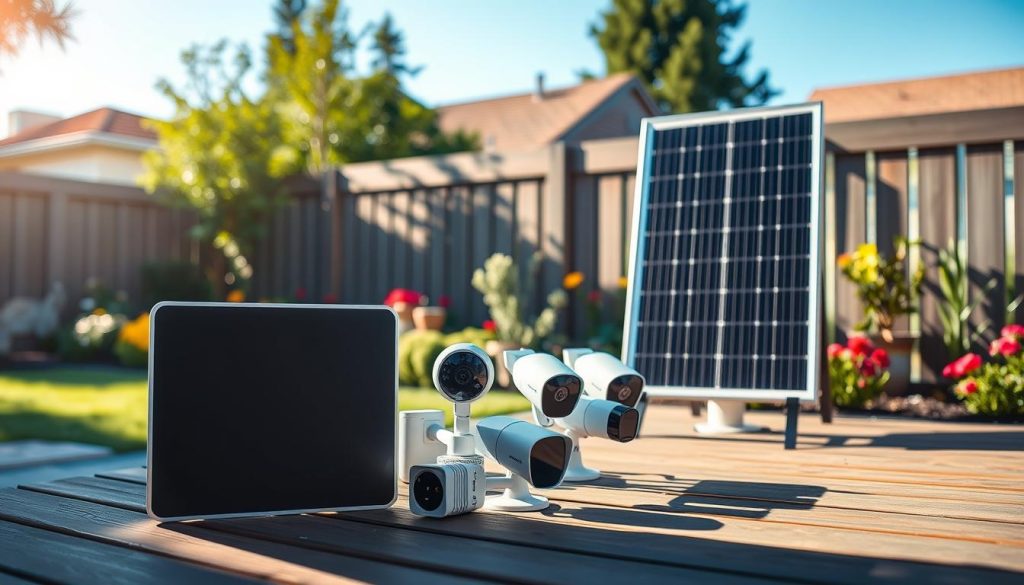
Pros: Simple Installation and Professional Monitoring
The installation process is incredibly easy. Most users can get their home security running in under an hour without special tools.
Smart motion detection with activity zones helps minimize false alarms. Unique features like Intruder Intervention provide verbal warnings, and Active Guard Outdoor Protection enhances perimeter monitoring.
Plans are flexible and operate on a month-to-month basis. These include professional monitoring and cellular backup for reliability during outages.
Cons: Limited Camera Range and Brand Lock-In
SimpliSafe offers a limited selection of devices. You primarily have their Outdoor Camera as your main video option.
The video resolution maxes out at 1536p, which is not 4K. All storage is cloud-only, requiring a paid subscription to access recordings.
The ecosystem is somewhat closed. You are encouraged to use SimpliSafe-branded devices for full compatibility, which limits your hardware options.
Key Specifications
For sustainable operation, SimpliSafe sells a dedicated photovoltaic accessory. This solar panel costs $79.99 and is designed for their Outdoor Camera.
The panel keeps the wireless unit charged with just a few hours of direct sunlight daily. Singapore’s consistent sun exposure makes this an ideal pairing for continuous energy.
The Outdoor Camera itself is battery-powered for a wire-free setup. It connects via Wi-Fi and offers a 140-degree field of view.
Key technical details include:
- Power source: Rechargeable battery with solar charging panel support
- Video quality: Up to 1536p resolution
- Night vision: Standard infrared for clear night imagery
- Smart home integration: Works with Alexa and Google Home for voice commands
- App control: Manage the entire system through a single mobile app
This system is excellent for homeowners in Singapore wanting reliable, monitored protection. Adding the solar panel extends coverage without complex wiring. The month-to-month plan flexibility is a major advantage for those avoiding long commitments.
Reolink Argus 3 Pro: Best Overall Value and Performance
The Reolink Argus 3 Pro emerges as a standout model for homeowners prioritizing value. It combines an affordable price with a comprehensive package that includes a photovoltaic panel in the box.
One review source notes, “We like the Reolink Argus 3 Pro for its simple DIY setup, cheap price tag, and easy-to-use app.” This sums up its appeal for a hassle-free, effective monitoring solution.
Pros: Affordable Bundle and Local Storage
A major advantage is the included solar panel. This 3.2-watt accessory comes with a long 13-foot cable. The length allows for flexible placement to catch optimal sun exposure.
You get support for both local storage on a microSD card and optional cloud backups. This dual approach gives you control over your data and potential subscription costs.
The companion app provides highly customizable settings. You can adjust motion sensitivity and create recording schedules with ease.
Video quality is excellent, featuring 2K resolution. It also includes color night vision for clearer footage after dark.
Cons: Built-in Battery and Narrow Field of View
The internal battery is not removable. When the battery eventually degrades, the entire camera may need replacement.
Its field of view is narrower than some competing models. This means it covers a smaller area in a single frame.
It lacks advanced motion zone customization found in higher-end units. Detection alerts are less precise as a result.
Key Specifications
Here are the vital details for this device:
- Solar Panel: 3.2W output with a 13-foot cord
- Battery: 6,000 mAh capacity, lasts up to 6 months on standby
- Video Resolution: 2K for sharp imagery
- Night Vision: Full-color capability
- Storage Options: Local microSD card; free basic cloud for one device; paid plans start at $3.49/month
- Installation: Simple DIY setup, weatherproof design
Including the panel in the bundle is a significant cost-saving advantage. Many brands sell this accessory separately.
This model is ideal for budget-conscious homeowners in Singapore. It suits those who want a reliable, wire-free system with local storage to avoid fees.
Its simple installation and robust build make it suitable for various outdoor locations on your property. For its balance of price, performance, and efficient energy harvesting, it is a strong contender for top overall pick.
Eufy Security: Best with Built-In Solar Panels
A sleek, all-in-one design defines the next brand in our review, merging photovoltaic technology directly into the unit’s body. Eufy Security offers devices with integrated solar panels, creating a clean, wire-free appearance.
This approach simplifies the entire setup process. You don’t need to manage a separate panel and its connecting cable.
Pros: Clean Installation and No Monthly Fees
The integrated solar panel is highly efficient. It harvests sunlight effectively to keep the internal battery charged.
Eufy systems emphasize local storage with a dedicated home base. This hub supports up to 16TB via a hard drive, completely avoiding monthly cloud subscription fees.
Video quality is top-tier, with 4K resolution available. You also get full color night vision for clear imagery after dark.
Advanced AI features like human detection and facial recognition help reduce false motion alerts. The companion app provides easy access to your footage and settings.
Cons: High Upfront Cost and Placement Limitations
The initial investment is significant, especially for multi-device kits. A four-camera system can cost several hundred dollars.
Built-in panels limit placement to areas with direct sun exposure. A north-facing wall in Singapore might not receive enough energy throughout the day.
The battery is non-removable. When its lifespan ends, the entire unit may need replacement.
For more flexibility, Eufy sells a separate solar panel accessory. It has a 13-foot cable for better positioning on your property.
Key Specifications
Here are the vital details for Eufy’s flagship models:
- Battery Life: Large 13,400 mAh battery claims up to 12 months of use.
- Video: 4K resolution with a wide field of view.
- Storage: Home base provides local storage; optional cloud options exist.
- Smart Features: Works with Alexa and Google Assistant for smart home control.
- Charging: Built-in solar panels or compatible separate accessory.
This brand is perfect for homeowners in Singapore who prioritize a neat installation. It suits those wanting to avoid ongoing costs and have the budget for high-quality, locally stored footage.
The built-in panels are highly effective in the local sunny climate. Careful placement is crucial to ensure they receive adequate sunlight for several hours daily. For more on sustainable tech, explore our guide to eco-friendly security options.
Wyze Cam Battery Pro: Best Budget-Friendly Solar Option
Wyze makes adopting solar-charged technology remarkably easy on your wallet. This model is the clear choice for cost-conscious homeowners. It provides a functional entry point into sustainable property monitoring.
One review source notes, “Wyze Battery Cam Pro… slides into our budget pick.” This highlights its role as an accessible option. You get capable features without a significant initial investment.
Pros: Extremely Low Cost and Good Cloud Storage
The upfront price of the unit itself is very low. This makes it an attractive first purchase. The accompanying photovoltaic accessory is also the most affordable on the market.
Wyze’s solar panel costs around $28. This low price removes a major barrier to sustainable operation. Adding it to your setup is a smart, economical move.
Storage options are another strong point. Wyze offers a unique “pay-what-you-want” free cloud plan. For full features, the Cam Plus subscription is only $2 per month.
The device delivers solid video performance. You get 2K resolution and full-color night vision. An integrated spotlight and siren add useful deterrence capabilities.
A removable battery design adds convenience. You can swap packs to keep the unit running. This is helpful if the panel isn’t installed yet.
Cons: Short Battery Life and Separate Panel Purchase
The internal battery life is relatively short. Without the solar panel, you may need to recharge it every few weeks. This increases maintenance compared to other models.
The photovoltaic accessory is sold separately. This is an extra step and cost during your initial setup. You must remember to buy it for optimal performance.
Build quality may not match more premium brands. The materials can feel less robust. This is a trade-off for the lower price point.
In practice, the claimed six-month battery life is often shorter. Frequent motion events and live viewing drain power faster. The solar panel is highly recommended to counter this.
Key Specifications
Here are the vital technical details for this budget-friendly system:
- Battery: 5,200 mAh capacity, removable design
- Solar Panel: 2.5W output, sold separately
- Video: 2K resolution with color night vision
- Features: Integrated spotlight and siren
- Storage: Free basic cloud or affordable Cam Plus plan
- Smart Home: Works with Alexa and Google Assistant
The panel requires a few hours of direct sunlight daily. In Singapore’s sunny climate, this is easily achieved with proper placement. It continuously harvests energy to keep the battery topped up.
This model is suitable for monitoring smaller areas or as a temporary solution. Homeowners on a tight budget will appreciate its low entry cost. The affordable solar panel maximizes uptime and reduces manual charging.
For reliable operation, pairing the camera with its panel is almost essential. This combination creates a practical, wire-free monitoring system. It proves that effective property defense doesn’t have to be expensive.
Essential Features to Consider Before You Buy
Your final choice hinges on understanding a handful of critical technical specifications. A smart purchase balances performance with practical needs for your specific location.
Look beyond the brand name and focus on the core attributes that ensure reliable operation. This guide walks you through the key points to compare.
Camera Resolution and Night Vision Capability
Video resolution determines how clear the footage will be. Higher numbers like 2K or 4K provide sharper details for identifying faces or license plates.
Remember that higher resolution files consume more storage space and battery power. Choose a level that meets your identification needs without excess.
Night vision is equally important for round-the-clock monitoring. Standard infrared provides black-and-white imagery, which is functional.
For better detail after dark, look for full-color night vision. This feature often uses a built-in spotlight to illuminate the scene. It delivers more usable video during the night.
Storage Options: Cloud vs. Local and Subscription Costs
How your footage is saved impacts both cost and privacy. You typically have two main options.
Local storage uses a microSD card or a home base station hard drive. This method keeps your data on your property and avoids monthly fees. It’s a great choice for budget-conscious users.
Cloud storage uploads recordings to a remote server. This provides secure backup and easy access from anywhere. Most brands require a paid subscription for full access to cloud history.
Consider the long-term costs of a subscription versus the upfront price of a device with ample local storage. Your preference for privacy or convenience will guide this decision.
Smart Home Compatibility and App Quality
Integration with your existing tech ecosystem adds significant convenience. Check if the device works with platforms like Alexa, Google Assistant, or Apple HomeKit.
This smart home compatibility allows for voice commands and automated routines. You can create a more connected and responsive home security system.
The companion app is your primary control center. A high-quality app offers reliable live view, customizable alerts, and intuitive settings menus.
Test the app‘s notification speed and review features. Smooth performance here is crucial for daily use and peace of mind.
Solar Panel Efficiency and Cable Length
The heart of a sustainable solar-powered security setup is the photovoltaic panel. Its efficiency, measured in watts, dictates how quickly it charges the battery.
A higher-wattage solar panel can harvest more energy in a shorter time. This is vital for locations with partial sun exposure.
Placement is everything. The accessory needs several hours of direct sunlight during peak daylight. An adjustable mount helps you angle it perfectly.
Don’t overlook the connecting cord’s length. A longer cable, often 10 to 15 feet, provides immense flexibility. You can mount the camera in an optimal spot while placing the panel where the sun shines brightest.
Battery Type: Removable vs. Built-In
The battery design affects long-term maintenance and device lifespan. There are two common approaches.
Removable batteries allow you to swap in a fresh pack while the other recharges. This keeps your surveillance active with zero downtime. It also extends the overall life of your security camera.
Units with a built-in battery offer a sleeker, more integrated design. The trade-off comes later when the battery capacity naturally degrades. At that point, the entire unit may need replacement.
Your choice depends on your willingness for occasional maintenance versus a potentially shorter product lifecycle.
Other factors also deserve a quick check. A wide field of view covers more area. Accurate motion detection reduces false alerts.
For Singapore’s climate, prioritize a high weatherproof rating (IP65 or higher) for humidity and rain. Also, ensure the solar panels are rated for intense, continuous sun exposure without overheating.
Privacy features like end-to-end encryption for your video feeds add an extra layer of security. Evaluating these elements ensures you select a robust and reliable monitoring solution.
Installation and Maintenance Tips for Optimal Performance
Achieving consistent performance from your equipment depends on two key factors: placement and upkeep. A well-installed unit delivers reliable surveillance and extends its operational life. These practical steps help you get the most from your investment.
Following these guidelines ensures your monitoring remains active through various conditions. It also minimizes the need for manual intervention. Let’s explore how to set up for success.
Finding the Perfect Spot: Sun Exposure in Singapore
Your photovoltaic accessory needs ample sunlight to function. Positioning is the most critical step in the entire installation process. You must find a location with minimal shading from trees or nearby structures.
In the Northern Hemisphere, aim for a south-facing position. This orientation receives the most direct sunlight throughout the day. The goal is at least six hours of peak exposure, typically between 10 am and 4 pm.
“Keeping your solar-powered security camera running requires direct sunlight daily during peak hours… Place your solar panel in a south-facing spot that sees full sunlight for at least six hours daily.”
The connecting cord’s length offers valuable flexibility. Use it to separate the panel from the device itself. Mount the camera where the view is best for your property. Then, place the solar panel where the sun shines brightest.
During Singapore’s monsoon season, sunlight may be reduced. Choose a spot that still catches rays during brief sunny breaks. This helps maintain the battery charge during cloudy periods.
Weatherproofing and Protecting Your Investment
Outdoor electronics face constant exposure to the elements. Verify the weatherproof ratings for both your device and its panel. Look for an IP65 or IP66 rating, indicating strong resistance to dust and water jets.
Even with a high IP rating, consider adding a slight overhang above the lens. This simple shield protects from direct rain and reduces glare. It also helps keep the lens cleaner for longer.
Routine maintenance is straightforward but essential. Periodically wipe the solar panel surface clean of dust, pollen, or bird droppings. A clean surface maximizes energy harvesting efficiency.
After extreme weather, check all mounting hardware for tightness. Vibrations from wind or storms can loosen screws over time. A quick visual inspection ensures everything remains securely in place.
Ensure the unit has adequate ventilation. In Singapore’s intense sun, proper airflow prevents overheating. Avoid mounting it flush against a wall with no air gap.
Maximizing Battery Life Through Smart Settings
The onboard battery is your system’s lifeline. Smart configuration within the companion app can dramatically extend its duration. Adjusting settings reduces unnecessary power drain.
Start by fine-tuning motion detection sensitivity. High sensitivity triggers recordings for every passing leaf or shadow. Set it to a level that captures people but ignores minor environmental movement.
Create activity zones to focus on important areas. This tells the device to ignore motion in less critical parts of the frame. It saves battery and storage space.
“You can maximize battery life by adjusting various settings like motion detection, video resolution, frame rate, recording length, and turning off spotlights.”
Consider lowering the video resolution or frame rate if continuous recording isn’t essential. High-definition footage consumes more energy. Schedule recording times or turn off non-essential features like spotlights when not required.
Regularly monitor battery levels through the app. During prolonged cloudy weather, levels may drop. If they get too low, bring the device or its battery indoors for a full recharge.
Finally, prioritize your network and software security. Secure your Wi-Fi with a strong password. Keep the device’s firmware updated through the app. Updates often include performance improvements and vital security patches.
These steps create a robust and efficient home security system. They ensure your solar-powered setup provides peace of mind day and night, season after season.
Making Your Final Decision on a Solar Security Camera
With the insights from our detailed reviews, you are now equipped to make a confident purchase. A solar-powered setup delivers wire-free convenience and sustainable operation. It eliminates frequent battery swaps and complex wiring.
This technology is particularly effective in Singapore’s sunny climate. Your solar panel needs good sunlight exposure for optimal charging. Remember to weigh essential features like video quality and preferred storage type.
For a balance of value and performance, the Reolink Argus 3 Pro is a top contender. Each model, however, has distinct strengths. Choose the one that aligns with your property layout and home security needs for lasting peace of mind.