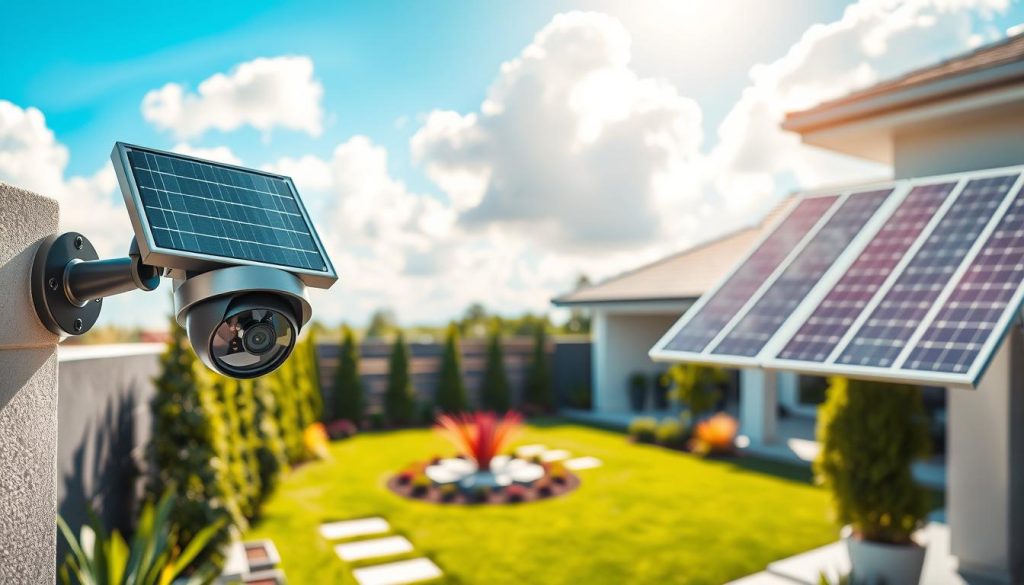
Keeping your property safe is a top priority for any homeowner. Today, a modern solution combines green energy with wireless connectivity for superior protection. This innovative approach is gaining popularity across Singapore.
More residents are choosing sustainable, self-sufficient devices. The desire for energy independence and environmental care drives this trend. It’s a smart move for the future.
A major benefit is the elimination of complicated electrical wiring. You can place these units in remote or difficult spots on your land. This flexibility was hard to achieve with traditional systems.
They harness the sun’s abundant power to operate continuously. Reliable day and night surveillance is assured. Even during the rainy season, a well-designed system keeps working.
Integration with smart home ecosystems adds great convenience. You can get live video feeds and alerts directly on your phone. This allows for real-time monitoring from anywhere.
Selecting a device with a high-efficiency panel and large battery is crucial. It must withstand Singapore’s tropical weather. This ensures year-round performance and peace of mind.
Our guide reviews top models and brands available locally. We’ll help you understand key features, compare options, and offer installation tips. Get ready to make an informed choice for your family’s safety.
Key Takeaways
- Modern home protection systems merge renewable energy with wireless tech for easy setup.
- They require no electrical wiring, allowing installation in remote areas of your property.
- Singapore’s sunny climate is ideal for keeping these units powered continuously.
- Smart features like mobile app access provide convenient remote monitoring and alerts.
- Choosing a model with a robust battery and efficient solar panel is vital for local weather conditions.
- This article provides a roundup of leading products and practical advice for Singapore homeowners.
Why Singapore Homeowners Are Turning to Solar Security
Rising utility bills and a growing eco-conscious mindset are reshaping how Singaporeans approach home protection.
Monthly electricity costs are a significant concern. A modern surveillance system harnesses free energy from the sun to reduce this ongoing expense.
Grid reliability is another factor. Storms or maintenance can cause blackouts.
A unit with a robust battery backup ensures your property remains monitored without interruption. This is crucial for continuous safety.
Homeowners also seek minimal upkeep. The technology involved has no moving parts.
An occasional wipe to clean the collection surface is typically all that’s needed. This suits busy lifestyles perfectly.
Installing traditional wired systems poses real challenges. Landed properties and condos often have strict rules against drilling and trenching.
Gardens and perimeter fences become problematic spots for electrical work. A truly wireless solution bypasses these hurdles entirely.
Singapore’s green initiatives make sustainable tech attractive. Government support for renewable energy aligns with this choice.
Choosing a self-powered device is a practical step towards environmental responsibility.
Coverage can now extend to every corner. Previous blind spots like gates, sheds, or long driveways are no longer off-limits.
You avoid the high cost and mess of professional electrical installation.
Industry leaders note these devices offer true wireless freedom, lower electric bills, and continued operation during blackouts. They are ideal for expanding coverage to remote areas.
Finally, there’s profound peace of mind. Knowing your surveillance operates independently provides confidence during emergencies or extended travel.
It’s a smart, forward-thinking investment for comprehensive property monitoring.
The Unmatched Benefits of a Solar WiFi Security Camera
Achieving complete surveillance coverage without reliance on the electrical grid is now a tangible reality. This technology provides distinct advantages that traditional systems simply cannot match.
It combines autonomous energy with modern connectivity for a superior protective solution.
True Wireless Freedom and Easy Installation
Forget about tangled cords and hiring electricians. These units require no power cords or Ethernet cables.
This allows for a clean, clutter-free setup on walls, poles, or eaves. You maintain the aesthetic of your property while adding robust monitoring.
Installation is often a simple DIY task. It typically involves mounting a bracket and connecting the collection panel.
Most homeowners can complete the setup without professional help. This saves significant time and money from the start.
Continuous Operation, Even During Blackouts
Grid failures can leave a property vulnerable. A self-powered system with a strong battery backup solves this problem.
The built-in energy cell stores enough charge to keep the device running for days without sunlight. According to Hikvision, some models offer up to 7 days of continuous operation under such conditions.
This ensures your monitoring never stops, day or night. Peace of mind continues during storms or maintenance outages.
Eco-Friendly Power and Reduced Electricity Costs
Harnessing renewable energy directly reduces your carbon footprint. It aligns perfectly with national sustainability goals like Singapore’s Green Plan 2030.
From a financial perspective, the savings are clear. A typical unit consumes zero grid electricity.
This leads to lower monthly bills. For systems with multiple units, the long-term cost reduction is substantial.
Key benefits include true wireless freedom, lower electric bills, and continued operation in a blackout. They are ideal for expanding coverage to remote areas with quiet, low-maintenance performance.
Expanded Coverage for Remote Areas
Running electrical lines to distant spots is often costly or impossible. This technology removes that barrier entirely.
It enables monitoring of farms, large gardens, or construction sites with ease. Every corner of your land can now be watched.
Integration with your home network allows for convenient remote access. View live video feeds and get alerts directly on your smartphone from anywhere.
For a robust wireless outdoor surveillance unit, this combination of reach and connectivity is unmatched.
Durability is also a key feature. The equipment is built to withstand tropical heat and rain while maintaining peak performance year-round.
Key Features to Look for in Your Solar WiFi Security Camera
The effectiveness of your property monitoring system hinges on several core hardware and software capabilities. Not all units are created equal.
Focusing on these specifications ensures you get a reliable device that meets Singapore’s unique demands.
Solar Panel Efficiency and Battery Capacity
Autonomous operation starts with energy collection. The panel’s efficiency is measured in watts.
A higher wattage rating means faster charging, which is crucial during our frequent cloudy days. It directly impacts how quickly the internal energy cell replenishes.
This battery capacity is listed in milliampere-hours (mAh). A larger number translates to longer backup life.
Some models offer modular batteries for easy replacement. According to Reolink, prioritizing both high-efficiency collection and a large-capacity power bank is a key consideration for uninterrupted service.
Video Resolution and Night Vision Capability
Visual clarity is non-negotiable for useful oversight. Resolution options range from 1080p to 4K Ultra HD.
Higher resolution provides crystal-clear details, essential for identifying faces or license plates from a distance.
After dark, capability varies widely. Standard infrared offers black-and-white footage.
Advanced units feature color night vision or starlight sensors. These technologies deliver full-color imagery in very low light, providing superior situational awareness.
Hikvision notes that all-day protection includes 24/7 color imaging, a significant advantage for detailed monitoring.
Connectivity: WiFi, 4G LTE, and Storage Options
Reliable data transmission is vital. Most homes will use standard wireless network connectivity.
For areas with poor signal, a 4G LTE model, like those in the Reolink Go series, becomes essential. It uses a mobile data SIM card for a completely independent link.
Your recorded footage needs a secure home. Local storage on a microSD card is private and has no monthly fees.
Network Video Recorders (NVR) offer centralized management for multiple units. Cloud subscriptions provide off-site backup but involve ongoing costs.
TP-Link Tapo highlights flexible storage as a key feature, allowing users to choose between local and cloud options.
Weatherproof Durability and Smart Detection
Our tropical climate demands rugged construction. Look for an IP65, IP66, or IP67 rating.
This certifies resistance to heavy rain, dust, and intense heat. Hikvision designs its products with a wind-resistant and waterproof IP67 design for maximum endurance.
Beyond hardware, intelligent software reduces nuisance alerts. AI-powered detection can distinguish between people, vehicles, and animals.
Features like AI motion detection significantly cut down false alarms from pets or moving foliage, delivering only relevant notifications.
This smart filtering saves you time and ensures you pay attention to genuine events. It’s a hallmark of a modern, efficient system.
Top Solar-Powered Security Camera Brands Available in Singapore
Navigating the market for autonomous surveillance reveals a few standout manufacturers with proven track records in Singapore. Each brand brings a distinct philosophy, catering to different needs from professional estates to smart homes.
Understanding their strengths helps you match a product to your specific property and lifestyle. We focus on three leaders known for reliability and local support.
Hikvision: Professional-Grade Solar Kits for Flexible Deployment
Hikvision is a global leader, offering robust kits ideal for large landed properties, farms, or commercial sites. Their solutions emphasize flexibility and endurance.
They provide self-customized power kits. This means you can tailor the panel and battery setup for exact deployment needs.
A key advantage is extended battery life. Their systems can deliver up to seven days of operation without direct sunlight.
This is crucial for Singapore’s occasional prolonged rain. You maintain continuous monitoring through less sunny periods.
Durability is certified with an IP67 rating. This ensures complete resistance to heavy tropical rain and dust.
For viewing, options include varifocal, PT, and PTZ models. These allow you to cover wide areas or zoom in on specific points.
Our designs offer 24/7 color imaging and support flexible connectivity via 4G or Wi-Fi, with built-in storage for reliable operation in diverse environments.
This brand suits users who need a scalable, professional-grade system. It’s a top choice for demanding applications.
Reolink: Feature-Rich Wireless Cameras for Home Security
Reolink targets homeowners seeking high-end features in a user-friendly package. Models like the Argus 4 Pro and Go PT Ultra are highly popular.
They deliver stunning 4K Ultra HD video clarity. This resolution captures fine details essential for identification.
Their color night vision technology provides vivid imagery after dark. You see more than just shadows and shapes.
Connectivity is a strong suit. Dual-band Wi-Fi ensures a stable link, while 4G LTE models like the Go series operate completely independently of home networks.
This is perfect for remote sheds or construction sites. Smart person/vehicle detection drastically cuts down false alarms from animals or foliage.
The design is truly wireless, relying on efficient sun-powered charging. It’s a blend of premium video quality and intelligent alerts.
TP-Link Tapo: User-Friendly AI Cameras with Smart Home Integration
TP-Link Tapo is the go-to for smart home enthusiasts prioritizing ease of use and integration. Setup is straightforward through a mobile app.
Their units offer sharp 2K or 1080p video. Color night vision ensures clear footage around the clock.
A standout feature is advanced AI motion detection. It intelligently analyzes scenes to send relevant alerts.
Build quality includes IP65 or IP66 ratings. This protects the equipment from our intense heat and seasonal downpours.
Storage choices are flexible. Use a microSD card for local recording or opt for a cloud subscription for off-site backup.
Seamless integration with Alexa and Google Assistant allows for voice control. You can view feeds on smart displays with simple commands.
Making Your Choice:
- Hikvision excels for large-scale, professional needs with maximum durability and deployment flexibility.
- Reolink is ideal for feature-seeking homeowners who want top-tier video and reliable connectivity options.
- TP-Link Tapo wins on user-friendliness, smart home integration, and value-focused AI features.
These products are available through authorized Singapore retailers and major online platforms. Purchasing locally ensures genuine items, valid warranty, and accessible technical support.
Installation Tips for Optimal Performance in Singapore’s Climate
A successful deployment hinges on strategic placement and careful configuration tailored to local conditions. Following proven steps ensures your unit operates reliably through sun and rain.
Reolink’s setup guide emphasizes surveying the site first. This foundational work prevents common issues later.
Hikvision notes their integrated designs allow for flexible deployment with easy installation. Their kits have a net weight around 14 kg, making them manageable for most homeowners.
Surveying Your Property for Sunlight and Coverage
Begin by walking your land. Identify spots with the most direct exposure during midday.
Avoid areas shaded by buildings or large trees. Consistent light is key for the collection panel.
Next, consider coverage needs. Entry points, driveways, and blind spots are priority zones.
Ensure each device has a clear field of view. Obstructions like plants can block the lens and trigger false alerts.
This planning phase saves time and boosts overall system efficiency.
Mounting Your Camera and Panel for Maximum Efficiency
Secure the collection surface first. Angle it at approximately 10 to 15 degrees, facing south.
This aligns with Singapore’s latitude for year-round sun exposure. Use the provided brackets on a sturdy wall or pole.
Mount the monitoring unit nearby. Protect it from direct rain, but avoid deep eaves that might block its view.
Hikvision’s designs support this flexible approach. The integrated kit simplifies the process.
A firm installation prevents movement during storms. Check all connections are weather-tight.
Configuring Your Network and Security Settings
Strong connectivity is vital. Test the wireless signal strength at the unit’s location.
Use a network extender if the signal is weak. For truly remote spots, a 4G LTE model with a SIM card is ideal.
Now, secure your access. Create a strong, unique password for the device and its app.
Enable two-factor authentication if available. Regularly update the firmware to patch vulnerabilities.
Set up motion detection zones within the app. This smart feature reduces alerts from unimportant movement.
Our setup steps ensure reliable day and night performance. Testing both video quality and alert functionality is crucial for peace of mind.
Configure your storage choice. Format a microSD card for local use or set up a cloud account.
For multiple units, connecting to a Network Video Recorder (NVR) allows centralized management.
Finally, conduct thorough tests. Verify video clarity during day and night.
Trigger motion alerts to ensure they work. Check the battery charging status via the app to confirm the panel is working.
These steps guarantee your solar-powered security cameras are ready for dependable, long-term operation.
Ensuring Longevity and Reliability of Your Solar Camera System
The true value of a self-powered monitoring solution is realized when it operates flawlessly for its entire expected lifespan. Proactive care is the key to achieving this.
Simple, regular habits can significantly extend the service life of your equipment. This protects your investment and keeps your property watched.
Following a few best practices ensures reliable performance year after year.
Routine Maintenance and Panel Care
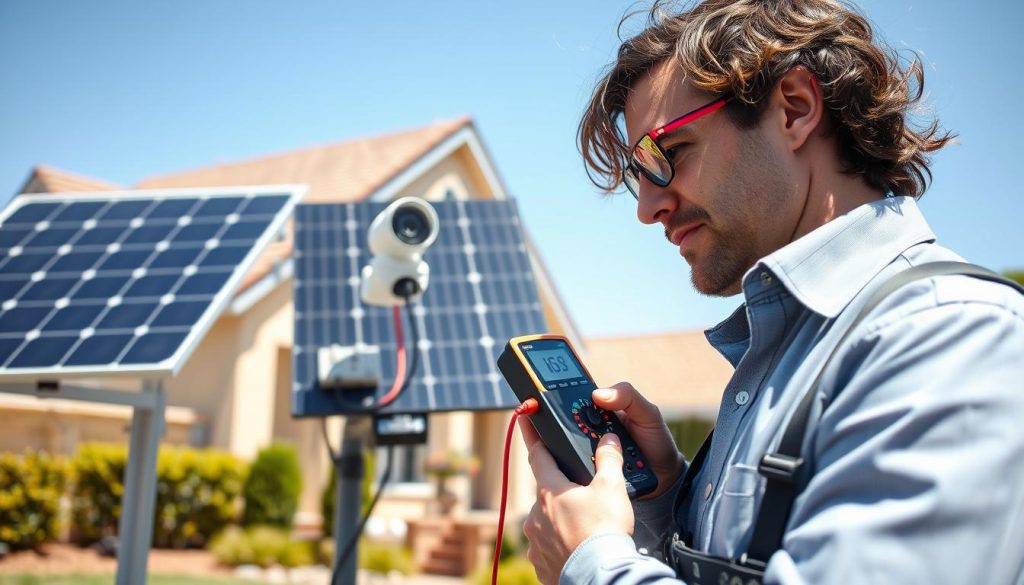
Start with the collection surface. Dust, pollen, and bird droppings can block sunlight.
Clean the panel with a soft, damp cloth every few months. This maintains peak charging efficiency.
Next, inspect the unit’s housing annually. Look for cracks in the seals or signs of water ingress.
This is especially important after heavy rain seasons. Hikvision designs its products with anti-corrosion and IP67 ratings for endurance, but visual checks are wise.
For the battery, avoid letting it discharge completely. Deep cycles can shorten its overall life.
Use the manufacturer’s app to monitor its health. Plan to replace the power cell every two to three years if you notice shorter operation times.
Managing Power Through Singapore’s Weather Seasons
Singapore’s monsoon period brings prolonged cloudy days. Your system needs a strategy for these times.
Ensure the panel is angled to shed water quickly. This allows it to capture any available light.
Monitor the battery level closely via the app during these stretches. If levels drop too low, consider supplemental charging.
You can use a USB power bank for a quick boost. Some homeowners keep a spare battery as a backup plan.
This ensures your surveillance never misses a day. Reliable power storage is crucial, as highlighted by Hikvision’s focus on long battery life and low consumption.
Updating Firmware and Monitoring System Health
Software updates are vital for your device’s health. Manufacturers release firmware to patch vulnerabilities and add features.
Regularly check for updates within the app. Installing them keeps your system secure and modern.
Your app dashboard is a control center. Use it to check vital signs like solar charging status and network connectivity.
Set up alerts for low power or offline status. This lets you address issues before they affect monitoring.
According to Reolink’s FAQ, the typical lifespan for these devices is 3-5 years, depending on build quality and the local environment. With proper care, they can often exceed this expectation.
Finally, have realistic expectations. Quality units are built to last, but components do age.
When it’s time for an upgrade, you can find excellent options by purchasing a complete solar-powered security camera system. Consistent, simple maintenance is the best way to ensure your current system delivers reliable protection for its full lifespan.
Making the Right Choice for Your Home’s Protection
Your final decision on property surveillance merges practical needs with environmental responsibility.
These innovative systems offer true wireless freedom and eco-friendly power. They deliver reliable monitoring tailored for Singapore residences.
Assess your unique situation first. Consider your land size, available sunlight, and desired features like AI detection.
Evaluate leading brands like Hikvision, Reolink, and TP-Link Tapo. Match their strengths to your specific requirements and budget.
Correct installation and consistent upkeep are critical for long-term performance. This ensures your setup withstands our humid and rainy climate.
Investing in this technology enhances your home protection while reducing energy costs. It’s a tangible step towards sustainability.
Start by securing one key area. You can expand your coverage gradually as needed.
Always purchase from authorized Singapore dealers. This guarantees valid warranty and accessible local support for any issues.
Use the insights from this guide to explore the reviewed products. Implement the installation tips for optimal results.
Enjoy profound peace of mind with a robust, self-sufficient surveillance solution guarding your property.