
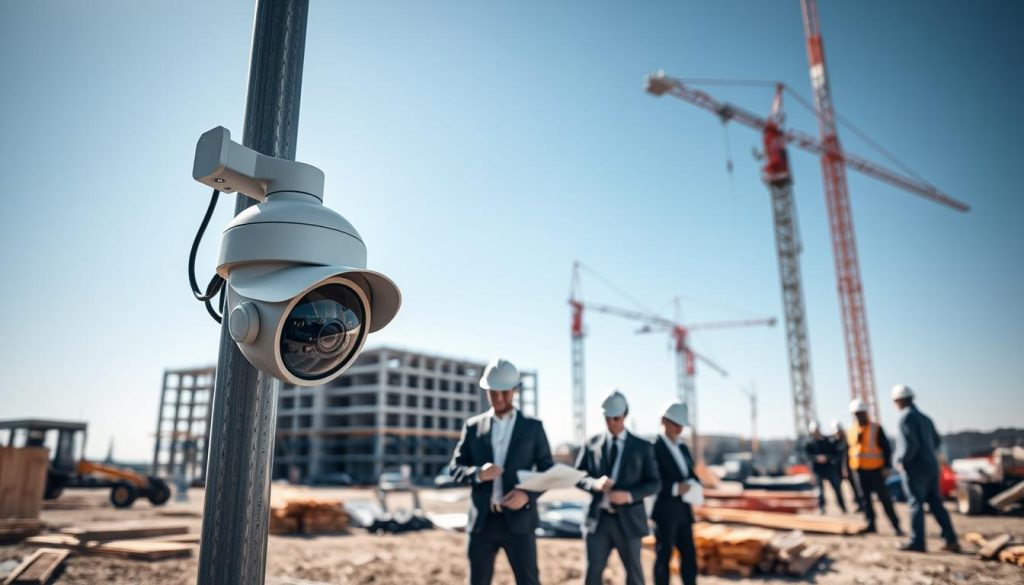
Construction sites in Singapore are bustling hubs of activity. They are also prime targets for theft and vandalism. High-value equipment and materials are often left unattended after hours. This creates a critical need for reliable, around-the-clock security.
This article serves as your complete buying guide. We review the top cellular security cameras available locally. Our goal is to help you protect your assets and manage your project with confidence.
Unlike standard Wi-Fi models, these specialized cameras operate independently. They use Singapore’s robust 4G LTE networks for connectivity. This makes them perfect for remote or temporary sites where internet access is unavailable or unstable.
The risks are significant. Loss from stolen tools, vandalism, or trespassing can lead to major financial and legal headaches. A robust surveillance system acts as a powerful deterrent.
A well-chosen solution provides constant monitoring. You get real-time alerts and clear video evidence. This enhances overall site safety and project oversight.
We will compare leading brands like Reolink and Vosker. We focus on features that matter in Singapore’s tropical weather. This includes resistance to heavy rain and high humidity. We also consider local network coverage from providers like Singtel, StarHub, and M1.
By the end of this guide, you will understand key specs, costs, and setup. You will be ready to make a smart investment in your site’s protection.
Key Takeaways
- Construction sites in Singapore require dedicated security solutions due to high risks of theft and vandalism.
- Cellular cameras provide reliable remote monitoring without needing a local Wi-Fi network.
- Key benefits include 24/7 coverage, instant mobile alerts, and clear evidence collection.
- Local factors like mobile network coverage and weather resistance are crucial for performance.
- This guide offers a detailed comparison of top models and brands available in the market.
- Investing in the right system enhances overall site safety and project management efficiency.
- Consider battery life, video quality, and data plans when choosing your solution.
Why Your Singapore Construction Site Needs Cellular Security
The dynamic nature of building projects across the island demands a security solution that is as mobile as the site itself. Traditional wired or Wi-Fi-dependent systems simply can’t keep up.
This section breaks down why standalone, network-connected surveillance is not just an option but a necessity for modern construction management.
The Limitations of Wi-Fi and Wired Systems on Remote Sites
Relying on a fixed internet line or local Wi-Fi is a fundamental flaw for temporary sites. These locations rarely have stable, pre-installed network infrastructure.
Extending a signal to a remote perimeter is often difficult and costly. The connectivity becomes unreliable or completely absent.
This makes standard IP cameras useless when you need them most. A system that depends on local access points creates a major security gap.
Cellular 4G LTE technology bypasses this entire problem. It uses Singapore’s robust mobile networks from providers like Singtel and StarHub.
The unit operates independently. It transmits data anywhere a cellular signal exists, ensuring constant operation.
How Cellular Cameras Deter Theft and Vandalism Effectively
The visible presence of a modern security camera is a powerful psychological deterrent. Potential intruders are far less likely to target a monitored area.
It signals that activity is being recorded. This simple fact prevents many incidents before they happen.
The theft of a single high-value piece of equipment can result in tens of thousands of dollars in loss, not counting project delays.
Advanced features like smart motion detection amplify this effect. The system doesn’t just record; it actively watches.
It sends instant push alerts to a manager’s smartphone the moment unauthorized movement is sensed. This enables a rapid response, potentially stopping a crime in progress.
Clear video with night vision captures identifiable footage of any suspicious activity. This provides crucial evidence.
Gaining Real-Time Oversight from Anywhere in Singapore
The core advantage is real-time oversight. Managers are no longer blind when off-site.
Using a dedicated smartphone app, you can live-view your jobsite from any location. Check in from your office, home, or while traveling.
This constant monitoring experience contrasts sharply with delayed discovery. Periodic security patrols or local recording-only devices often find problems too late.
Immediate alerts and remote access turn a reactive stance into a proactive one. You gain control.
This capability also aids remote project management. Verify material deliveries after hours or check work progress without a physical visit.
It enhances overall site security and operational efficiency. You protect assets and maintain smoother workflows under all conditions.
Essential Features of Top-Tier Cellular Jobsite Cameras
The cornerstone of effective remote site monitoring lies in selecting devices with specific capabilities designed for challenging conditions. Not all security equipment can handle the unique demands of Singapore’s construction environments.
This section details the must-have specifications that separate basic models from professional-grade solutions. Understanding these features ensures your investment provides reliable protection and peace of mind.
4G LTE Connectivity and Singapore Network Compatibility
Reliable network access is the foundation of any remote surveillance system. The best units use 4G LTE technology to transmit data independently of local Wi-Fi.
For consistent service across Singapore, verify compatibility with major carriers like Singtel, StarHub, and M1. This ensures strong signal coverage even in less developed areas.
A device that locks onto the strongest available network provides uninterrupted connectivity. This is vital for real-time monitoring and instant alerts.
Solar Power and Extended Battery Life for Uninterrupted Operation
Power autonomy is critical for sites without established electrical infrastructure. High-capacity rechargeable batteries allow devices to function for weeks on a single charge.
Integrated solar panel technology takes this further. It harnesses sunlight to continuously replenish power, enabling potentially indefinite operation.
Industry benchmarks show that solar-assisted systems can operate for over six months without manual intervention, making them ideal for long-term projects.
This combination eliminates worries about power failure. Your security system remains active through weekends, holidays, and site closures.
Rugged, Weatherproof Design for Tropical Conditions
Singapore’s climate presents serious challenges. Heavy rainfall, high humidity, and pervasive dust can quickly disable poorly built equipment.
Look for an IP65 rating or higher. This certification guarantees protection against dust ingress and water jets from any direction.
The housing should resist corrosion and physical impacts common on active construction sites. A rugged design ensures the unit survives the project’s entire duration.
For comprehensive site protection, consider professional construction CCTV installation to ensure optimal placement and integration.
High-Resolution Video and Advanced Night Vision
Video quality directly impacts the usefulness of recorded footage. Aim for at least 1080p Full HD resolution. This clarity captures crucial details like faces or license plates.
For larger sites or areas requiring finer detail, 4K resolution provides superior image quality. It allows for digital zoom without losing evidentiary value.
Effective night vision is non-negotiable for 24/7 security. Advanced systems use infrared LEDs or starlight sensors to deliver clear, detailed images in total darkness.
Some models even provide color night video using ambient light. This makes identifying people and objects much easier during nighttime activity.
Smart Motion Detection and Instant Alert Systems
Basic motion sensors trigger for any movement, causing alert fatigue from false alarms. Smart detection uses artificial intelligence to analyze the scene.
The system can distinguish between people, vehicles, and non-threats like animals or moving foliage. This intelligence focuses your attention on genuine security events.
When a person is detected, instant notifications arrive on your smartphone via push alerts, SMS, or email. Many systems include a snapshot or short video clip for immediate assessment.
This allows for rapid response, potentially preventing theft or vandalism in progress. You maintain control of your site from anywhere.
Additional valuable features include two-way audio for communication, time-lapse recording for project documentation, and Wide Dynamic Range (WDR) to balance extreme lighting conditions. Prioritizing these core specifications leads to a robust, dependable surveillance solution that enhances overall site safety.
Top Contenders: A Roundup of Leading Cellular Jobsite Cameras
The landscape of off-grid security solutions is dominated by a few key manufacturers with distinct strengths. Each brand offers a unique approach to reliable remote monitoring.
This roundup highlights the top performers available for Singapore projects. We focus on their core value propositions to help you narrow your choice.
Reolink Go Series: Versatile LTE and Solar-Powered Options
Reolink is a major player in the remote surveillance market. Its Go Series provides versatile, LTE-connected units suitable for various site needs.
Models like the Go PT Ultra offer 4K clarity and color night vision. The Go PT Plus is a strong 2K+ alternative. Both support optional solar panels for sustained power.
This flexibility makes the series a solid choice. You can scale from basic oversight to high-resolution monitoring with pan-tilt-zoom control.
Vosker V-Series: Built for Complete Off-Grid Surveillance
Vosker specializes in completely off-grid, solar-powered systems. The V-Series is engineered for long-term deployment with minimal maintenance.
The flagship V300 ULTIMATE includes a massive 12-month solar power bank. It enables continuous live-streaming without worrying about battery life.
The V150 model serves as a cost-effective workhorse. It delivers reliable photo monitoring for essential security on a budget.
Reolink TrackMix LTE: Dual-Lens Tracking for Active Monitoring
For monitoring large, active perimeters, the Reolink TrackMix LTE stands out. It features a unique dual-lens system.
One lens provides a wide-angle view of the entire area. The second lens automatically zooms in to track moving people or vehicles.
This auto-tracking feature is ideal for securing expansive construction sites. It ensures no suspicious activity goes unnoticed.
Specialist Picks: Cameras like DEFEND for Rugged Durability
Some models are built explicitly for harsh environments. The DEFEND camera is noted for its exceptional ruggedness and imaging.
It boasts a 24MP sensor for incredibly detailed footage. Its IP65-rated build withstands dust and heavy rain common in Singapore.
With low-glow infrared night vision and motion-activated recording, it provides discreet, effective monitoring for high-risk areas.
It is also solar-compatible, aligning with the need for autonomous operation on remote sites.
In summary, Reolink offers feature-rich options, Vosker champions ultimate off-grid reliability, and specialists like DEFEND prioritize durability. All share LTE connectivity but differ in their approach to power, video quality, and specialized tracking.
This comparison sets the stage for deeper dives into specific product lines in the following sections. Your ideal choice depends on your project’s specific demands for security, budget, and site conditions.
Deep Dive: Reolink Cellular Cameras for Singapore Job Sites
Selecting the right equipment often means choosing a trusted brand. Reolink’s LTE-connected units are engineered for demanding professional use.
Their ecosystem offers tailored solutions for various security needs on local construction projects. This section explores key models and their ideal applications.
Reolink Go PT Ultra: 4K Clarity with Pan-Tilt-Zoom Control
For areas where detail is critical, the Go PT Ultra excels. It captures stunning 4K 8MP Ultra HD video.
Remote motorized pan, tilt, and zoom (PTZ) control is a standout feature. You can direct the view remotely via the app to scan the entire area.
This is perfect for monitoring fixed zones like storage compounds or equipment yards. You get a comprehensive visual experience without physical presence.
Its color night vision provides superior low-light identification. Suspicious activity is recorded in clear detail, day or night.
Reolink TrackMix LTE: Auto-Tracking for Perimeter Security
Securing a large, active perimeter requires a different approach. The TrackMix LTE uses a unique dual-lens system.
One lens gives a wide-angle overview. The second automatically zooms in to track moving subjects like people or vehicles.
This auto-zoom tracking makes it exceptional for wide-area monitoring, ensuring no unauthorized movement goes unnoticed.
It transforms passive recording into active security. The system focuses on potential threats as they happen.
For expansive sites, this automated detection and tracking significantly enhance safety and oversight.
Balancing Features with Budget in the Reolink Ecosystem
Not every location requires top-tier resolution. The Reolink Go PT Plus offers a cost-effective entry point.
It delivers sharp 2K+ 5MP video with core LTE connectivity. Smart person/vehicle detection filters out false alarms.
All models share the unified Reolink app. This provides ease of setup and consistent access to live viewing, playback, and alerts.
Power autonomy is addressed through optional official solar panels. This enables sustained off-grid deployment without worrying about battery life.
Practical selection depends on your site’s specific needs. Choose the Go PT Ultra for detail-critical fixed areas.
Opt for the TrackMix LTE for active, wide-area monitoring. The Go PT Plus is ideal for reliable, budget-conscious coverage.
All units are built to withstand dust, rain, and Singapore’s temperature swings. This rugged design ensures reliable service throughout your project.
Deep Dive: Vosker’s Solar-Powered Cellular Camera Solutions
Some security systems are built not just for remote sites, but to thrive there indefinitely without external support. Vosker has carved its niche with this exact philosophy. The brand focuses exclusively on creating truly autonomous, solar-powered surveillance units.
Their solutions are engineered for long-term deployment with near-zero maintenance. This makes them a compelling choice for Singapore projects where reliable power and network access are not guaranteed.
VOSKER V300 ULTIMATE: Live-Streaming and Long-Term Power
The V300 ULTIMATE is Vosker’s flagship model. It stands out for its rare ability to provide continuous live video streaming over a cellular network. This is a step beyond systems that only send short clips or photo alerts.
Its most impressive feature is the integrated power system. The package includes a massive solar power bank designed to deliver up to 12 months of operation.
This eliminates the primary worry for off-grid security: battery life. The unit can function through an entire project phase without a manual recharge.
For managers who need real-time visual access to critical areas, the V300 ULTIMATE is a top-tier security camera option. It offers peace of mind through constant visibility.
VOSKER V150: A Cost-Effective Workhorse for Basic Monitoring
Not every location requires live streaming. The V150 model serves as a dependable, entry-level solution. It focuses on capturing high-quality photo alerts and short video clips when motion is detected.
This approach conserves power and data. It is ideal for sites where verifying activity after an alert is sufficient.
The housing is built to withstand Singapore’s humid, rainy conditions. Vosker backs this ruggedness with a standard 2-year warranty. This provides significant peace of mind for long-term deployments.
It represents a straightforward, budget-friendly path to reliable surveillance. You get essential protection without complex features.
The Vosker App Experience and Data Plan Structure
Remote management is handled through the unified Vosker mobile app. The interface is designed for ease of use. You can view alert footage, check live feeds from the V300, and manage multiple cameras from a single dashboard.
Sharing access with team members is simple. This facilitates collaborative site oversight.
Vosker simplifies procurement with a bundled subscription model. A monthly or yearly plan covers all cellular transmission and cloud services.
This structure means a predictable ongoing cost. It removes the hassle of sourcing separate SIM cards and data plans from local network providers.
In summary, Vosker is the go-to choice for users who prioritize ultimate off-grid endurance. The brand offers straightforward, subscription-based service. It is built for set-and-forget reliability on Singapore’s most challenging construction sites.
Critical Buying Considerations for the Singapore Market
To ensure your investment pays off, you need to navigate key considerations specific to Singapore’s environment and infrastructure. The best device on paper can fail if it doesn’t align with local network strength, climate, and practical site needs.
This section breaks down the essential factors beyond basic specs. We focus on coverage, durability, ongoing costs, and ease of deployment.
Assessing Singtel, StarHub, and M1 LTE Coverage for Your Site
Reliable signal is the non-negotiable foundation. A weak network connection renders any remote monitoring system useless.
Before purchase, verify 4G LTE coverage maps for your exact project location. Check all three major carriers: Singtel, StarHub, and M1.
- Visit each provider’s website and use their coverage checker tool.
- Input the site’s postal code or address for the most accurate result.
- Look for areas indicated as having “good” or “excellent” outdoor signal strength.
Devices that can automatically switch to the strongest available carrier offer the best reliability. For remote or basement-level sites, this verification step is paramount.
A unit with multi-carrier support ensures uninterrupted service, even if one network experiences temporary issues in your area.

Also, confirm the device supports the LTE frequency bands used locally. Purchasing from a reputable Singapore distributor often guarantees this compatibility.
Weather Resistance (IP Ratings) for Humidity and Heavy Rain
Singapore’s tropical weather demands robust protection. The Ingress Protection (IP) rating tells you exactly how well a unit is sealed.
Look for a minimum rating of IP65 or IP66. The first digit (6) indicates complete protection against dust ingress.
The second digit (5 or 6) confirms resistance to water. A ‘5’ rating protects against water jets from any direction. A ‘6’ offers protection against powerful jets.
This level of sealing is essential for year-round operation. It safeguards internal components from relentless humidity, torrential rain, and pervasive construction dust.
A rugged housing material adds further durability against accidental impacts. This combination ensures your security camera survives the project’s entire duration.
Data Plan Costs and Subscription Models in Singapore
Ongoing data transmission is a key operational cost. You typically have two main options for connectivity.
The first is using a local prepaid or postpaid SIM card from Singtel, StarHub, or M1. You manage the plan and top-ups yourself.
The second is a bundled subscription from the manufacturer, like Vosker’s model. This plan covers all network fees and cloud services in one monthly payment.
Budget between SGD $15 to $40 per month, per unit. The final cost depends on video quality and usage.
Higher resolution footage and frequent live streaming consume significantly more data. Smart motion detection that sends short clips or photos is more data-efficient.
Consider your actual monitoring needs to balance capability with cost. A bundled plan offers predictability, while a local SIM might offer more flexibility.
Ease of Installation and Portability for Temporary Sites
Quick, tool-free setup is a major advantage for temporary projects. You need to secure an area rapidly, often without specialized tools.
Look for features like strong magnetic mounts, versatile strap-on designs, or adjustable mounting brackets. These allow you to attach a unit to fences, scaffolding, or containers in minutes.
This portability is invaluable. As the construction site evolves, you can easily reposition your security cameras for optimal vision.
At the project’s end, the equipment can be swiftly demounted and redeployed elsewhere. This maximizes your investment’s value over time.
When placing units, be mindful of local guidelines. Ensure your monitoring respects privacy, especially if the camera‘s field of view includes public areas or adjacent properties.
A simple, portable installation process directly enhances site safety and management experience from day one.
Understanding the Total Cost of Ownership
A smart investment in site protection goes beyond the sticker price. It includes long-term operational costs and potential savings from risk prevention.
This financial analysis is called Total Cost of Ownership (TCO). It helps you budget accurately and see the true value of your security system.
Upfront Hardware Investment: From Single Units to Multi-Camera Kits
The initial capital expenditure (CapEx) varies with your project’s scope. A single, capable LTE unit with solar power typically costs between SGD $600 and $900.
Specific models have different price points. For example, a Reolink Go PT Ultra may start around $230. A Vosker V300 ULTIMATE is a higher-tier investment.
Purchasing a multi-camera kit often provides better value per unit. For a mid-size construction site needing 4 to 6 devices, expect hardware costs between $3,000 and $6,000.
This budget should include a network video recorder (NVR) and cloud storage fees. Do not forget ancillary costs.
These include mounting accessories, spare batteries, and extended warranties. Professional installation labor can add 10% to 20% to the total hardware costs.
Monthly Cellular Data Fees: What to Budget For
Ongoing operational expenditure (OpEx) comes from data transmission. You must budget for monthly cellular subscription fees.
A reliable rule is to allocate SGD $15 to $40 per month, per camera. The final amount depends on video quality and usage patterns.
High-resolution footage and frequent live streaming consume more data. Smart motion detection that sends short clips is more efficient.
You have two main paths for this service. The first is using a local SIM card from Singtel, StarHub, or M1.
The second is a bundled subscription from the manufacturer. This plan covers all network fees and cloud storage in one predictable payment.
Projecting annual costs is simple. For three units on a $25/month mid-tier plan, your yearly OpEx is $900.
Potential Savings from Theft Prevention and Project Efficiency
The most compelling argument for investment is Return on Investment (ROI). Preventing a single major theft can save tens of thousands of dollars.
This far outweighs the system’s total costs. A stolen generator or excavator represents a massive financial hit.
Remote surveillance acts as a powerful deterrent. It also provides clear evidence if an incident occurs.
Indirect savings boost the ROI further. Remote progress checks reduce supervisor travel time and fuel expenses.
Enhanced safety compliance and recorded coverage may help lower insurance premiums. This improves overall project efficiency.
View this purchase as a risk mitigation investment, not a pure cost. The high financial impact of site theft and vandalism makes protection essential.
A practical step is to create a simple TCO spreadsheet. Compare different system configurations over your project’s timeline.
Factor in all CapEx and OpEx elements. Then, weigh them against the potential loss from one security event.
This exercise clearly shows how a robust monitoring solution protects your assets and your bottom line.
Setting Up and Managing Your Cellular Camera System
Once you’ve selected your equipment, the next critical phase is deployment and ongoing oversight. A correctly configured system delivers the promised security and monitoring benefits from day one.
This process is designed for ease. Most modern units can be operational within minutes, not hours. Following a logical setup sequence and smart placement ensures optimal performance.
Step-by-Step Guide for Initial Deployment and Activation
Begin by unboxing your unit and familiarizing yourself with the components. The first physical step is often inserting the SIM card and activating your chosen data plan.
If your model includes a solar panel, connect it now or ensure the internal battery is fully charged. This guarantees sufficient power for initial testing.
- Mount the device in a temporary, secure location using the provided bracket. This allows you to verify signal strength and view quality before final placement.
- Download the manufacturer’s dedicated mobile app (e.g., Reolink, Vosker, or DEFEND). Create an account or log in.
- Follow the in-app instructions to add your new camera. This typically involves scanning a QR code on the device.
- Once connected, perform a live video check. Confirm you can see the feed clearly and receive test alerts.
This streamlined installation gets your surveillance online quickly. You can then focus on fine-tuning the position for long-term deployment.
Optimal Camera Placement for Maximum Site Coverage
Strategic positioning is key to effective site security. The goal is to eliminate blind spots and cover critical zones.
Always elevate your units to avoid easy tampering. Mount them high on poles, trailers, or perimeter fencing. Angle them to oversee high-value storage areas, main entry and exit points, and equipment yards.
For solar-powered models, ensure the panel has direct, unobstructed sunlight exposure for most of the day. This is vital for maintaining battery life.
Creating overlapping fields of view in critical areas, like tool cribs, adds a layer of redundancy. If one angle is blocked, another captures the activity.
Use a mix of fixed and PTZ (Pan-Tilt-Zoom) devices. Fixed units provide constant coverage of choke points. PTZ models allow remote control to scan wide areas and zoom in on details.
This combination ensures comprehensive monitoring for any construction project size. Regularly reassess placement as the site layout evolves.
Managing Alerts and Footage via Mobile Apps
The companion app is your command center for daily management. It provides real-time access to live feeds, recorded footage, and alert configurations.
Start by customizing your notification settings. Define motion detection zones to focus on specific areas, like gates, and ignore others, like busy roads.
Adjust sensitivity to reduce false alarms from moving vegetation or shadows. You can also set quiet hours during known active periods to minimize unnecessary alerts.
When an alert triggers, the app typically provides a snapshot or short clip. You can instantly review this footage and decide on a response.
For recorded video, access depends on your storage choice. Footage saved on a microSD card can be played back directly. Cloud-stored video is accessible from anywhere with an internet connection.
User management features allow multiple supervisors to have view-only or full access. This facilitates team oversight without sharing login credentials.
Finally, establish a routine for periodic system checks. Verify all cameras are online, lenses are clean, and power levels are sufficient. This proactive habit ensures your security system remains a reliable asset throughout the project’s timeline.
Securing Your Site with the Right Cellular Camera Choice
Effective protection for your assets hinges on selecting a unit that matches your unique environment and needs. Prioritize robust connectivity, weatherproof durability, and reliable power sources. High-quality imaging and smart alert systems are also essential for reliable surveillance.
Top contenders like Reolink offer feature variety, while Vosker provides off-grid endurance. Specialist models like DEFEND deliver rugged simplicity. Match these strengths to your specific site requirements and budget for optimal security.
Investing in a proper system is a proactive measure. It safeguards valuable assets, enhances operational oversight, and provides documented evidence against theft. This leads to a more secure and efficiently managed construction project in Singapore.
Take action based on your assessment. Consider local network conditions and total cost of ownership. For a detailed comparison of models suited for areas without Wi-Fi, explore our guide on the best construction site cameras.
Remote monitoring technology is growing in importance. It fundamentally improves both security and project management experience across all sites.