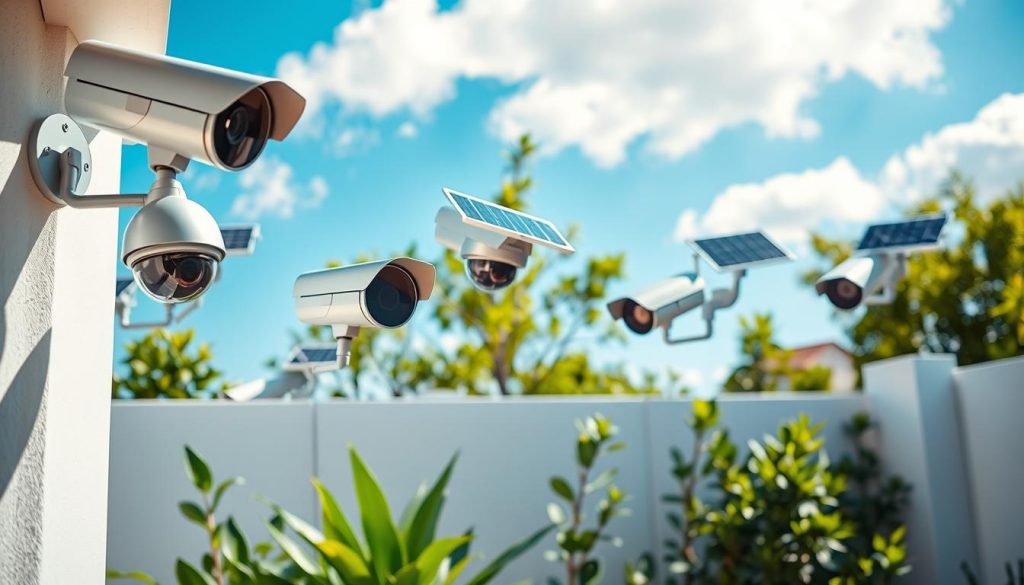
Keeping your home safe is a top priority for many people. Modern technology offers smart solutions that are both effective and kind to the environment. Solar-powered security cameras are a perfect example of this innovation.
These devices use the sun’s energy to operate. This means they can work continuously without needing a plug. You get reliable property protection while cutting down on electricity use.
This technology is especially useful in places with lots of sunshine. For homeowners in Singapore, it’s a natural fit. The abundant sunlight provides free power for your security system year-round.
This guide will help you find the right model for your needs. We will look at the best features, compare top products, and discuss what to consider before you buy. Our goal is to help you achieve peace of mind and long-term savings.
Key Takeaways
- Solar-powered security cameras provide continuous operation using renewable energy.
- They offer a reliable and eco-friendly solution for home protection.
- Installation is flexible, as they don’t require a nearby power outlet.
- These systems can lead to significant long-term savings on energy costs.
- Modern models often include smart features like video storage and remote viewing.
- They are an ideal choice for areas with abundant sunlight, like Singapore.
- Choosing the right system involves comparing performance, features, and durability.
Introduction to Modern Solar-Powered Security
Gone are the days when reliable monitoring was tethered to an electrical outlet. The evolution of property defense has moved from bulky, wired setups to sleek, intelligent systems. Today’s solutions harness the sun’s abundant rays to deliver consistent protection.
This shift represents a powerful convergence. Renewable energy meets advanced technology to create a sustainable security system. The core principle is elegantly simple.
A small panel converts sunlight into electrical energy. This charges an integrated battery, which then powers the device day and night. Even during overcast weather, the stored reserve ensures continuous operation.
Recent leaps in photovoltaic efficiency have been crucial. Modern panels are smaller yet capture more energy. Coupled with improved battery storage, this makes the technology a practical choice for homes.
Many believe these systems fail without direct sun. That’s a common misconception. High-capacity batteries are designed to bridge several cloudy days, minimizing any downtime.
Modern setups often form a complete ecosystem. A single hub can manage multiple units. Users can choose between cloud or local storage for their video footage.
The flexibility is a major advantage. Installation is possible in remote corners of a property. Places without easy access to power lines are no longer blind spots.
Industry data shows a clear trend. Adoption rates are climbing steadily. This is driven by decreasing equipment costs and growing environmental awareness.
The integration of clean power into residential security is no longer a niche concept. It’s becoming a mainstream preference for its reliability and eco-friendly profile.
In a place like Singapore, this solution is particularly logical. The tropical climate provides ample sunlight year-round. This natural resource makes such a system especially efficient and viable here.
Finally, these devices seamlessly connect to your digital life. They integrate with popular smart home platforms. This allows for remote viewing and control directly from a mobile app, putting property security literally in the palm of your hand.
Why Choose a Solar Surveillance Camera? Key Benefits
Investing in a security system powered by the sun brings a host of practical advantages beyond just basic monitoring. These benefits address financial, environmental, and practical concerns for modern homeowners.
From ensuring constant operation to enabling installation in remote spots, the value proposition is strong. Let’s explore the key reasons these products are gaining popularity.
Uninterrupted Power and Operation
A primary concern for any monitoring device is consistent performance. Solar-powered security systems solve this by combining efficient panels with high-capacity batteries.
The panel harvests sunlight during the day. This energy charges the internal battery for use at night and on cloudy days.
Modern batteries are remarkably robust. Brands like Hikvision engineer their units to deliver up to seven days of continuous operation without direct sunlight.
This means your property protection doesn’t falter during a stretch of bad weather. You get true 24/7 coverage, which is essential for reliable security.
Reduced Environmental Impact and Energy Costs
Using renewable energy directly cuts your carbon footprint. Each day of operation powered by the sun is a day without drawing from the grid.
After the initial investment, the ongoing energy cost drops to nearly zero. The sun provides free fuel for your security cameras.
Over time, this leads to noticeable savings on your electricity bill. Running multiple units can compound these savings significantly.
It’s a clean, sustainable solution that aligns with eco-conscious living. You enhance your home’s safety while supporting environmental stewardship.
Flexible, Wire-Free Installation Anywhere
The absence of power cords is a game-changer. You are no longer limited to spots near an outdoor outlet.
Installation becomes simple and flexible. Place the unit on a fence, garden shed, or gate for the optimal vantage point.
This wire-free nature opens up applications in remote areas. It’s ideal for monitoring farmlands, long driveways, or even temporary sites like festivals.
There’s no need for costly trenching or complex electrical work. The setup is straightforward, saving you time and money on professional installation.
Maintenance is also minimal. The panels have no moving parts and typically require only occasional cleaning to perform well.
Reliability During Power Outages
Grid failures are a critical vulnerability for traditional wired systems. A storm or a burglar cutting your power can leave you blind.
A solar-powered security camera with a battery backup provides a crucial fail-safe. Its independent power system keeps it running when the grid goes down.
This ensures continuous video recording and alerting capabilities during blackouts. Your home remains monitored during the most critical times.
This independent operation offers profound peace of mind. You know your security system’s performance isn’t tied to the reliability of the public utility.
The integrated power management in these systems is designed for resilience. It’s not just about saving energy—it’s about ensuring your protection never sleeps.
In summary, the benefits extend from your wallet to the environment and your overall sense of safety. It’s a smart upgrade for any property.
Essential Features of a Top-Tier Solar Security Camera
A high-performing outdoor unit is defined by more than just its power source; it’s about integrated performance. To make a smart choice, you need to evaluate several technical aspects. These features work together to deliver reliable property protection.
Focus on these five critical categories. They separate adequate products from exceptional ones.
Solar Panel Efficiency and Battery Life
The heart of the system is its energy harvesting. Panel wattage and conversion rates determine how quickly the battery recharges.
Look for high-efficiency panels. They produce more watts from the same amount of sunlight.
Battery capacity, measured in mAh, dictates sustained operation. A larger capacity means more days of use without direct sun.
Brands like Reolink design panels for quick charging. Hikvision employs smart power management for extended battery life. This ensures your device runs day and night.
Video Resolution and Night Vision Capability
Clarity is paramount for identifying details. Modern standards range from 1080p to 4K UHD.
Higher resolution provides a sharper view. It allows you to see license plates or faces clearly.
Night vision is equally crucial. Technologies include infrared LEDs for black-and-white images and full-color vision.
Lorex offers long-range color and infrared options. Reolink provides true full-color night vision in dim lighting. This turns night into day for your monitoring.
Connectivity: Wi-Fi, 4G LTE, and Local Storage
Your device needs to send data and footage. The right connection depends on your location.
Wi-Fi is standard for homes with strong network coverage. Dual-band Wi-Fi 6, found on some Reolink models, offers faster, more stable links.
4G LTE is vital for remote areas without internet. It uses a cellular data plan. Hikvision supports 4G SIM cards for this purpose.
Storage options are key for video review. Choices include:
- Local microSD cards
- Network Video Recorders (NVRs)
- Cloud subscription plans
Some products, like certain Hikvision units, have built-in eMMC or SSD storage. This gives you a self-contained solution.
Durability and Weatherproof Ratings
Outdoor equipment must withstand the elements. This is especially true in Singapore’s tropical climate.
Check the IP (Ingress Protection) rating. An IP66 or IP67 rating guarantees resistance to heavy rain and dust.
Build materials should resist corrosion. Look for anti-corrosion features in the design.
Robust construction is non-negotiable. A unit must survive high humidity, intense sun, and occasional storms to be a reliable long-term investment.
Hikvision, for example, designs its products with wind-resistant and waterproof housings. This ensures year-round performance.
Smart Detection and Alert Features
Basic motion alerts are outdated. Advanced analytics reduce false alarms and focus on what matters.
AI-powered detection can distinguish between people, vehicles, and animals. This intelligence sends relevant notifications to your phone.
Reolink offers precise person/vehicle detection. Arlo uses AI-driven analytics for similar smart alerts.
Hikvision’s AcuSense technology and radar detection further minimize unnecessary alerts. Features like motion zones and facial recognition (offered by Google Nest) add layers of control.
The result is a system that informs you of genuine events. You gain peace of mind without constant interruptions.
Product Roundup: Comparing the Best Solar Surveillance Cameras
This head-to-head analysis breaks down seven popular options, from professional kits to simple DIY solutions. With so many brands on the market, finding the right fit can be challenging.
Our comparison focuses on key specs, unique strengths, and ideal use cases. This will help you identify which product aligns with your specific needs for property monitoring.
Hikvision: Professional-Grade All-in-One Systems
Hikvision targets users who need a robust, self-contained solution for challenging locations. Their setups are designed for areas where running power cords is impractical.
These all-in-one units feature an extended battery life, often up to seven days without direct sun. They boast an IP67 weatherproof rating for durability.
Connectivity options include both 4G LTE and Wi-Fi, providing flexibility. A key advantage is the built-in SSD storage, eliminating monthly fees.
These systems are ideal for large-scale or commercial applications. Think farmlands, temporary event sites, or remote stretches of highway.
Reolink: Versatile Wireless Options with Strong Solar Performance
Reolink offers a versatile lineup that excels in harnessing sunlight efficiently. Their models are built to stay powered with minimal maintenance.
Flagship products like the Argus 4 Pro deliver 4K UHD video and support fast Wi-Fi 6. The Go PT Ultra model provides complete freedom with 4G LTE connectivity.
Features include true full-color night vision and precise person/vehicle detection. This brand is a strong choice for users seeking high performance without wires.
Lorex: High-Resolution Cameras with Robust Solar Options
Lorex brings its camera manufacturing expertise to the sun-powered category. They offer high-resolution units, with some capturing stunning 4K detail.
Their security cameras are compatible with dedicated, weatherproof panels. A major benefit is the inclusion of free local video storage with many systems.
The solar panel accessory typically costs around $79.99. This brand is a solid pick for those who prioritize crystal-clear image quality.
Ring: User-Friendly Ecosystem with Solar Accessories
Ring integrates seamlessly into a DIY-friendly smart home. Their strength lies in a simple ecosystem where accessories work together effortlessly.
They offer affordable solar panels for their Spotlight Cam and Stick Up Cams. You can choose a standard panel for $49.99 or a more powerful “Super” version for $99.99.
Installation is straightforward, aimed at homeowners. Video quality ranges from 1080p to 4K, with footage stored via cloud subscription.
Arlo: DIY-Friendly Solar-Powered Camera Systems
Arlo systems are known for their sleek design and user-friendly setup. They are a favorite for homeowners who want a polished, effective solution.
A universal solar panel (around $59.99) is compatible with several Arlo models. These devices offer up to 4K resolution and advanced AI detection for smarter alerts.
The installation process is designed to be tool-free and simple. It’s a great option for those who value aesthetics and easy configuration.
Google Nest: Smart Home Integration with Solar Charging
For deep integration with a smart home, Google Nest leads the pack. Their battery-powered cameras and doorbells can be kept charged with third-party panels.
The popular Wasserstein solar panel retails for about $59.99. It reliably powers devices like the Nest Cam (battery) throughout the year.
Unique features include familiar face alerts and customizable activity zones. This system excels for users already invested in the Google ecosystem.
SimpliSafe: Easy Setup for Solar-Powered Outdoor Monitoring
SimpliSafe lives up to its name by focusing on simplicity and reliability. Their solution is arguably the easiest to get up and running.
A dedicated solar panel ($79.99) pairs with their Outdoor Camera. Setup is intuitive, and the system uses smart motion detection to filter out false alarms.
The best choice isn’t about finding the single “best” product. It’s about matching a system’s core strengths—be it professional features, top resolution, ecosystem ties, or sheer simplicity—to your personal priorities.
Video storage is handled through a cloud plan. This brand is perfect for anyone who wants capable, hassle-free outdoor monitoring.
What to Look for When Buying Your Solar Camera
A successful investment hinges on matching the product’s capabilities to the demands of your property. This isn’t about finding the most expensive model. It’s about selecting a system that performs reliably in your specific environment.
Think of it as a tailored solution. You need to evaluate three core areas before you commit.
Assessing Your Property’s Sunlight and Coverage Area
Start with a simple site survey. Walk around your home and note where the sun shines brightest. Most panels need at least four to six hours of direct rays for optimal performance.
Look for south-facing spots without shade from trees or buildings. Some advanced panels can work with partial sun, but direct exposure is best.
Next, map your coverage needs. Identify all entry points, blind spots, and valuable assets. This exercise helps you decide how many units you need and where to place them.
Consider the viewing angle of each device. A wide-angle lens can cover a larger yard. A narrow focus might be better for monitoring a specific gate or doorway.
Matching Camera Features to Your Security Needs
Your priorities should guide your feature selection. Do you need to capture fine details like license plates? If so, prioritize high video resolution, such as 2K or 4K.
For monitoring dark driveways or gardens, strong night vision is non-negotiable. Look for full-color or long-range infrared capabilities.
Smart detection is a game-changer. AI that distinguishes people from animals cuts down on false alerts. This keeps your phone from buzzing every time a cat walks by.
Connectivity is another major decision. Urban homes with strong Wi-Fi can use standard wireless models. Rural properties might require a 4G LTE model for reliable operation without internet.
Don’t pay for features you won’t use. A basic, reliable device often provides better value than an overloaded one that drains its battery faster.
Understanding Data Plans and Storage Options
How your footage is saved is critical. You have two primary paths: local storage or cloud storage.
Local options include microSD cards or a Network Video Recorder (NVR). This means you own the data outright with no monthly fees. It’s a great one-time cost solution.
Cloud storage involves a subscription plan. Brands often offer limited free tiers. Advanced features like longer video history require a paid plan.
If you choose a 4G LTE model, a cellular data plan is an additional ongoing cost. Factor this into your long-term budget.
- Local Storage: Higher upfront cost for hardware, but no recurring fees.
- Cloud Storage: Lower startup cost, but potential for monthly subscription costs.
- Hybrid Systems: Some products offer both, giving you flexibility.
Finally, consider total cost of ownership. Add the product price, any necessary accessories, and potential subscription fees. A slightly more expensive model with a larger battery might save you money and hassle over many years.
Balancing upfront investment with long-term value is the smartest approach.
How to Set Up Your Solar-Powered Camera System
A well-executed setup transforms individual components into a cohesive protection network. Following a clear, step-by-step process ensures your equipment delivers reliable performance from day one. This guide walks you through the essential stages, from planning to fine-tuning.
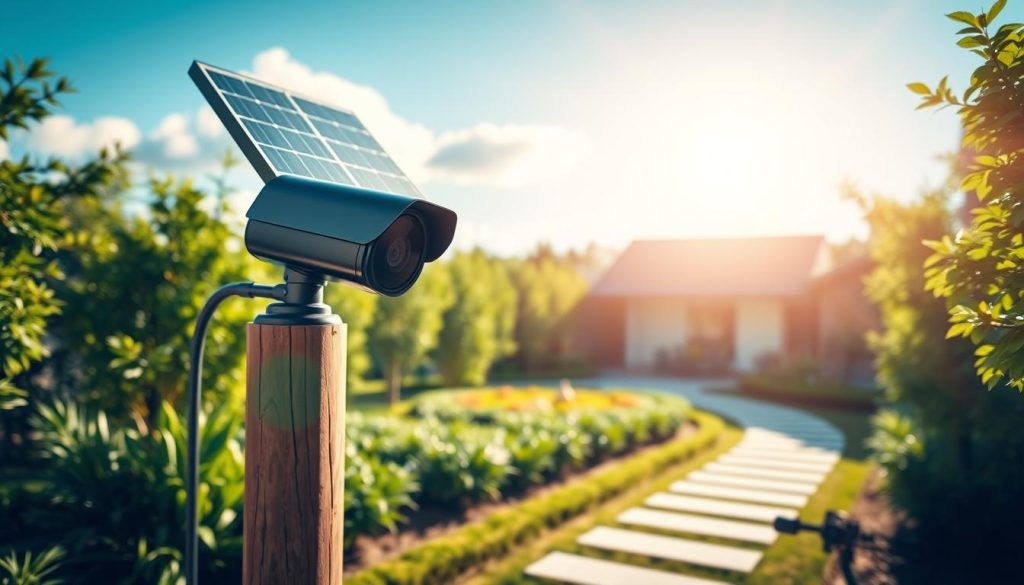
Proper installation maximizes energy harvest and monitoring coverage. It also extends the functional life of your investment. Let’s begin with the foundational step: surveying your property.
Step 1: Site Survey and Optimal Panel Placement
Start by walking your property at different times. Noon is ideal for identifying the sun’s peak path. Note where shadows from trees or buildings fall throughout the day.
Your goal is to find spots with maximum direct sunlight. These areas should receive at least four to six hours of unfiltered rays. This is crucial for keeping the battery charged.
Also, identify high-traffic zones and blind spots. Think about entry points and valuable assets. This helps determine the best vantage points for your monitoring device.
In Singapore, orient the photovoltaic panel towards the north. This captures the most sunlight year-round in the Southern Hemisphere. Avoid locations prone to heavy shade or debris accumulation.
Step 2: Mounting the Camera and Solar Panel
Choose a sturdy mounting surface. Walls, poles, or eaves work well. Ensure the bracket is secure and tamper-resistant.
Angle the panel approximately 30 to 45 degrees. This tilt optimizes energy capture from the sun. Use the included hardware and follow the manufacturer’s instructions.
Position the unit to cover the desired area. Check the field of view before finalizing. Then, connect the weather-proof cable between the panel and the device.
Clip or secure the cable along its path. This protects it from weather damage and accidental disconnection. A clean installation prevents future issues.
Step 3: Network Configuration and App Setup
Power on your equipment. Next, connect it to your home Wi-Fi network. For larger properties, a Wi-Fi extender may be necessary for a clear signal.
Download the manufacturer’s mobile application. Create an account using a strong, unique password. Enable two-factor authentication for an extra layer of security.
Now, configure your video storage preference. You can typically choose from:
- A local microSD card
- A Network Video Recorder (NVR)
- A cloud subscription service
Follow the in-app prompts to pair your device. Encryption features protect your live feed from unauthorized access. This step is vital for remote viewing and alert management.
Step 4: Testing and Optimizing Performance
Verify the live video feed on your phone. Check the image quality during daylight hours. Then, test the night vision functionality after dark.
Walk through the monitored zone to trigger motion detection. Adjust the sensitivity settings in the app. This minimizes false alarms from moving foliage or small animals.
Monitor the battery level indicator. It should show a charging status when the sun is out. A healthy charge cycle confirms the panel is working correctly.
A thorough test phase catches small issues early. It ensures your property protection operates as intended before you rely on it fully.
Finally, establish a simple maintenance routine. Periodically clean the panel surface of dust and leaves. Check all cable connections for wear every few months.
This proactive care maintains peak system efficiency. Your setup will provide dependable service for years to come.
Solar Security Camera Considerations for Singapore
Singapore’s unique urban landscape and tropical climate present specific considerations for sun-powered property protection. To achieve reliable performance, your system must be chosen and installed with local factors in mind.
This means evaluating durability against heavy rain and high humidity. It also involves planning for optimal energy harvest amidst tall buildings.
Understanding local rules is equally important. A thoughtful approach ensures your investment delivers peace of mind for years.
Adapting to Singapore’s Tropical Climate and Weather
Consistent heat and humidity can degrade electronic equipment over time. Frequent downpours during the monsoon season pose another challenge.
Your outdoor unit needs a robust build to withstand these conditions. Look for a high Ingress Protection (IP) rating.
An IP66 or IP67 rating guarantees resistance to heavy rain and dust. This is a non-negotiable feature for reliable operation here.
Corrosion-resistant materials are equally vital. They prevent damage from salty air and constant moisture.
Brands like Hikvision design their products for such environments. Their IP67-rated and anti-corrosion housings ensure year-round performance.
This durability protects your video feed and system integrity. It’s the foundation of a trustworthy security solution.
Maximizing Solar Efficiency in an Urban Environment
Shading from neighboring high-rises can limit a panel’s exposure. Careful placement is key to capturing enough sunlight.
Conduct a simple site survey at different times of day. Identify spots that receive at least four to six hours of direct sun.
Use adjustable mounts to angle the panel towards open sky. This simple trick can significantly boost energy intake.
Consider higher-efficiency panels if space is limited. They convert more of the available light into usable power.
Despite the urban density, Singapore’s equatorial location provides abundant sunlight. With strategic placement, a solar-powered security camera remains a highly viable solution.
The goal is to keep the internal battery adequately charged. A full charge supports continuous operation through the night and cloudy days.
Local Regulations and Best Practices for Installation
Always check rules before mounting equipment on your exterior. Housing and Development Board (HDB) flats, condominiums, and landed properties may have different guidelines.
Condo management often has strict rules about altering building facades. The Urban Redevelopment Authority (URA) may regulate installations in public view.
Consult your town council or a professional installer familiar with local codes. This ensures compliance and helps you avoid potential fines.
A key advantage is that panels require minimal structural modification. This often simplifies approval compared to wired systems.
Follow these best practices for a clean and respectful setup:
- Conceal cables within conduits or along discreet paths to maintain aesthetics and prevent tampering.
- Angle your camera’s view to monitor only your property, avoiding any intrusion on neighbors’ privacy.
- Select a model with a large battery capacity to account for consecutive cloudy days during the monsoon season.
Taking these steps creates a secure, efficient, and neighbor-friendly setup. Your property protection will perform reliably within the local context.
Analyzing the Costs: Upfront Investment vs. Long-Term Savings
The decision to go solar for security is often framed as an environmental choice, but the financial story is equally compelling. A true cost analysis looks beyond the purchase price to the total cost of ownership.
This perspective reveals where the real value lies. It balances initial spending against years of operational savings.
Upfront costs include the camera unit itself, a photovoltaic panel, and mounting hardware. Premium models with 4K video or 4G LTE can cost over $300.
The panel is a separate but crucial accessory. Prices typically range from $50 to $100.
For example, Ring offers a panel for $49.99. Arlo’s universal version is around $59.99, while Lorex’s robust option is $79.99.
This initial outlay is often higher than a basic plug-in model. The trade-off comes from eliminating other expenses.
You avoid paying for professional wiring or trenching across your yard. There is also no ongoing drain on your home’s electricity.
Over several years, powering multiple units with free sunlight cuts your energy bills. The savings add up, especially as utility rates rise.
Another critical value is uninterrupted operation during a blackout. This continuous coverage can prevent property loss, adding indirect savings.
Recurring costs are the final piece of the puzzle. Some brands use cloud storage subscriptions for video history.
Ring and Google Nest have optional monthly plans. Others, like Lorex, provide free local storage with their systems.
If you choose a 4G LTE model, a cellular data plan is an extra ongoing cost. Factor all these into your long-term budget.
The return on investment improves dramatically where running power lines is tough or impossible. For remote farmlands or large estates, a sun-powered solution is often the most economical path to full coverage.
In these complex scenarios, a professional solar CCTV installation can ensure optimal setup and performance.
For most homeowners in sunny Singapore, the long-term benefits clearly outweigh the initial premium. The abundant sunlight maximizes energy harvest, making the system highly cost-effective over time.
View this purchase as an investment in sustainable, reliable property protection. It pays dividends in both financial savings and lasting peace of mind.
Our Top Picks for Reliable Solar-Powered Security
Our review highlights standout products for different users, from tech enthusiasts to practical homeowners. For a professionally monitored solution, consider ADT with Google Nest. Homeowners wanting top video quality should look at Lorex’s 4K models.
If you love smart home tech, Google Nest or Ring offer seamless integration. DIY fans will find Arlo and SimpliSafe very easy to set up. For remote areas, Reolink’s 4G LTE or Hikvision’s professional kits are ideal.
Remember to choose a weatherproof model with efficient charging for Singapore’s climate. Your perfect system matches your property layout and security needs.
This technology is a smart, future-proof investment in your peace of mind. It offers strong protection using clean energy. Visit manufacturer sites to explore these excellent products today.