
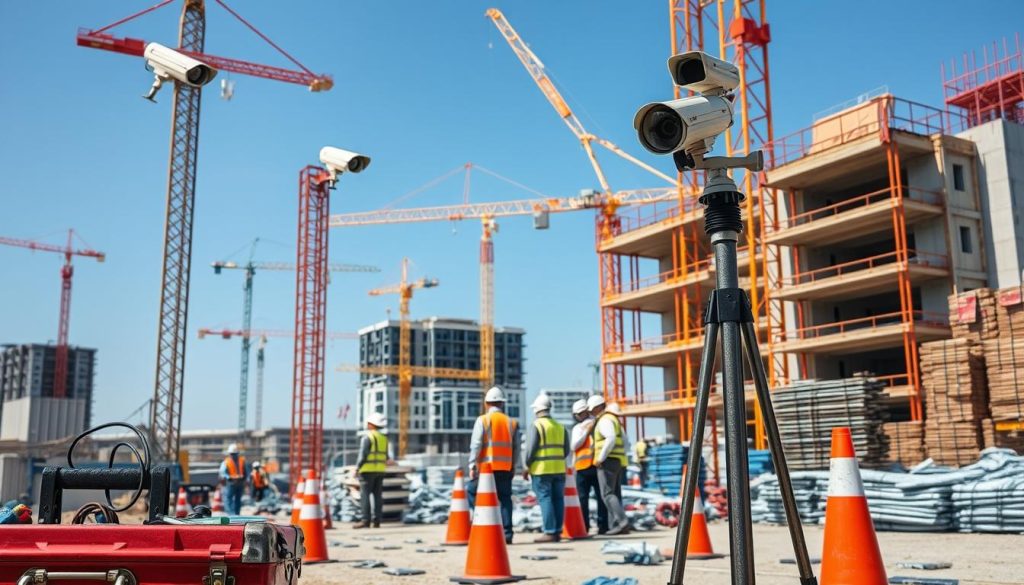
In Singapore’s dynamic building sector, protecting your assets is more critical than ever. Incidents of theft and vandalism have surged by 25%, leading to average annual losses nearing $500,000 per location. This financial drain threatens project timelines and profitability.
Implementing robust site security is no longer optional; it’s a strategic necessity. Modern surveillance solutions can deter up to 40% of potential intruders and have been shown to reduce theft-related incidents by an impressive 80%. This directly safeguards your bottom line.
The technological landscape is evolving rapidly. Features like AI-powered analytics and remote live-streaming now offer unprecedented control and insight. Furthermore, new regulations will mandate video surveillance for projects valued over $5 million, starting in June 2024.
This guide is designed to navigate these complexities. We will help you select the right construction CCTV systems that deliver long-term value, enhance on-site safety, and ensure project success.
Key Takeaways
- Site crime in Singapore’s building industry causes significant financial losses, making advanced security essential.
- Effective surveillance systems are powerful deterrents, capable of reducing theft incidents by up to 80%.
- High-definition video and remote access are key features for modern monitoring and operational efficiency.
- New regulations will soon require video surveillance on major projects, starting June 2024.
- Choosing the right system involves matching technology to specific site needs and environmental challenges.
- Proper implementation protects assets, supports safety protocols, and provides a strong return on investment.
Why Construction Site Security Cameras Are a Critical Investment
Financial viability on major builds is increasingly tied to the ability to secure materials and equipment from loss. A modern surveillance system is not an expense but a strategic safeguard for your capital and schedule.
It delivers a measurable return by stopping losses before they happen and streamlining daily operations.
The Rising Threat of Theft and Vandalism in Singapore
Work areas here face a unique danger. They are 400% more likely to be targeted by thieves than other properties.
This isn’t just about stolen tools. The financial impact can be devastating, consuming up to 25% of a project’s total budget.
Without effective measures, incident rates can climb to nearly 60%. The solution is proven. Deploying dedicated monitoring solutions slashes these events by up to 90%.
Visible units act as a powerful psychological barrier. They deter most petty criminals and unauthorized entry simply by being present.
The most effective security prevents a crime from being attempted in the first place.
The operational savings are substantial. Integrating CCTV oversight can reduce reliance on physical guards, cutting those costs by 80%.
Beyond Security: Enhancing Project Management and Accountability
These video systems transform from a cost center into a value-adding asset. They enable constant oversight that improves overall project management.
Remote access capabilities allow managers to verify work progress from their office. They can ensure compliance with safety protocols and address inefficiencies in real-time.
This creates a culture of accountability among workers. Everyone knows their actions are visible, promoting diligence and proper procedure.
The key benefits for management include:
- Remote Verification: Confirm deliveries, crew presence, and milestone completion without traveling to the location.
- Safety Audits: Review footage to ensure PPE usage and identify potential hazard zones.
- Dispute Resolution: Use recorded video to clarify incidents involving subcontractors or damage claims.
- Resource Optimization: Monitor material usage and equipment deployment to prevent waste.
The investment delivers a dual return. It protects tangible assets from direct loss. Simultaneously, it improves intangible factors like workflow efficiency and worker safety.
This holistic approach is what makes modern surveillance a critical, non-negotiable component for successful projects.
Key Trends in Modern Construction Site Surveillance
The tools available for securing work areas have undergone a significant transformation, driven by smart analytics. Today’s leading-edge solutions do much more than just record events. They actively interpret data to prevent loss and streamline operations.
This shift is marked by two major advancements. Intelligent software now provides instant insights, while constant remote access offers total oversight. Together, they form a proactive shield for your assets.
The Shift to AI-Powered Analytics and Real-Time Alerts
Artificial intelligence has moved from a luxury to a core component of modern security. These smart analytics examine live video feeds to spot unusual activity. They can identify loitering, unauthorized vehicles, or perimeter breaches.
This intelligent monitoring increases the detection of theft and other incidents by up to 40%. It far outperforms old passive recording systems. The system doesn’t just see; it understands and warns.
When a potential threat is detected, it generates instant alerts. These notifications are sent directly to a manager’s phone or a security team. This allows for immediate intervention before a small problem becomes a major loss.
The goal of modern surveillance is to stop an incident in real-time, not just to review it after the fact.
Integration of Remote, 24/7 Live-Streaming Capabilities
Reliable, high-speed connectivity has made constant remote view a practical reality. Managers can now watch their project from any location, at any time. This 24/7 live-streaming is crucial for large-scale projects in Singapore.
New regulations often mandate continuous recording for major builds. A robust security camera system ensures compliance with these rules. It provides an indisputable record of all on-site activity.
The trend extends beyond ground-level cameras. Aerial surveillance using drones is gaining popularity. Drones offer a top-down view of large or complex jobsite areas.
This helps identify layout vulnerabilities and monitor progress. The most effective approach integrates various tools. Video surveillance feeds are combined with wireless sensors and biometric access logs.
This creates a multi-layered defense ecosystem. Adopting these advanced surveillance systems leads to direct cost savings. Some sites report reductions of up to 80% in traditional security expenses.
Efficient, technology-driven monitoring replaces costly manual patrols. It delivers superior coverage and safety for a better return on investment.
Understanding the Financial Impact of Site Crime
A deep analysis of loss statistics uncovers why security investment is a fundamental fiscal strategy. The true cost extends far beyond replacing stolen materials. It includes delayed timelines, inflated insurance premiums, and costly legal disputes.
This financial vulnerability threatens the very viability of developments. Proactive measures are not just about protection; they are about preserving profitability.
Statistics on Losses for Singapore Construction Projects
The numbers paint a stark picture of systemic risk. Industry estimates reveal annual losses from theft and vandalism range between $300 million and $1 billion locally.
This staggering sum highlights a pervasive operational challenge. A startling 80% of firms in this sector report experiencing theft.
These are not minor incidents. Losses can escalate to consume up to 25% of a project’s total budget. Such a hit can derail financial planning and jeopardize timely completion.
The repercussions continue. Locations lacking proper surveillance face a 20% increase in legal claims. Clear video evidence is often the key to verifying liability and resolving disputes swiftly.
How Proactive Surveillance Mitigates Financial Risk
Implementing a robust security system transforms this risk equation. Data shows visible CCTV units can reduce crime rates on site by 65%.
This is a powerful direct deterrent. Historical data from implemented systems demonstrates even greater long-term value.
Vandalism incidents see a reduction of as much as 70% over time. This protects both permanent assets and temporary structures.
In financial terms, a surveillance system functions as a high-yield insurance policy. It pays for itself by preventing losses, not just documenting them.
The presence of technology delivers concrete financial benefits:
- Streamlined Insurance Claims: Indisputable recorded evidence accelerates claim processing and can help validate builder’s risk policies.
- Reduced Legal Costs: Faster dispute resolution cuts down on attorney fees and settlement expenses.
- Operational Savings: Preventing loss of equipment and materials avoids costly replacements and project delays.
- Enhanced Accountability: Improved management oversight reduces waste and improves resource allocation.
Therefore, evaluating a security camera solution should focus on long-term value. The initial cost pales in comparison to the severe and predictable financial risks it mitigates. This makes proactive monitoring a cornerstone of sound project financial management.
Essential Features to Look for in Construction Jobsite Cameras
The effectiveness of your monitoring setup hinges on specific technical features designed for the unique challenges of outdoor projects. Choosing the right hardware is about more than just recording video. It’s about ensuring that footage is clear, the equipment survives the environment, and the system provides intelligent insights.
Focusing on these core capabilities transforms a basic security camera into a reliable partner for asset protection. This section breaks down the non-negotiable specs for modern surveillance systems.
High-Definition Video and Low-Light/Night Vision Performance
Clarity is paramount. High-definition video, with a minimum of 1080p resolution, is essential for capturing identifiable details of individuals and vehicles. This level of detail is vital for both deterring incidents and providing forensic evidence if needed.
Superior performance in darkness is equally critical. Projects are highly vulnerable during non-working hours. Cameras equipped with powerful infrared illuminators or thermal imaging maintain a security watch all night.
Thermal technology, like that from EarthCam, detects heat signatures. It provides reliable video in complete darkness, fog, or smoke. This ensures continuous coverage regardless of lighting conditions or weather.
A clear view in pitch darkness isn’t a luxury; it’s the backbone of 24/7 site protection.
This day night capability means your investment works around the clock. It stops crimes that rely on the cover of darkness.
Rugged, Vandal-Resistant Design for Harsh Environments
These units face dust, rain, physical impacts, and even intentional tampering. A rugged build is not optional. Look for a high IP rating for protection against dust and water ingress.
For defense against blunt force, an IK10 rating is the industry’s highest standard for vandal resistance. Housings from brands like Pelco meet this benchmark. They can withstand direct attacks that would disable lesser equipment.
This durability ensures your security camera system remains operational through the entire project lifecycle. It protects your capital investment in the system itself.
AI Analytics for Theft Deterrence and Safety Compliance
Modern analytics turn passive recording devices into proactive sentinels. Artificial intelligence software can scan live feeds to detect specific behaviors. This includes perimeter breaches, unauthorized loitering, or safety violations like missing personal protective equipment.
This intelligent monitoring boosts the detection of potential theft by up to 40% compared to traditional setups. When a threat is identified, the system generates instant alerts. These notifications are sent directly to managers’ phones for immediate action.
The benefits extend beyond loss prevention. This technology actively promotes safety compliance. It helps create a culture of accountability on the jobsite.
When evaluating camera systems, consider how well they integrate with your video management software. A seamless security ecosystem provides a comprehensive view and maximizes your return on investment.
Navigating Singapore’s Regulatory Landscape for Video Surveillance
Operating a major development project in Singapore now requires a firm grasp of evolving legal mandates for electronic oversight. Compliance is no longer just a best practice. It is a binding requirement that integrates directly with your site security strategy.
Understanding these rules is essential for avoiding penalties and building a responsible operation.
Overview of the Video Surveillance System (VSS) Requirements
A major regulatory shift began on June 1, 2024. The Ministry of Manpower now mandates that all construction projects valued at $5 million and above implement a compliant Video Surveillance System.
The primary goal is to enhance workplace safety and health. Constant monitoring of high-risk activities is required. This includes work at height, scaffolding zones, excavations, and areas with heavy vehicle movement.
Technical specifications are clearly defined to ensure useful footage. Systems must record at a minimum of 1080p HD resolution and 12 frames per second. This clarity is vital for incident investigation.
Data retention is strictly regulated. General footage must be kept for at least 30 days. However, video related to a reportable safety incident requires 180 days of storage.
This structured approach provides a reliable audit trail. It supports both safety reviews and potential regulatory inquiries.
Compliance with the Personal Data Protection Act (PDPA)
Operating a surveillance system also means adhering to Singapore’s Personal Data Protection Act. The PDPA governs how personal data, including images of individuals, is collected and used.
Simply installing cameras is not enough. You must implement specific measures to comply.
Transparency and purpose limitation are core principles of the PDPA. Individuals should be aware they are being recorded, and the data should only be used for its stated safety and security purpose.
Key compliance steps include posting clear signage at entry points. This notifies all personnel and visitors that video recording is in operation.
Access to recorded footage must be restricted to authorized personnel only. Robust cybersecurity for your security camera system is non-negotiable. It prevents unauthorized access and data breaches.
Non-compliance with either VSS or PDPA rules can result in significant financial penalties. Partnering with a provider who understands both the technical and legal layers is crucial.
A properly implemented system does more than meet legal checks. It becomes a powerful tool for proactive safety audits, crew training, and demonstrating due diligence to insurers.
This turns a regulatory requirement into a strategic asset for your project.
Operational Benefits: More Than Just Crime Prevention
The true value of a sophisticated monitoring system unfolds in its ability to streamline daily operations and provide actionable insights far removed from security incidents. These platforms evolve from a simple deterrent into a central hub for project intelligence.
This shift delivers tangible advantages for efficiency, cost control, and risk mitigation. It turns a defensive tool into a proactive asset for the entire management team.
Improving Site Management Efficiency and Remote Oversight
Modern security solutions provide a live window into every corner of your operation. Managers gain an unprecedented view of workflow, resource deployment, and subcontractor activity from any location.
This constant visibility is a game-changer. It allows for the verification of material deliveries as they happen. Teams can also confirm crew presence and monitor progress against critical milestones in real time.

This data-driven approach leads to smarter decisions. Management can identify bottlenecks early and reallocate labor or equipment before delays occur. It empowers a more responsive and agile leadership style.
Remote oversight isn’t about replacing boots on the ground; it’s about empowering managers with the clarity to make better decisions faster.
Leading systems, like those from Pelco, are designed for this purpose. They help optimize staffing levels by providing clear evidence of activity across different areas. This ensures people are where they are needed most.
The result is a more efficient, accountable, and productive work environment. Problems are spotted and addressed swiftly, keeping the project on track.
Supporting Builders Risk Insurance and Reducing Premiums
From a financial perspective, a professional surveillance setup is a powerful lever for risk management. Insurance providers recognize sites with verified monitoring as significantly lower risks.
This recognition can translate into direct cost savings. Demonstrating proactive safety and asset protection can lead to more favorable policy terms and premium reductions.
Services like EarthCam’s Command Watch 24 provide a compelling case for insurers. This service offers round-the-clock central station monitoring and holds key certifications.
It is UL-listed and TMA Five Diamond certified. These credentials place it on the approved vendor lists of many major insurance underwriters.
Documented, 24/7 oversight is a major mitigation factor in the eyes of insurers. It shows a commitment to protecting the project from theft, vandalism, and safety lapses.
Furthermore, recorded video serves as an impartial witness. In the event of an accident or a dispute over work quality, footage provides clear evidence.
This protects the company from fraudulent liability claims and can shorten lengthy legal battles. The system pays for itself by safeguarding both physical assets and financial interests.
Ultimately, these operational benefits redefine the investment. A modern security camera solution becomes an active tool for enhancing productivity, controlling costs, and ensuring project success.
Exploring the Types of Construction Security Camera Systems
A well-protected project relies on a strategic combination of surveillance technologies, each serving a unique purpose. The market offers a diverse range of camera types designed for specific functions.
Selecting the right mix is crucial for comprehensive site coverage. Understanding these options allows you to build a robust security ecosystem.
Fixed Cameras: Dome, Bullet, and Turret Styles
Fixed security cameras provide reliable, constant monitoring of specific zones. They are the foundational elements of any camera system.
Dome cameras are often chosen for their discreet, vandal-resistant design. They offer a wide-angle view, perfect for covering large indoor areas like site offices.
Bullet cameras are engineered for long-distance observation. Their streamlined housing is ideal for monitoring perimeters or remote storage yards.
Turret styles offer a middle ground with flexible manual adjustment during installation. Each fixed style delivers unwavering video surveillance of its assigned area.
Pan-Tilt-Zoom (PTZ) and 360-Degree Cameras
For dynamic sites, PTZ cameras offer unparalleled flexibility. A remote operator can manually control the unit’s direction, tilt, and zoom.
This allows for tracking suspicious activity across large, open job sites. It effectively conducts virtual patrols without deploying physical guards.
The ability to zoom in on a license plate or a worker’s safety gear from a control room transforms reactive recording into proactive management.
360-degree or fisheye cameras provide a single, panoramic view. They eliminate blind spots in indoor spaces like warehouses.
This technology can reduce the total number of units needed for complete coverage. Both PTZ and 360-degree models add a powerful layer of operational intelligence.
Specialized Cameras: Thermal, License Plate Recognition, and Access Control
Advanced threats require advanced systems. Specialized security cameras bring capabilities beyond standard video.
Thermal imaging cameras detect heat signatures, not light. They enable reliable intrusion detection in total darkness, fog, or smoke.
This ensures true 24/7 day night surveillance. It provides a critical response advantage during night hours or adverse weather.
Automated License Plate Recognition (ALPR) systems automatically log every vehicle. Services like EarthCam’s use optical character recognition to identify plates.
This streamlines access control and helps flag unauthorized access instantly. It creates an automated log for verifying deliveries and contractor arrivals.
Integrated access control solutions, such as DoorCam, combine video verification with two-way audio. Remote personnel can visually confirm identities before granting entry to gates.
This tightens security at entry points. A hybrid system that combines fixed, PTZ, and specialized cameras is often the most effective solution.
It delivers comprehensive protection and strong analytics for a dynamic construction site environment.
How to Select the Right System for Your Project Needs
The path to effective asset protection begins with a clear understanding of your project’s unique vulnerabilities and goals. Selecting a security camera system is not a one-size-fits-all decision. It requires a tailored approach that matches technology to your specific operational landscape.
This process involves three core evaluations. You must analyze the physical site, consider the project timeline, and weigh financial investment against long-term value.
Assessing Your Site: Size, Layout, and Risk Areas
Your first step is a thorough site assessment. Walk the perimeter and map the entire layout. Identify zones that demand focused monitoring.
High-value asset storage areas, like tool cribs and material yards, are top priorities. Also, note high-traffic zones for deliveries and vulnerable perimeter points where unauthorized access is most likely.
This mapping exercise directly informs your system design. It determines the quantity of units needed and their optimal placement for complete coverage without blind spots.
- Pinpoint Critical Assets: Locate expensive equipment, fuel storage, and prefabricated materials.
- Analyze Traffic Flow: Understand vehicle and personnel movement patterns to position cameras effectively.
- Identify Blind Spots: Look for areas obscured by structures or terrain that could hide activity.
Evaluating Temporary vs. Permanent Surveillance Solutions
Project duration is a key deciding factor. Short-term projects often benefit from flexible, temporary solutions. Mobile, trailer-mounted systems can be deployed quickly and relocated as the site evolves.
For long-term developments, a permanent, hardwired infrastructure is typically the wiser investment. These setups offer robust features and provide unwavering surveillance. They are ideal for protecting persistent risk zones like scaffolding and equipment yards.
Consider future-proofing your investment. Choose systems with open-platform architecture, like those from Pelco. This ensures compatibility with your existing video management software (VMS). It also allows for easy integration of new technologies later.
The most adaptable systems are built on open standards, protecting your investment from becoming obsolete as technology advances.
Storage is another vital component. Solutions like EarthCam’s Edge Video Recorder (EVR) offer long-term, on-site recording. They can capture continuous HD video for over a year. This ensures compliance with data retention laws without constant cloud bandwidth.
Balancing Initial Cost with Long-Term Value and ROI
A critical evaluation must look beyond the sticker price. Balance the initial capital outlay against the long-term value proposition. Factor in all costs: hardware, professional installation, monitoring services, and ongoing maintenance.
Then, weigh these against the potential savings. Theft prevention, reduced insurance premiums, and operational efficiencies from remote management all contribute to the return.
Calculate the potential Return on Investment (ROI) realistically. Estimate the total value of assets at risk. Review the historical cost of incidents at similar sites. Add the value of managerial insights gained from remote view capabilities.
Engage with reputable vendors who provide customized site plans. They should demonstrate their equipment’s durability in harsh conditions. Look for partners offering scalable solutions that can grow as your project evolves.
Ultimately, the right system delivers reliable, comprehensive coverage tailored to your specific risk profile. It provides peace of mind and tangible financial protection for the entire project lifecycle.
Best Practices for Installation and Ongoing Management
A robust surveillance setup’s success depends heavily on two critical phases: expert installation and diligent ongoing management. The finest technology can underperform if deployed incorrectly or neglected. This section outlines the operational steps to ensure your security investment delivers maximum protection and value from day one.
Strategic Camera Placement for Maximum Coverage and Deterrence
Effective protection begins with a smart layout. Units should be positioned to monitor all primary access points, including gates and perimeter fences. High-value zones like material storage yards and equipment parking are also top priorities.
Creating overlapping fields of view is essential. This strategy eliminates blind spots where unauthorized activity could go unseen. It ensures comprehensive coverage of the entire operational area.
Mounting height and angle are technical details with major impact. Install units high enough to avoid easy tampering, typically above nine feet. The angle should be set to capture clear, identifiable details of people and vehicles when needed.
The physical visibility of your security cameras is a powerful psychological tool. Prominent, well-placed housings signal that the site is actively watched. This presence alone can stop many crimes before they are attempted.
Posting clear signage is a proven best practice. Notices stating that video surveillance is in operation enhance the deterrent effect. In busy areas, this visible warning can cut incidents of theft and vandalism by half.
Strategic placement is about creating a net of visibility that leaves no room for doubt—doubt for managers about what’s happening, and doubt for intruders about being seen.
The Role of Professional Installation and Central Station Monitoring
Engaging certified technicians for installation is highly recommended. Professionals ensure proper weatherproofing, secure mounting, and optimal network configuration. They comply with all electrical and data wiring standards, preventing costly mistakes.
This expert setup guarantees your system operates reliably in harsh conditions. It forms the solid foundation for all other security functions.
For round-the-clock vigilance, consider integrating with a central station monitoring (CSM) service. Services like EarthCam’s Command Watch 24 add a vital human layer. Trained agents monitor feeds 24/7 and verify alerts from AI analytics.
When a genuine threat is confirmed, these professionals can immediately contact on-site personnel or dispatch law enforcement. This drastically cuts response times to real incidents, moving from passive recording to active intervention.
Ongoing management is crucial for long-term performance. Schedule regular system health checks, clean lenses of dust and debris, and apply firmware updates. Also, routinely verify storage integrity to ensure recorded video is accessible when needed.
Finally, adherence to privacy laws during both installation and operation is mandatory. Ensure units do not point into private neighboring properties. All data handling must comply with Singapore’s Personal Data Protection Act (PDPA). This responsible approach protects your project legally while it protects your assets physically.
Making an Informed Decision for Your Site’s Security Future
The decision you make today about site monitoring will define your operational resilience tomorrow. Choosing the right security system is a strategic move. It directly protects your financial health and enhances overall efficiency.
This guide has shown the severe risks of theft and vandalism. Modern surveillance does more than deter crime. It enables remote management and can lower insurance costs.
Technologies like AI analytics and thermal imaging offer proactive tools. They help prevent incidents before they happen. Compliance with local regulations is also a fundamental requirement.
Partnering with experts for professional installation is crucial. Services like central station monitoring add a vital layer of rapid response. This turns basic cameras into a command center.
Ultimately, an informed investment brings peace of mind. It safeguards your project’s bottom line and ensures a safer, more accountable work environment for everyone.