
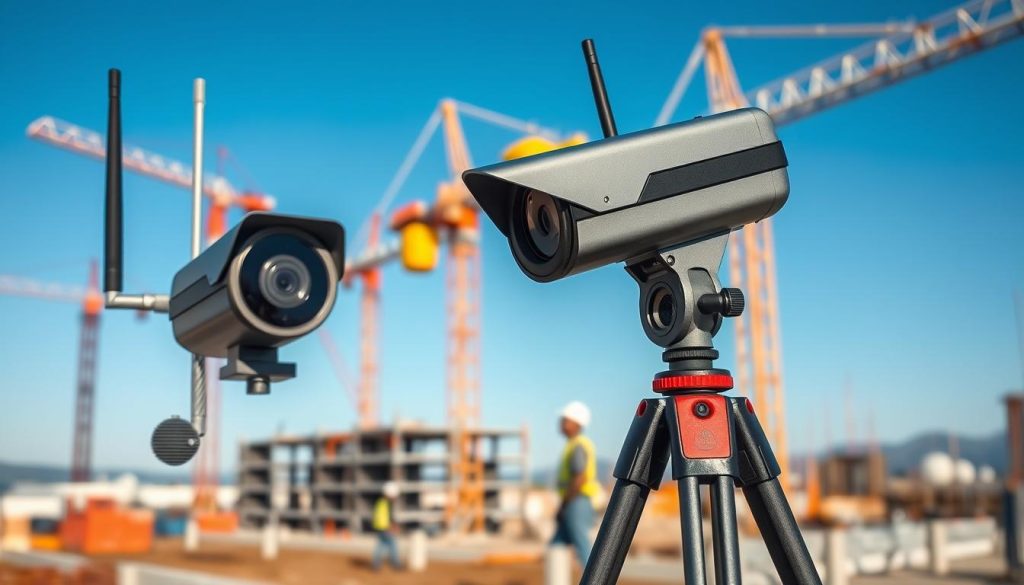
Managing a project in Singapore demands smart tools for safety and efficiency. Choosing the right surveillance technology is a major decision for any professional. This comprehensive buyer’s guide is crafted for project managers, site supervisors, and security teams.
Modern surveillance delivers much more than simple theft prevention. It is a cornerstone of proactive project management. These systems provide real-time video monitoring and enhance overall operational control.
We will break down the essential advantages of choosing a modern system. Key benefits include unmatched flexibility, easy scalability, and rapid deployment. A detailed analysis of technical features like resolution, night vision, and durability will follow.
Given Singapore’s regulatory landscape, we thoroughly explain the Ministry of Manpower’s (MOM) Video Surveillance System (VSS) mandate. This rule is effective June 2024. The guide also addresses local challenges like tropical climate resilience and optimal network connectivity.
You will gain a practical, step-by-step checklist to assess your specific needs. Our goal is to empower you to make a future-proof investment. This investment will enhance safety, ensure compliance, and improve project efficiency.
Key Takeaways
- This guide is designed for construction project managers and security professionals in Singapore.
- Modern surveillance is an indispensable tool for project management, going beyond basic theft deterrence.
- Wireless systems offer critical advantages in flexibility, scalability, and speed of deployment.
- Key technical features to evaluate include resolution, night vision, durability ratings, and power options.
- Compliance with Singapore’s MOM VSS mandate, effective June 2024, is a crucial consideration.
- The guide addresses Singapore-specific factors like tropical weather and network choices (4G/5G vs. Wi-Fi).
Introduction: Why Construction Site Monitoring is Non-Negotiable
The dynamic nature of contemporary project zones creates a complex web of operational and safety challenges. These are high-value environments where financial stakes and human safety are paramount.
Constant movement defines these locations. Personnel, heavy machinery, and valuable materials are always in flux. This activity inherently increases vulnerability.
Effective oversight is now a fundamental pillar of responsible management. It is not an optional extra. A robust visual management system provides the clarity needed to navigate daily complexities.
The High-Stakes Environment of Modern Construction
Modern construction sites are ecosystems of immense pressure. Tight deadlines and large budgets demand flawless execution. Any disruption can lead to significant financial loss.
These areas are attractive targets for theft and vandalism. Without proper oversight, controlling access and asset movement becomes incredibly difficult. The sheer volume of activity makes manual supervision insufficient.
Furthermore, ensuring worker safety is a legal and moral imperative. Verifying that safe work practices are followed across all sites is a constant challenge. Proactive monitoring is a critical tool for risk mitigation.
From Security to Productivity: The Multifaceted Role of Cameras
Surveillance technology has evolved far beyond its traditional role. Today’s systems are powerful management tools. They provide a continuous record of on-ground realities.
Video evidence is invaluable for resolving disputes. It can clarify the sequence of events during an incident or delay. This protects all parties and supports accurate reporting.
These systems also drive productivity. Managers can observe workflow and vehicle traffic in real time. This allows for quick adjustments to avoid costly stoppages.
They deter unsafe behavior and unauthorized access. The presence of a monitoring device promotes accountability. Recorded footage serves as excellent material for safety training and process audits.
Implementing a professional visual management system, like the professional surveillance solutions tailored for such environments, is a strategic decision. It safeguards security, enhances safety, and protects your project’s bottom line. In today’s landscape, this level of oversight is truly non-negotiable.
The Wireless Advantage: Transforming Site Security and Management
The evolution from traditional wired setups to modern wireless systems represents a fundamental upgrade for operational oversight. This shift unlocks new levels of efficiency and control for project leaders.
Modern wireless technology moves beyond simple video capture. It creates an agile, intelligent management layer. This layer adapts to the unique demands of any project environment.
Eliminating the Hassles of Wired Installation
Traditional wired installation is a major logistical challenge. It involves extensive trenching, conduit running, and disruptive labor. This process is often impractical in active, changing environments.
Wireless systems remove this entire burden. There is no need to run cables across difficult terrain. This eliminates significant cost and safety risks associated with physical wiring.
Professionals gain the freedom to place monitoring units anywhere. Hard-to-reach or temporary zones become easy to secure. The result is a safer, cleaner, and far less intrusive setup process.
Flexibility and Scalability for Evolving Projects
A project’s layout is never static. Phases change, and new risk areas emerge. A rigid surveillance system can quickly become obsolete.
Wireless solutions offer inherent adaptability. Units can be relocated in minutes as needs shift. Expanding coverage is as simple as adding a new device to the network.
This flexibility directly protects your investment. Security measures evolve with the project’s lifecycle. It allows for dynamic resource allocation, leading to substantial long-term savings.
An easy-to-deploy system facilitates more than just theft prevention. It becomes a tool for managing vehicle flow and worker productivity, radically boosting on-ground efficiency.
Rapid Deployment for Immediate Coverage
Speed is critical. Fast-moving projects cannot afford security delays. Wireless deployment happens in hours or days, not weeks.
This provides immediate visual oversight from day one. Critical areas are monitored without waiting for infrastructure work. It ensures protection during the most vulnerable early phases.
Cellular network options (4G/5G) guarantee connectivity anywhere. Even remote “greenfield” locations without internet can have full remote access. Managers get real-time visibility regardless of location.
This rapid coverage is a strategic advantage. It secures assets and personnel without slowing down the project timeline. It transforms security from a delayed afterthought into an integrated, proactive function.
Key Features to Look for in Construction Site Cameras Wireless
Beyond the convenience of cable-free setup, the critical differentiators are found in a device’s imaging, resilience, and intelligence. Not all visual monitoring units are created equal. The right specifications turn raw footage into powerful, actionable intelligence for your team.
This section breaks down the essential capabilities you must evaluate. Your choice directly impacts security effectiveness and operational insight.
Video Resolution and Image Clarity
Image detail is paramount. A blurry feed is useless for identification or evidence. Prioritize units with a minimum of 1080p Full HD resolution.
For large or complex areas, 4K options are a game-changer. They provide critical detail for identifying individuals, license plates, and equipment serial numbers from a significant distance. This level of clarity can resolve disputes and investigations swiftly.
Night Vision and Low-Light Performance
Effective after-dark monitoring is non-negotiable. Projects don’t stop at sunset, and neither should your oversight. Look for robust infrared (IR) illuminators.
Advanced starlight or low-light sensors are even better. They deliver clear, usable video in near-total darkness. This ensures continuous protection and safety oversight, 24 hours a day.
Durability and Environmental Protection (IK/IP Ratings)
These devices face a brutal environment. They must withstand dust, heavy rain, and physical impacts. This is where IK and IP ratings become your guide.
Seek high ratings like IK10 for impact resistance and IP67 for ingress protection. An IK10/IP67 unit can survive direct vandalism and monsoonal rain. This toughness guarantees reliable operation through the entire project lifecycle.
Power Options: Solar, Battery, and Hybrid Systems
Continuous operation depends on a reliable power source. Evaluate autonomy based on your location’s logistics. Long-life battery-powered models offer flexibility for temporary zones.
Solar-powered units are ideal for off-grid locations. Hybrid systems combine the best of both for uninterrupted operation. The right power strategy eliminates downtime and maintenance headaches.
Intelligent video analytics transform a passive recording device into an active sentry, providing immediate alerts for specific events rather than just continuous footage.
Remote Access and Real-Time Alerts
The system must offer seamless remote access via a smartphone app or web portal. This allows for live viewing from anywhere, giving managers true mobile command.
Smart detection features are key. Look for motion detection in specific zones, plus person or vehicle classification. These analytics trigger instant push notifications or email alarms for suspicious activity.
This enables a proactive response, not just a post-event review. It dramatically enhances your coverage and reaction capability.
Finally, consider storage solutions. Onboard SD card storage provides local backup. Reliable cloud options ensure secure, off-site evidence preservation. This dual approach complies with data retention policies and safeguards critical footage.
Navigating Compliance: Singapore’s MOM VSS Mandate Explained
A new mandate from Singapore’s Ministry of Manpower has fundamentally changed the requirements for visual oversight on major projects. This regulation makes advanced visual documentation a legal necessity, not just a best practice.
For project managers, understanding and implementing this rule is critical. It directly impacts operational planning and legal liability.
Understanding the June 2024 Regulations
Effective June 1, 2024, the MOM Video Surveillance System (VSS) mandate applies to all project locations with a contract value of S$5 million or more. Its primary goal is to enhance worker safety through better oversight.
The core requirement is a system that can capture, record, and store clear footage of high-risk work activities. This evidence is crucial for incident investigation and promoting safe work practices.
This rule transforms visual management from an optional tool into a compulsory component of project security. CCTV monitoring Singapore solutions are now central to regulatory adherence.
Mandatory Requirements for High-Value Projects
Compliance involves specific technical and operational standards. The system must provide continuous monitoring of designated high-risk zones.
Recorded video must be of sufficient quality to show critical details. This includes identifying personnel, equipment, and specific actions. Evidentiary clarity is non-negotiable.
Secure data storage for a mandated period is essential. Authorized personnel, like safety officers, must have reliable access to review footage at any time. This ensures transparency and supports audits.
Choosing a system pre-configured for the Singapore market guarantees it meets these specific regulatory storage and access requirements from day one.
How a Wireless System Meets and Exceeds Compliance
Modern wireless technology is inherently suited for this mandate. Its rapid deployment allows coverage of critical areas immediately, without waiting for cable installation.
This speed ensures compliance from a project’s earliest, often most vulnerable, phases. High-resolution imaging delivers the clear video evidence regulators demand.
Robust night vision guarantees 24/7 monitoring capability. Secure cloud storage solutions provide off-site data protection and easy access for investigators.
Remote real-time viewing is a key advantage. Safety managers can proactively monitor live feeds to ensure procedure compliance. This moves security from a reactive to a proactive function.
Each device can be strategically placed and easily moved as high-risk zones shift. This adaptability ensures continuous adherence throughout the project’s lifecycle, offering a level of operational security that fixed systems cannot match.
Singapore-Specific Considerations for Your Camera System
Operational oversight in Singapore is shaped by its climate, urban density, and strict legal framework. A generic system might fail under these unique pressures.
Your investment must be tailored to local realities. This ensures reliable performance and full regulatory compliance from day one.
Adapting to Singapore’s Tropical Climate and Urban Sites
Relentless humidity and heavy rainfall are constant challenges. Equipment must have a high IP rating for water and dust protection.
This guarantees operation during monsoon seasons. High temperatures also demand robust internal components.
Urban project areas add another layer of complexity. Space constraints require compact form factors.
Signal interference from surrounding buildings is common. Robust transmission technology is essential for clear coverage.
Systems engineered for this environment, like those from Pro-Tec Geo Systems, are built to last. They provide peace of mind in the toughest location.
Network Connectivity: 4G/5G vs. Wi-Fi Solutions
Stable network connectivity is the lifeline of your system. The choice depends heavily on your project’s phase and location.
For new projects without infrastructure, cellular is king. 4G or 5G connectivity ensures constant data transmission from any location.
“A cellular network provides immediate, reliable connectivity for remote sites, making it the go-to solution for early-phase projects where every day of oversight counts.”
On established sites with existing internet, Wi-Fi or mesh solutions can be cost-effective. You must assess signal range and penetration through materials.
Hybrid systems offer the best flexibility. They can use cellular as a primary link with Wi-Fi as a backup, ensuring zero downtime.
Data Storage and Privacy Laws in Singapore
Your storage strategy must satisfy two key mandates. The MOM VSS rules dictate retention for safety evidence.
Singapore’s Personal Data Protection Act (PDPA) governs all personal data. Recorded footage falls under this law.
Footage must be stored securely with strict access controls. This protects the privacy of individuals on camera.
Using vendors with local data centers simplifies compliance. It avoids complex cross-border data transfer issues.
Local providers design systems with these details in mind. Pro-Tec Geo Systems, for example, engineers solutions for Singapore’s regulatory and environmental landscape.
Their systems are fast to deploy and use solar power. This aligns perfectly with the need for resilient, off-grid power options.
Partnering with a specialist ensures your storage and network planning meets all local requirements from the start.
The Buyer’s Checklist: How to Choose the Right System
The final purchasing decision hinges on a thorough assessment of three core areas: physical layout, operational goals, and vendor capabilities. This structured checklist transforms a complex evaluation into a clear, actionable process.
Assessing Your Site’s Size, Layout, and Risk Areas
Begin with a comprehensive survey of your project’s footprint. Map the entire perimeter and all entry and exit points.
Identify zones where high-value assets are stored. Also, pinpoint locations where high-risk work activities occur.
This analysis directly informs the quantity of units needed and their optimal placement. You must calculate the required field of view for each location.
Adequate zoom capabilities are essential to eliminate blind spots. Proper planning ensures complete visual coverage of all critical areas.
Defining Your Monitoring Goals: Theft Deterrence vs. Safety Oversight
Clearly articulate your primary objectives. Is the main aim 24/7 theft deterrence, or is it monitoring worker safety protocols?
Perhaps you need to manage vehicle logistics and traffic flow. Many projects require a combination of all these functions.
Your specific goals dictate feature priorities. For example, safety oversight demands higher resolution to see procedural details.
Perimeter breach detection might prioritize different motion analytics. Defining this upfront guides your technical specifications and business case.
A system focused on safety evidence requires different configurations than one designed solely for asset security. Knowing the difference protects your investment.
Evaluating Vendor Support and Local Service in Singapore
Scrutinize potential suppliers for their local presence and reputation. Do they offer in-country technical support and on-site maintenance?
The availability of spare parts in Singapore is crucial for minimizing downtime. Evaluate the user-friendliness of their software platform.
The quality of training provided for your personnel is a key pro consideration. Always request detailed case studies or references from similar local projects.
This provides real-world proof of performance and reliability. A major advantage is a vendor who provides a single point of contact.
This simplifies project management by unifying hardware, software, connectivity, and support. It streamlines operations and controls long-term costs.
Choosing a partner with deep local expertise ensures your system meets all operational and regulatory needs from day one.
Installation and Deployment: What to Expect
A well-executed setup process transforms your security investment from a box of hardware into a live, intelligent management layer. This phase is where planning meets reality.
Understanding the steps involved ensures a smooth transition. It also guarantees your system delivers the promised coverage and insight from day one.
Site Survey and Strategic Camera Placement
Every professional installation begins with a detailed site survey. Experts visit your location to assess the unique layout and challenges.
They finalize the best models and mounting positions. This planning balances optimal viewing angles with vandalism prevention.
A clear line of sight for wireless signal transmission is also confirmed. The goal is to position each device for maximum effectiveness.
This survey also finalizes network and power logistics. It is the blueprint for a successful deployment.
Minimizing On-Site Disruption During Setup
For modern systems, deployment is significantly less disruptive. Work typically involves mounting units on poles, walls, or temporary structures.
There is minimal drilling or groundwork required. The focus is on swift execution to secure the area quickly.
“A professional team works with your schedule to avoid interfering with ongoing activities. This minimizes safety risks to workers and keeps the project on track.”
The process is designed for efficiency. Your operational flow experiences little to no downtime.
System Activation and Personnel Training
Once physically placed, the technical team configures each device. They set up the network, whether cellular or Wi-Fi.
All power sources, like battery or solar, are verified as operational. System activation is the next critical step.
This includes creating user accounts and configuring motion detection zones. Alert parameters and video recording schedules are also set.
Comprehensive training for your managers is crucial. It covers live viewing, reviewing recorded footage, and managing alerts.
Basic troubleshooting is also part of the session. This empowers your team to use the system confidently.
You will receive a complete handover document. It details system access, maintenance schedules, and support contact information.
This final step ensures you have full control and knowledge. Your visual oversight is now active, intelligent, and ready to protect your investment.
Understanding the Total Cost of Ownership
The true expense of a management system is measured across its entire lifespan, not just at purchase. Smart budgeting requires a detailed analysis of both capital investment and recurring operational outlays.
This holistic view is crucial for accurate financial planning. It prevents unexpected surprises and ensures your security solution remains sustainable.
By evaluating all financial components, you make an informed business decision. This protects your project’s bottom line while delivering maximum value.
Upfront Hardware and Software Costs
The initial investment covers several key items. This includes the cameras themselves, durable mounting brackets, and any necessary network gateways.
For cellular-based systems, you may need a dedicated router. Software licenses or access fees for the management platform are also part of this phase.
A significant advantage is the lower installation expense. Without extensive cabling, labor costs and time are drastically reduced.
This makes the initial deployment faster and less disruptive. You can secure your site immediately without major groundwork.
Exploring best wireless construction site cameras in helps you compare these upfront options. It ensures you select equipment that offers long-term reliability.
Ongoing Expenses: Data Plans, Cloud Storage, and Maintenance
Recurring costs are a vital part of the budget. Each cellular-connected unit typically requires a monthly data subscription.
Fees for cloud storage and advanced video analytics services are common. Software support contracts may also renew annually.
Regular upkeep is essential for peak performance. This involves cleaning lenses and checking power sources.
For battery or solar-powered units, periodic servicing is needed. Ensuring continuous power guarantees uninterrupted monitoring.
Proactive maintenance prevents small issues from becoming costly failures. It extends the system’s operational life and protects your investment.
Budgeting for these ongoing items from the start is wise. It avoids operational gaps and maintains full security coverage.
ROI: How Wireless Cameras Reduce Losses and Improve Efficiency
The return on investment is calculated by quantifying losses prevented. A visible surveillance system is a powerful deterrent against theft of tools and materials.
It helps avoid heavy fines for safety non-compliance. Insurers may also offer reduced premiums for projects with robust oversight.
Efficiency gains form another major part of ROI. Remote monitoring allows managers to oversee operations from anywhere.
This leads to better resource allocation and faster daily decisions. Video evidence speeds up the resolution of disputes, saving valuable time and legal fees.
The scalable nature of modern systems supports phased investment. You can start with a core setup for critical zones.
Expansion can happen as the project grows and budget allows. This aligns capital outlay with actual project phases, improving cash flow.
When all factors are considered, a professional visual management system pays for itself. It safeguards assets, ensures compliance, and drives operational excellence.
Integrating Cameras with Overall Site Security and Operations
To achieve true operational intelligence, your visual monitoring must become part of a unified digital ecosystem. Isolated video feeds offer limited insight. The real strategic advantage emerges when these systems communicate seamlessly with other management tools.
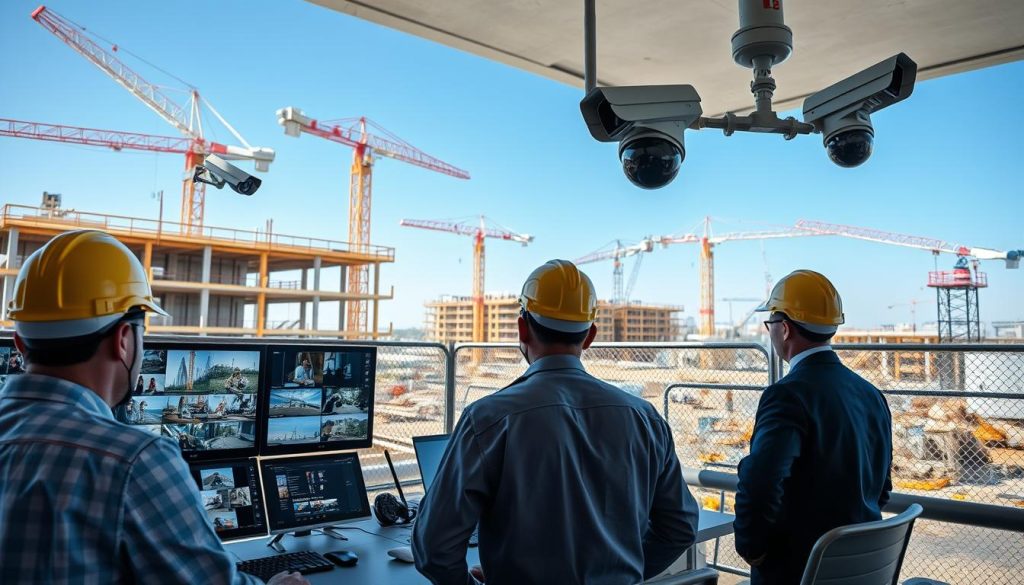
This integration creates a powerful, automated command center. It moves your approach from reactive observation to proactive control.
Linking Video Surveillance with Access Control and Alarms
Maximize your security ecosystem by connecting visual units with door controllers and perimeter sensors. When an unauthorized access attempt occurs, the linked cameras instantly activate.
They provide live video verification of the event. This allows managers to assess the situation visually before dispatching a response.
This unified approach eliminates false alarms. It ensures that every alert is backed by immediate visual context. Your team can react with precision and speed.
Integrating systems turns individual alerts into a coherent security narrative, dramatically improving incident response time and effectiveness.
Using Video Analytics for Proactive Safety and Management
Advanced analytics transform passive recording into an active management tool. These smart features analyze the video stream in real-time.
Configure them to send specific alerts for safety violations. For example, they can detection personnel not wearing proper PPE in hazardous zones.
Operational uses are equally powerful. People-counting functions help manage site occupancy. Vehicle detection can log deliveries and control traffic flow automatically.
This shifts the focus from reviewing footage after an incident to preventing it altogether. It empowers supervisors to enforce protocols proactively.
Centralized Monitoring for Multi-Site Projects
For firms managing multiple project zones, a cloud-based platform is essential. It allows managers to view live feeds from all sites on a single dashboard.
This enables efficient allocation of security resources across the portfolio. Standardized safety monitoring protocols can be applied company-wide.
Senior management gains streamlined reporting and a holistic view of operations. A centralized network simplifies management and reduces overhead.
Investigations also become more thorough. You can correlate video timelines with data from access logs and other alarms.
This integrated data picture provides undeniable evidence. It clarifies complex incidents and supports faster resolution.
Ultimately, a unified system transforms scattered data points into actionable intelligence. It elevates your entire security and operational posture.
Making an Informed Decision for Your Project’s Future
Concluding your evaluation requires synthesizing technical specs, local mandates, and operational goals into a single, future-proof choice. This decision directly shapes your project’s safety record, regulatory standing, and daily efficiency.
Use the framework from this guide. Apply the buyer’s checklist to assess your specific needs methodically. Critically evaluate vendors based on their local support and proven performance in Singapore.
View this procurement not as a simple security expense. It is a proactive management tool for preventing loss and gaining operational insight. A scalable, durable system adapts as your business and project phases evolve.
Taking the time to choose wisely now delivers immense long-term value. Move forward with confidence. A modern wireless surveillance solution is a foundational element for any successful, high-stakes construction undertaking.