
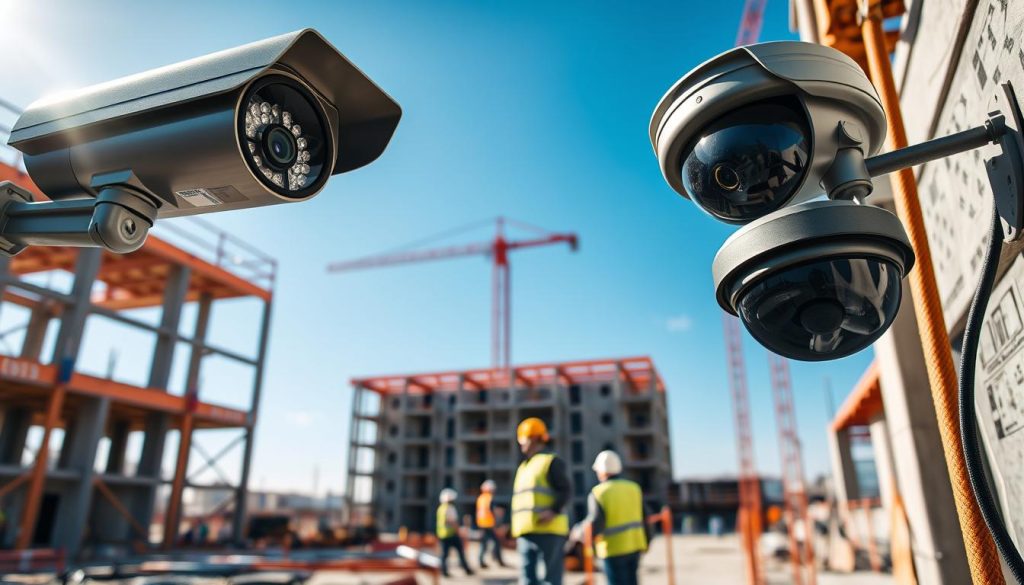
Keeping a construction site secure in Singapore is a major challenge. Theft and vandalism are rising problems. Recent data shows a 25% increase in theft incidents. Average losses can near $500,000 per site each year.
This guide is a vital resource for project managers and safety officers. It helps you invest in effective solutions. New rules are coming. Starting June 2024, projects over $5 million will need a mandatory Video Surveillance System (VSS).
A modern security system does more than watch a location. It deters crime and improves operational efficiency. It also ensures you meet regulatory standards. Advanced technology like AI analytics can spot threats and send real-time alerts.
We will cover essential features and types of systems. You will learn installation best practices. Most importantly, you will know how to select the right tools for your specific project needs. The right choice protects your assets, personnel, and timeline.
Key Takeaways
- Construction site theft in Singapore has increased by 25%, with losses averaging nearly $500,000 annually.
- New regulations will require a Video Surveillance System (VSS) for large projects starting in June 2024.
- Modern security systems act as both a crime deterrent and a project management tool.
- Key benefits include improved operational efficiency, better site oversight, and regulatory compliance.
- This guide will help you understand different system features, types, and selection criteria.
- Choosing the right solution is a strategic investment in asset and personnel protection.
- Technology like AI analytics provides real-time alerts for potential security threats.
Why Jobsite Security is a Critical Investment for Singapore Construction
In Singapore’s bustling construction industry, security is no longer an optional expense but a fundamental pillar of project success. The stakes are incredibly high. With a 25% surge in theft incidents, the average annual loss per location can approach half a million dollars.
These are not just numbers on a report. They represent direct hits to profitability and timeline integrity. A robust protection strategy is, therefore, a direct investment in your project’s financial health.
The Rising Cost of Theft and Vandalism on Local Sites
Construction properties are prime targets. Statistics show they are 400% more likely to experience theft compared to other commercial properties. The reasons are clear: multiple access points, expansive layouts, and the high value of assets left in the open.
Losses go far beyond stolen tools and materials. Project delays from replacing equipment can cascade. Insurance premiums often rise after claims. The total financial impact cripples budgets.
Visible monitoring tools are a powerful deterrent. Studies indicate they can reduce crime rates by up to 65% in these environments. This simple presence stops most criminal activity before it starts.
One industry report noted,
“A visible security presence is the most cost-effective method of loss prevention for high-value, transient sites.”
Beyond Security: Surveillance as a Project Management Tool
Modern video systems offer a dual benefit. They provide crucial data for daily operations and management. This transforms them from a cost center into a value driver.
Managers gain real-time oversight of worker productivity and material deliveries. They can verify safety protocol compliance from their office. Immediate response to incidents minimizes damage and costly downtime.
Remote access to live feeds is a game-changer. It allows supervisors to oversee multiple projects at once. This improves operational efficiency and accountability across the board.
Recorded footage serves as vital evidence. It protects the company in disputes, insurance claims, and safety investigations. This layer of documentation is indispensable for liability protection.
Ultimately, this investment safeguards more than assets. It protects a firm’s reputation and maintains client trust. It ensures projects finish on schedule and within budget. A comprehensive protection system is a core component of strategic risk management for any builder in Singapore.
Current Trends Shaping Construction Site Surveillance in 2024
This year, cutting-edge trends are redefining the standards for effective site oversight and threat prevention. The technology protecting your assets and personnel is smarter and more connected than ever.
Modern solutions go far beyond simple recording. They offer high-definition video, superior night vision, and advanced analytics. These features transform passive observation into an active management tool.
Staying ahead of these developments is crucial for project leaders. It ensures your investment remains effective and compliant for years to come.
The Shift to AI-Powered Analytics and Real-Time Alerts
Artificial intelligence is revolutionizing how we monitor work locations. AI-powered analytics automatically scan video feeds for unusual activity.
This includes unauthorized entry after hours or potential safety hazards like fallen materials. The system sends instant notifications to managers’ phones.
This proactive approach is a game-changer. Studies show AI boosts incident detection by up to 40% compared to older, manual methods.
The advantages are clear. AI drastically reduces false alarms from wind or animals. It can efficiently analyze vast amounts of footage that a human team would miss.
This allows for faster response times to genuine threats. It turns a reactive security measure into a powerful, predictive asset.
Integration of Mobile and Remote Monitoring Solutions
Constant, remote access is now a baseline expectation. Managers need to view live footage on smartphones or tablets from any location.
This capability provides unparalleled oversight. It enables verification of deliveries, worker productivity, and safety compliance in real time.
Connectivity is key, especially for remote or temporary sites. LTE and 4G networks ensure continuous coverage where traditional Wi-Fi fails.
This guarantees the system stays online, providing protection even in off-grid areas. Companies using these remote tools report up to 60% better operational efficiency.
These systems don’t work in isolation. They integrate with other smart site technologies for a unified view.
Drones offer aerial surveillance of large or difficult-to-access areas. IoT sensors can monitor environmental conditions like temperature or hazardous gases.
Data often flows into a centralized command center. This creates a single pane of glass for managing all site operations.
Storage has also moved to the cloud. Cloud-based video storage is scalable, secure, and easily accessible.
It simplifies compliance with regulations requiring data preservation. Authorized personnel can retrieve crucial footage from anywhere.
Hardware continues to advance. Thermal imaging and low-light cameras deliver clear video capture in total darkness or challenging weather.
Demand is high for rugged, weatherproof designs. These units withstand dust, heavy rain, and Singapore’s extreme heat.
As highlighted by experts at Wenhong’s comprehensive construction CCTV solutions, a modern system is a hub of intelligence. It enhances security, improves response times, and provides data for optimizing resources.
Understanding these trends is essential. It allows you to select a future-proof system that delivers long-term value and robust protection for your project.
Understanding the Financial and Operational Impact of Site Crime
Project managers face a harsh reality: site theft and vandalism systematically erode profitability and schedule integrity. The direct loss of assets is just the beginning. These incidents trigger a cascade of operational and financial consequences that can cripple a project.
To make informed decisions about protection, one must first grasp the full scope of the problem. Local data reveals the alarming scale and secondary costs involved.
Singapore-Specific Statistics on Losses and Incidents
Industry studies show about 80% of construction firms in Singapore have experienced theft. This is not an occasional nuisance but a pervasive risk. The annual financial drain on the industry is massive.
Estimates place total losses between $300 million and $1 billion each year. For a single project, theft and vandalism can consume up to 25% of the total budget.
Individual incidents are costly. Stolen high-value equipment like excavators or generators can mean a loss of tens of thousands per event. Tools and raw materials disappear constantly, adding up over time.
Repairing vandalism damage also inflates expenses. The theft incidence rate without any security measures is near 60%. With a proper video system in place, this can plummet by up to 90%.
“The financial hemorrhage from site crime is often underestimated. It’s not just the missing items; it’s the entire project’s heartbeat that gets disrupted,” notes a recent Singapore Contractors Association report.
These numbers underscore a critical vulnerability. They make a compelling case for proactive investment in site protection.
How Security Breaches Delay Timelines and Inflate Budgets
When a breach occurs, work often grinds to a halt. Replacing stolen items takes time. Investigations demand managerial attention. New security measures must be planned and implemented.
Each day of delay has a tangible cost. Missed deadlines can lead to contractual penalties. Client trust and a firm’s reputation suffer.
The ripple effects on the budget are severe. Insurance premiums frequently rise after claims. Without clear video evidence, the time to resolve disputes lengthens. Legal claims can increase by 20%.
Companies may need to hire additional guards for reassurance. This is a recurring operational cost. The original budget becomes a distant memory.
Operational disruption goes deeper. Worker morale drops in an insecure environment. Safety can be compromised if protective gear is stolen. Resources must be reassigned, causing inefficiency.
Here, modern monitoring technology proves its worth. Recorded footage provides irrefutable evidence for insurance. It speeds up investigations dramatically. Its mere presence is a powerful deterrent, with systems shown to reduce vandalism incidents by 70%.
Comparing the cost of a comprehensive security system to the potential losses is revealing. The investment is typically a fraction of the annual risk. The return on investment in preventing just one major incident can be immediate.
Indirect benefits also boost the bottom line. Better site organization and inventory management become possible. There is enhanced accountability among all personnel.
In Singapore’s context, the impact is magnified. Projects operate on tight schedules in dense urban settings. Even a minor disruption can cause significant cascading effects.
Understanding this full impact is not about fear. It’s about clarity. Proactive security measures are a necessity. They protect both financial viability and operational success.
Key Features to Look for in Jobsite Surveillance Cameras
Not all video monitoring tools are created equal. The right features make the difference between passive recording and active protection. Your choice must deliver clear evidence, work day and night, and survive harsh conditions.
Focusing on a few core capabilities ensures your investment is sound. This guide breaks down the essential specs for modern construction sites.
High-Definition Video and Night Vision Capabilities
Clarity is non-negotiable. High-definition video, starting at 1080p and moving to 2K or 4K, captures critical details. You can identify individuals, read license plates, and monitor equipment use from a distance.
This level of detail is vital for evidence and daily oversight. Blurry footage is useless when you need to resolve an incident.
Effective protection doesn’t stop at sunset. Night vision is essential for 24/7 site surveillance. Look for infrared (IR) technology that illuminates darkness.
Advanced low-light sensors provide clear images in near-total darkness. This ensures continuous monitoring and safety compliance after hours.
The Role of AI Analytics for Proactive Threat Detection
Modern systems are intelligent. Artificial Intelligence (AI) analytics transform a simple recorder into a proactive security tool. It scans video feeds automatically for specific types of activity.
The software can detect unauthorized perimeter breaches, loitering, or safety violations like missing safety gear. When a potential threat is identified, it sends instant alerts to a manager’s phone.
This shift is powerful. Studies show AI can improve incident detection by up to 40%. It filters out false alarms from wildlife or weather, letting you focus on real risks.
Durability: Weatherproof and Vandal-Resistant Designs
Construction sites are tough on equipment. Your security tools must be tougher. Durability is defined by two key ratings.
A weatherproof (IP66 or higher) housing seals out dust, rain, and moisture. It allows the unit to function in Singapore’s tropical storms and intense heat.
For physical protection, a vandal-resistant (IK10) design is crucial. This rating means the housing can withstand direct impacts and tampering attempts. It prevents criminals from disabling your eyes on the site.
Connectivity: LTE vs. Wi-Fi for Remote Sites
Reliable access to your footage is key. For locations with stable infrastructure, Wi-Fi offers a good solution. It uses existing network resources.
Many construction sites lack this. Remote or temporary projects need a different approach. LTE/4G connectivity is the answer.
These cellular systems operate independently. They ensure continuous video streaming and alert transmission from anywhere. Models like the Arlo Go 2 are built for this exact purpose.
This guarantees oversight even in off-grid areas where power and data lines are not yet installed.
Beyond these core features, consider additional tools for complete coverage. Pan-Tilt-Zoom (PTZ) units allow operators to actively monitor large areas. Wide-angle lenses provide broader views of storage yards.
Two-way audio enables remote communication with personnel on the ground. These options add layers of control and flexibility to your system.
Leading brands offer models that exemplify these traits. The Arlo Ultra 2 delivers 4K HDR video for exceptional detail. Pelco’s product lines are renowned for open-platform integration and advanced built-in AI analytics.
Select your tools based on site-specific needs. Place high-resolution units at main entrances and gates. Use the most durable designs in exposed or high-traffic zones where they might be bumped or sprayed with water.
Prioritizing these features builds a system that is effective, reliable, and adaptable. It moves your project security from a simple cost to a strategic asset.
- Video Quality: Insist on 1080p minimum for identifiable footage.
- Night Operation: Ensure strong infrared or low-light capabilities.
- Smart Detection: Choose AI analytics for automatic alerts.
- Build Quality: Verify IP66+ and IK10 ratings for durability.
- Constant Access: Select LTE connectivity for remote site reliability.
Navigating Singapore’s Regulatory Landscape for Video Surveillance
Project leaders must now navigate a complex regulatory environment governing video monitoring on construction locations. Understanding these rules is crucial for legal compliance and operational safety.
Singapore has implemented specific mandates for major projects. These regulations ensure proper oversight and protection for all stakeholders.
Mandatory Video Surveillance System (VSS) Requirements for Major Projects
Starting June 1, 2024, a significant change takes effect. Construction projects valued at $5 million and above must implement a Video Surveillance System (VSS).
This mandate comes from the Ministry of Manpower. It aims to enhance safety standards across the industry.
The technical specifications are precise. Systems must provide high-definition video with at least 1080p resolution.
A minimum frame rate of 12 fps is required. This ensures smooth playback for incident review.
Video retention periods are strictly defined. Normal footage must be kept for 30 days.
For reportable incidents, retention extends to 180 days. Export formats must support .avi and .mp4 files.
Coverage must focus on high-risk areas. These include work at height over 2 meters.
Scaffolding zones require constant monitoring. Excavation sites and areas with vehicular movement also need coverage.
Documentation is a key component. Records of camera placements must be maintained.
Authorized personnel should access footage easily. This facilitates safety investigations and compliance checks.
Compliance with the Personal Data Protection Act (PDPA)
The PDPA adds another layer of responsibility. It governs how personal data from video feeds is handled.
Transparency is the first principle. Individuals must be informed about monitoring activities.
Clear signage should be posted at entrances. This communicates the presence of recording equipment.
Purpose limitation is essential. Data collection should serve specific, legitimate needs.
Footage must be used only for safety and security purposes. Unauthorized use violates the law.
Data protection measures are mandatory. Stored footage requires robust security protocols.
Achieving PDPA compliance involves several steps. First, implement access controls for video storage systems.
Only authorized personnel should view recordings. Data encryption protects against unauthorized access.
Regular audits ensure continued compliance. Documentation of data handling practices is vital.
“Proper regulatory adherence does more than avoid penalties. It demonstrates a genuine commitment to worker welfare and legal standards,” notes a compliance expert familiar with Singapore’s construction sector.
Non-compliance carries serious consequences. Fines can be substantial for violations.
Legal liability may arise from improper data handling. Work activities could face suspension.
Integrating regulatory requirements into system design is smart practice. Select equipment that meets HD standards from the start.
Use secure data storage solutions with encryption. Consider these factors during initial planning.
Compliance enhances overall site safety culture. It shows workers their protection is a priority.
It also builds trust with clients and regulators. A properly configured system makes adherence straightforward.
Understanding these regulations is essential for any Singapore construction project. The right video monitoring system facilitates compliance while providing critical oversight.
Tangible Benefits of Deploying a Comprehensive Camera System
Deploying the right tools transforms a construction location from a vulnerable target into a streamlined, accountable, and safer operation. The return on this investment is measured in more than just prevented losses.
A comprehensive visual system delivers a cascade of tangible advantages. These benefits directly impact your project’s financial health, timeline, and overall culture.
Deterring Crime and Reducing Financial Loss
Visible monitoring equipment is a powerful psychological barrier. Studies show it can deter up to 40% of would-be intruders.
On construction sites, this presence can reduce theft incidents by an astounding 80%. The financial impact is immediate and substantial.
You prevent the direct loss of high-value assets and materials. You also minimize costs associated with repairing vandalism.
Recorded footage provides irrefutable evidence for insurance claims. This speeds up recovery and maximizes payouts. One project manager noted the clear link.
“The most expensive security system is still cheaper than replacing one stolen excavator. The math makes the decision for you.”
Furthermore, such systems can reduce reliance on physical guards. This can cut related security costs by up to 80%.
Enhancing Worker Safety and Oversight
Modern protection goes beyond watching for criminals. It actively promotes a safer working environment for everyone on site.
Live feeds allow safety officers to monitor compliance with protocols in real time. They can spot missing personal protective equipment (PPE) or unsafe behaviors from a distance.
Advanced analytics software takes this further. AI can automatically detect hazardous activities, like workers entering restricted zones.
This enables supervisors to intervene before an accident happens. In the event of an incident, recorded video is invaluable.
It provides a clear record for investigation. This helps determine root causes and prevents future occurrences.
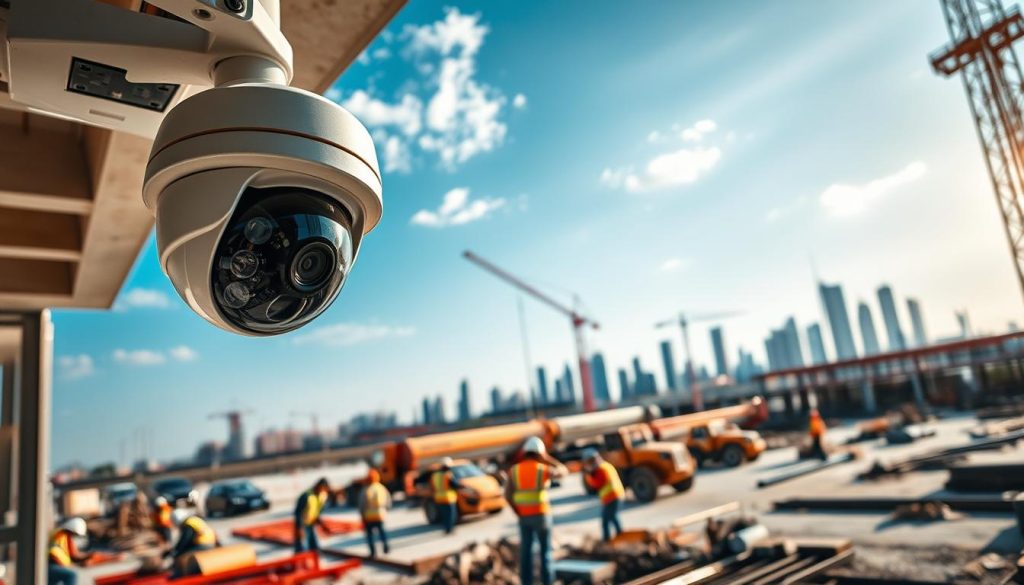
This constant oversight fosters a culture of responsibility. Workers are more likely to follow best practices when they know safety is a visible priority.
Improving Operational Efficiency and Project Accountability
The operational benefits are where the system truly proves its strategic value. Managers gain a powerful tool for daily oversight without being physically present.
You can verify material deliveries as they happen. Monitor work progress across different zones simultaneously. Optimize the allocation of labor and equipment based on real-time visuals.
Companies using remote monitoring report up to 60% better operational efficiency. This directly translates to tighter schedules and controlled budgets.
Accountability improves dramatically. The objective record discourages time theft and unauthorized extended breaks.
It also provides neutral evidence to resolve disputes with subcontractors. This saves considerable time and preserves business relationships.
The footage serves as excellent documentation for project reviews and client reporting. It enhances transparency and builds trust.
Potential for Lower Insurance Premiums
Insurance providers assess risk. A certified, professional monitoring installation is a demonstrable risk mitigation measure.
It significantly lowers the likelihood and potential severity of claims. Many insurers recognize this and may offer reduced premium rates for sites with such systems in place.
To maximize this benefit, provide your insurer with details of your setup. Highlight features like 24/7 recording, remote access, and vandal-resistant housing.
This demonstrates a proactive approach to risk management. It positions your project as a lower-risk client in their eyes.
The combined value of these benefits is clear. A comprehensive visual system is not just a cost of doing business.
It is a strategic investment that protects your assets, empowers your team, and safeguards your project’s success from multiple angles.
Types of Construction Security Camera Systems Available
From fixed sentinels to actively patrolling units, construction site protection relies on a strategic mix of camera types. Understanding the different categories is the first step to building a robust visual shield.
Each style serves a unique purpose. Fixed units watch over specific zones. Pan-Tilt-Zoom models provide dynamic oversight. Specialized hardware tackles extreme conditions.
Your choice depends on project scale, duration, and specific risk areas. A well-planned combination ensures no blind spots and maximizes your investment.
Fixed Cameras: Dome, Bullet, and Turret Styles
These are the workhorses of any system, mounted in a single position. They offer reliable, constant viewing of critical points.
Dome cameras are discreet and often vandal-resistant. Their dome-shaped housing makes it hard to tell which way the lens is pointing. This is ideal for general indoor and outdoor monitoring where a low profile is preferred.
Bullet cameras are highly visible cylindrical units. They act as a strong visual deterrent. Their design is perfect for long-range viewing along perimeter fencing or across large storage yards.
Turret cameras offer a compact, flexible design. They can be easily adjusted after mounting to perfect the angle. This makes them excellent for covering corners, entrances, and other tricky spots.
Pan-Tilt-Zoom (PTZ) Cameras for Active Monitoring
For large, open areas, a PTZ unit is a powerful tool. Operators can control it remotely to pan left/right, tilt up/down, and zoom in on details.
This provides a 360-degree view from a single location. It can track moving people or vehicles across a vast space. This active monitoring capability is perfect for central yards or areas requiring frequent, detailed inspection.
Advanced models include auto-tracking features. They can follow a detected threat automatically. This frees up personnel for other tasks while maintaining vigilant oversight.
Specialized Cameras: Thermal, Low-Light, and Explosion-Proof
Standard equipment may fail in extreme environments. That’s where specialized tools come in.
Thermal imaging cameras detect heat signatures instead of visible light. They can “see” perfectly in total darkness, through smoke, light fog, or foliage. This is crucial for perimeter security at night or in poorly lit areas.
Low-light cameras use advanced sensors to capture color video in near-darkness. They provide clearer identification details than standard infrared in challenging lighting at dusk or dawn.
Explosion-proof cameras are built with hardened housings for hazardous locations. They are essential for sites storing flammable gases or materials. They prevent the unit from becoming an ignition source.
Temporary vs. Permanent Surveillance Solutions
The project timeline dictates the installation approach. You have two main options.
Temporary solutions are designed for speed and flexibility. These include trailer-mounted units or portable wireless systems. They can be deployed in hours, powered by solar or generators.
This is ideal for short-term projects or as a rapid response to a security incident. Brands like Arlo offer robust wireless models with LTE connectivity for these scenarios.
Permanent installations involve hardwired cameras with robust infrastructure. They offer superior stability, higher image quality, and integration with building management systems.
This is the choice for long-term sites, corporate headquarters, or permanent facilities. Leading manufacturers like Pelco provide extensive lines for these fixed applications.
Most modern units support ONVIF standards. This ensures they can integrate with various Video Management Systems (VMS). It allows for a unified platform to manage all your visual tools.
The right strategy uses a mix. Use bullet cameras at main gates for deterrence. Place dome cameras inside material storage sheds. Position a PTZ unit to oversee the central work area.
Understanding the available types is not just about buying hardware. It is about designing a tailored visual strategy. This strategy must match the specific security and operational demands of your project in Singapore.
Best Practices for Installation and Site Coverage Strategy
Strategic installation is the critical bridge between purchasing security tools and achieving real-world protection. A well-executed plan ensures every piece of equipment performs its role, creating a seamless shield for your assets and personnel.
This phase determines the system’s effectiveness. Poor placement or unreliable connections can render advanced features useless. Following proven best practices maximizes your investment and delivers peace of mind.
Strategic Placement for Maximum Perimeter and Asset Coverage
Eliminating blind spots is the primary goal. Your visual shield must cover all critical zones without gaps. Start with a thorough site survey before any equipment is mounted.
Identify all entry and exit points first. These are the primary vectors for unauthorized access. High-traffic areas for workers and vehicles also need clear oversight.
Material storage zones and equipment yards are high-value targets. Ensure these areas have overlapping fields of view. This deters theft and provides clear evidence if an incident occurs.
High-risk work zones, like areas with scaffolding or deep excavation, require dedicated coverage. This supports safety compliance and incident investigation.
Mounting height and angle are crucial. Install units at an elevated position, around 9 feet or higher. This maximizes the field of view while protecting the equipment from easy tampering.
Angling units slightly downward improves identification. It also helps capture activity closer to the unit’s base, reducing hidden areas. A well-planned coverage strategy often reduces the total number of units needed.
This optimization cuts costs without sacrificing site security.
Professional Installation vs. DIY Setups
You face a key decision: handle the setup internally or hire experts. Each path has distinct advantages and risks for your construction project.
A professional installation service ensures correct configuration from day one. Experienced technicians handle complex wiring, network setup, and system integration. They understand local regulations, including the Personal Data Protection Act (PDPA).
It’s estimated that over 80% of CCTV systems in Singapore must adhere to these data rules. Professionals ensure your setup is legally sound, avoiding fines.
They also implement crucial ethical practices. This includes posting clear signage to inform individuals of recording. It involves carefully angling units to avoid filming private property beyond your site boundaries.
“A certified installer doesn’t just mount hardware. They build a compliant, reliable system that aligns with your specific operational risks,” explains an industry veteran.
DIY setups can appear cost-effective initially. However, they risk improper configuration, network vulnerabilities, and regulatory missteps. Errors in cable management or power supply can lead to persistent failures.
For many firms, the reliability and legal assurance of a professional installation service outweigh the upfront savings. It turns the system into a true asset rather than a potential liability.
Ensuring Power and Data Reliability in Harsh Environments
Construction sites are unforgiving. Your system’s infrastructure must withstand dust, moisture, heat, and physical knocks. Reliability in these conditions is non-negotiable.
Start with power supply. An uninterrupted power supply (UPS) is essential for fixed systems. It maintains operation during short grid outages.
For remote or temporary sites, explore backup options. Solar panels or high-capacity battery packs can keep units running for extended periods. This guarantees continuous monitoring even when mains power is unavailable.
Data transmission is the system’s nervous system. For stable, high-quality footage, wired Ethernet connections are superior. They are less susceptible to interference and offer consistent bandwidth.
Wireless solutions provide flexibility. Robust Wi-Fi networks with industrial-grade access points can cover large areas. For locations without infrastructure, LTE/4G cellular modems are the answer.
Use signal boosters to ensure strong connectivity in every corner. This prevents video dropouts that create dangerous gaps in your oversight.
Environmental protection is a final layer. All outdoor equipment must have a weatherproof enclosure (IP66 or higher). Surge protectors shield electronics from voltage spikes caused by storms or equipment.
Secure cable management prevents damage from vehicles, tools, or weather. Conduit or armored cable should be used wherever lines are exposed.
A well-planned installation is the foundation of effective site security. It ensures your visual tools work together seamlessly. This provides continuous oversight and enables a rapid response to any threat, safeguarding your project’s success.
Making Your Final Decision: Selecting the Right System for Your Project
Your final selection of a site protection system should be a strategic decision, balancing immediate needs with future-proof capabilities. Start by assessing your project’s scale, specific risk areas, and required features like AI analytics and night vision. Ensure any solution meets Singapore’s VSS and PDPA compliance standards from day one.
Weigh the total cost of ownership against long-term savings from theft prevention and operational gains. Consulting with local security experts ensures a design tailored to your unique site conditions and workflow. Opt for scalable systems that can grow with your project or be redeployed later.
This well-informed choice is a cornerstone of modern construction site security. It maximizes safety, ensures project success, and delivers a strong return on your investment.