
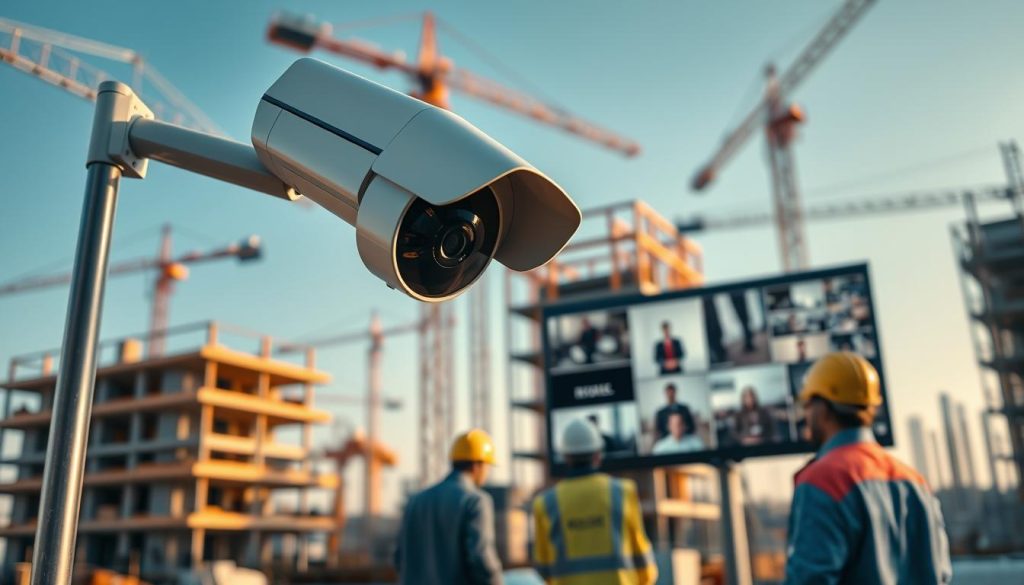
Building projects are dynamic environments filled with high-value materials and equipment. Protecting these assets requires a robust approach to site security. The correct visual monitoring system is a cornerstone of this protection.
The financial and operational stakes are incredibly high. Incidents of theft and vandalism can lead to severe project delays and losses. Studies show that a visible security presence can deter a significant number of criminal attempts.
Modern solutions offer far more than just recording. High-definition video not only provides evidence but also helps reduce theft-related costs. Furthermore, remote monitoring capabilities can boost operational efficiency dramatically, giving managers real-time visibility from anywhere.
In Singapore, new regulations add another layer of importance. Starting June 2024, projects exceeding a $5 million value will have specific video monitoring requirements. Compliance is no longer optional for major developments.
This guide is designed to help you navigate the options. We’ll break down the features, types, and key considerations—like project scale and budget—that influence the best choice for your unique challenges.
Investing in a tailored security solution is a proactive step. It safeguards your assets, ensures smoother management, and contributes directly to overall project success.
Key Takeaways
- Choosing the appropriate visual monitoring system is critical for addressing the unique risks of a busy project site.
- Effective security measures can dramatically reduce incidents of theft and vandalism, protecting your bottom line.
- Remote monitoring technology offers significant gains in operational efficiency and management visibility.
- Compliance with upcoming Singapore regulations for large projects is a major factor in system selection.
- The right system is an investment that enhances overall site safety, management, and project success.
- Key selection factors include project size, specific security needs, and budget constraints.
- Modern systems offer advanced capabilities like high-definition recording and analytics for smarter security.
The Critical Role of Surveillance in Modern Construction Sites
The modern job site demands more than just locks and fences; it requires intelligent oversight that protects assets and enhances operational flow. This visual monitoring technology transforms site security from a reactive measure into a powerful, proactive shield.
Its role is multifaceted. Beyond deterring criminal activity, these systems provide crucial visibility into worker safety and daily workflows. Managers gain a clear window into operations, enabling better on-the-ground management.
The impact on crime is measurable and significant. Statistics show that visible monitoring can lead to a 50% drop in theft and a 70% reduction in vandalism. For locations that are inherently vulnerable, this level of protection is invaluable.
Financial benefits are equally compelling. Implementing a comprehensive system can reduce the need for on-site security personnel by a substantial margin. Some reports indicate potential savings of up to 80%. Furthermore, demonstrable security measures can often lead to lower insurance premiums.
Today’s advanced solutions don’t operate in isolation. They integrate seamlessly with other technologies like access control and alarm systems. This creates a unified defense network that is greater than the sum of its parts.
For large or dispersed projects, this technology gives supervisors eyes on multiple areas at once. The recorded video also serves as indisputable evidence for any incident investigation, streamlining insurance claims and legal processes.
There’s a strong psychological effect, too. The presence of monitoring fosters a culture of accountability among personnel. It also acts as a clear deterrent to unauthorized individuals considering entry.
Ultimately, these capabilities connect directly to project efficiency. By identifying logistical bottlenecks and optimizing resource allocation, intelligent monitoring supports smoother operations and timely completion. It is a critical tool for modern project success.
Assessing the Risks: Theft and Vandalism Statistics in Singapore
Project managers must confront hard numbers: crime on job sites is not a rare occurrence but a frequent and expensive reality. The data paints a stark picture of the risks facing the building industry. A deep understanding of these statistics is essential for effective protection and management.
Recent Trends in Construction Site Crime
Incidents of theft have surged by 25% across Singapore in recent years. This trend highlights a growing challenge for project teams. High-value materials and tools are the most common targets.
Criminals often exploit perimeter weaknesses during off-hours. Nearly 80% of all building firms report experiencing at least one major theft event. This makes asset loss a near-universal problem.
- Targeted Assets: Copper wiring, power tools, and bulk materials like lumber and steel.
- Common Methods: Unauthorized entry through fences, coordinated operations by groups, and quick removal of goods.
- Vulnerability Factors: Isolated locations, limited lighting, and a lack of visible deterrence significantly increase risks.
Acts of vandalism also contribute to major losses. Deliberate damage to equipment and structures sets back timelines. These criminal activities often occur together, compounding the financial damage.
Financial Impact on Projects
The direct costs are staggering. Individual site losses can approach $500,000 annually. For some developments, theft and vandalism can consume up to 25% of the total project budget.
Industry-wide, the annual toll is estimated between $300 million and $1 billion. This massive drain affects profitability and competitiveness.
Beyond replacement costs, projects face severe indirect consequences:
- Project Delays: Stolen materials must be reordered, halting work and extending schedules.
- Increased Insurance Premiums: Frequent claims lead to higher policy costs for the entire firm.
- Legal and Liability Issues: Without good security, injury-related legal claims can rise by 20%.
- Reputational Harm: Clients lose trust in firms that cannot secure their own sites.
Consider a real-world scenario: A major downtown project faced repeated overnight theft. The delays and replacement costs added months to the completion date. The client’s confidence was severely damaged.
These numbers underscore the necessity of robust visual monitoring. Implementing a modern security system is a powerful risk mitigation strategy. Effective solutions have been shown to cut theft rates by up to 90% and reduce vandalism by 70%.
Singapore’s upcoming regulatory requirements for large projects are a direct response to these prevalent issues. The law is aligning with the need for better site oversight.
Looking ahead, criminal tactics will evolve. However, technology adapts in turn. Future systems will leverage smarter detection and real-time alerts to stay ahead of these challenges. Investing now future-proofs your protection.
Must-Have Features in Construction Surveillance Cameras
The effectiveness of your site’s oversight system is directly tied to the capabilities engineered into its individual components. Not all hardware offers the same level of performance or protection. To build a reliable defense, focus on these essential features.
High-definition video quality is non-negotiable for clear identification. Blurry footage is useless for investigations. You need crisp detail to recognize faces, read license plates, and see small tool markings.
High-Definition Video Quality
Resolution determines how much detail you capture. Standard 1080p Full HD is a good baseline for most projects. It provides clear images for general monitoring and evidence collection.
For larger sites or critical zones, 4K Ultra HD is superior. It offers four times the detail of 1080p. This allows digital zoom without losing clarity, perfect for tracking activity across wide areas.
Consider your specific needs. A compact project might be well-served by 1080p. A sprawling development with high-value materials likely requires 4K. The right choice ensures you have the visibility needed for any situation.
Night Vision Capabilities
Job sites are vulnerable after dark. Criminals often use low-light conditions to their advantage. True 24/7 security demands reliable night vision.
This technology typically uses infrared (IR) LEDs. These LEDs emit light invisible to the human eye but detected by the sensor. The result is a clear monochrome image in total darkness.
Check the IR range specification. A longer range, like 100 feet, illuminates a larger area. This ensures your perimeter and storage zones remain visible all time. It’s a critical layer of after-hours protection.
AI Analytics for Enhanced Monitoring
Modern systems are intelligent. They don’t just record; they understand what they see. AI-powered analytics automate threat detection and reduce false alerts.
These smart features can identify specific behaviors. They detect loitering, unauthorized entry, or removed objects. This triggers instant notifications to a manager’s phone.
Advanced analytics go further. People counting helps manage crowd density. Heat mapping shows where activity concentrates. Object removal alerts directly combat material theft.
This technology boosts incident detection rates significantly. It transforms passive recording into an active security partner. Your team can respond to real threats, not just review footage after the fact.
Weatherproof and Vandal-Resistant Design
Outdoor environments are harsh. Your equipment must endure rain, dust, and physical abuse. A fragile product will fail when you need it most.
Look for high Ingress Protection (IP) ratings. An IP66 or IP67 rating guarantees resistance to dust and powerful water jets. This is essential for Singapore’s tropical climate.
Vandal-resistant design is equally important. Housing should be made of rugged materials like metal or hardened polycarbonate. Tamper-proof screws and reinforced mounts prevent easy disabling.
This physical durability ensures continuous operation. It protects your investment from both environmental and human risks. A tough camera is a lasting deterrent.
These core capabilities work together to create a layered defense. Prioritize them based on your site’s specific challenges and budget.
For high-theft areas, prioritize AI analytics and superior night vision. For exposed locations, durability is key. Most modern systems also integrate with alarms and access control.
This creates a unified platform for smarter management. Choosing hardware with these features is a direct investment in project safety and efficiency.
Compliance is Key: Singapore’s Video Surveillance Regulations
Singapore has established clear legal requirements for visual monitoring on major developments, making compliance a top priority. This regulatory framework is designed to standardize security practices and enhance overall safety. Understanding these rules is essential for effective project management.
Failing to adhere can lead to severe penalties and operational disruptions. More importantly, following the guidelines creates a safer, more accountable work environment. It turns legal obligation into a strategic advantage.
Understanding the VSS Mandate for Projects Over $5 Million
A significant new rule took effect on June 1, 2024. The Video Surveillance System (VSS) mandate applies to all construction projects valued over $5 million. This law sets a baseline for modern site oversight.
The mandate specifies precise technical standards. Systems must record in high-definition 1080p resolution at a minimum of 12 frames per second. This ensures clear, usable footage for any review.
Video data must be stored for at least 30 days. For any recorded incident, the retention period extends to 180 days. This supports thorough investigation and evidence preservation.
Coverage is mandated for specific high-risk areas. These zones require constant monitoring:
- Work at heights exceeding 2 meters
- All scaffolding and temporary structures
- Major excavations and confined spaces
- Vehicle and machinery movement zones
Non-compliance carries serious consequences. Regulatory bodies can impose substantial fines. In severe cases, they may issue a stop-work order until the security system meets standards.
This halts progress and creates major financial risks. Partnering with a professional security system provider ensures your setup adheres to the VSS mandate from day one.
Data Protection and Privacy Considerations
Recording video involves collecting personal data. In Singapore, this practice is governed by the Personal Data Protection Act (PDPA). About 80% of all CCTV systems must follow these privacy laws.
The PDPA outlines your obligations. You must inform individuals they are being recorded. Clear signage at all entry points is a fundamental requirement.
You must also limit recording to public areas. Avoid pointing equipment into private spaces like offices or break rooms. This respects individual privacy while maintaining site security.
Data protection is a critical responsibility. Implement robust storage solutions with encryption. Strict access controls are needed to prevent unauthorized viewing.
Only authorized personnel should handle the footage. Create clear protocols for who can view, copy, or delete recordings. This prevents data breaches and maintains trust.
Documentation proves your compliance. Keep records of camera placements, especially for zones with limited access. Maintain logs of all data reviews and incidents.
This documentation is vital during regulatory audits. It shows a commitment to lawful and ethical operations.
View these regulations not as a burden, but as a blueprint. They provide a framework for responsible management. A compliant system enhances operational integrity and worker safety.
It builds a culture of transparency and accountability. This proactive approach to protection safeguards your project, your people, and your reputation.
How Security Cameras Act as a Powerful Deterrent
Psychological deterrence forms the first and strongest line of defense on any project site. The goal is to stop trouble before it starts. A visible monitoring presence achieves this by influencing behavior and decision-making.
This approach is far more cost-effective than reacting to losses. It creates a protection shield that safeguards assets and people. The benefits extend across the entire operation.
Visible Surveillance and Crime Reduction
The principle is straightforward. Would-be offenders are less likely to act if they believe they are being watched. This simple human reaction is the core of crime prevention.
Statistical evidence is compelling. Visible security equipment can cut overall crime by 65% on project locations. Studies show sites with these systems reduce theft risks by up to 80%.
About 92% of sites deal with theft often. Yet, 78% of companies report less theft and vandalism after installing a security system. Effective visual oversight can deter up to 40% of would-be intruders.
There is a key difference between passive recording and active deterrence. Passive systems just capture footage. Active deterrence uses prominent placement and clear signage.
Signs announce that the area is under watch. This makes the psychological effect explicit. It turns anonymous equipment into a recognized authority.
Mobile monitoring units are especially potent. They can cut crime rates by more than 90%. Their obvious presence leaves no doubt about security measures.
The deterrent effect improves worker compliance with safety protocols. People tend to follow rules more closely when they know they are on camera. This fosters a culture of accountability and care.
Real-Time Alerts and Incident Response
Modern technology transforms deterrence from a static concept into a dynamic process. Real-time alerts create an immediate connection between the site and management.
Here is how these systems work. Smart analytics and motion sensors constantly scan the video feed. The moment an intrusion or unusual activity is detected, an instant notification is sent.
These alerts go directly to a manager’s smartphone or tablet. This happens within seconds. It allows for immediate assessment and intervention.
Improved incident response time is a game-changer. Instead of discovering a theft the next morning, a supervisor can act while it is happening. They can contact authorities or on-site personnel directly.
This capability turns a monitoring system into an active security partner. It shifts the focus from evidence collection to crime interruption. The goal is to stop the incident, not just record it.
Recorded footage still plays a vital role. It serves as a tool for post-incident analysis and undeniable evidence. This strengthens the deterrent cycle by ensuring perpetrators are identified and held accountable.
Some may think this equipment is easily disabled. Modern solutions counter this with features like tamper detection. If a unit is touched or covered, it sends a distinct alert.
This adds another layer of protection. It ensures the visibility of your security apparatus is maintained. The system defends itself.
Investing in a deterrent strategy is profoundly cost-effective. It prevents incidents before they occur, saving immense resources. You avoid the direct costs of replacement and the indirect costs of delays.
It is a proactive investment in project efficiency and peace of mind. A strong visual presence protects your bottom line by keeping your site secure.
Demystifying Remote Monitoring Technology
The power to oversee a bustling project location from a smartphone represents a monumental shift in management and security practices. This technology removes the barrier of physical distance, providing instant visibility and control.
It connects the physical site to the digital world of oversight. Managers are no longer tied to an on-site office or a specific time to check on progress or verify an alarm.
How Remote Jobsite Cameras Work
A modern remote monitoring setup is a cohesive ecosystem. It integrates hardware, connectivity, and software to create a seamless flow of information.
The core components are intelligent visual units, transmission technology, and a viewing platform. High-definition video and infrared tech enable 24/7 operation, capturing clear footage day and night.
Transmission is the critical link. Data travels securely from the site to cloud servers or on-premise storage. For locations with scarce or no local internet, cellular-based systems using 4G LTE provide a reliable, independent connection.
This is how the user experience unfolds:
- Authorized personnel log in via a secure web portal or mobile app.
- They instantly access a live feed or browse recorded video from any connected device.
- Advanced motion detection and AI analytics scan the feed, sending instant alerts for specific events like unauthorized entry.
This process turns raw data into actionable intelligence. It empowers teams to respond, not just react.
Benefits of Live-Streaming and Cloud Access
The flexibility of remote access is transformative. Oversight can happen from the office, home, or while traveling. This flexibility is a major boost to operational efficiency.
Live-streaming enables real-time decision-making. A manager can verify an alarm within seconds, coordinate a delivery, or provide visual guidance to on-site crews. This immediacy can cut response time dramatically.
Cloud storage offers significant advantages over local recorders. It provides scalable, off-site backup that protects footage from on-site tampering or damage. Retrieving clips for investigations becomes a simple, fast process.
Advanced features enhance this capability further. Digital zoom allows for detailed inspection of a specific area. Two-way audio lets supervisors communicate directly with personnel. For broader coverage, PTZ (Pan-Tilt-Zoom) units can be controlled remotely to follow activity or inspect details.
Perhaps the most powerful benefit is centralization. A single platform can manage security for multiple sites. This improves oversight consistency and slashes travel costs for managers.
Ultimately, this technology is a force multiplier. It extends your managerial presence without extending your workday. It provides a continuous, intelligent layer of protection and insight that drives projects forward more smoothly and securely.
Boosting Productivity and Efficiency with Surveillance
Beyond preventing losses, modern visual monitoring unlocks significant gains in operational performance and financial health. These systems transform from simple watchdogs into powerful management tools. They deliver a clear return on investment through enhanced productivity and tangible cost savings.
The benefits are twofold. First, they provide unparalleled visibility into daily workflows. Second, they create a data-driven foundation for smarter decision-making. This dual impact addresses core challenges in project execution.
Improving Site Management and Oversight
Recorded footage serves as an objective log of all activity. Supervisors use this video to verify contractor hours and track material usage accurately. This eliminates disputes and ensures billing reflects actual work completed.
Regular review of this data reveals patterns invisible on the ground. Managers can identify workflow bottlenecks, unsafe practices, or equipment sitting idle. Addressing these issues directly boosts overall efficiency.
Remote progress checks are a major productivity booster. Instead of frequent physical visits, a manager can quickly scan multiple projects from their office. This saves valuable time and travel expenses.
Advanced analytics take this further. They can analyze movement data to optimize site logistics. This includes smarter delivery schedules and better storage area utilization. The result is a smoother, faster operation.
Improved safety oversight is another critical gain. Catching near-misses on camera allows for proactive training. This leads to reduced accident rates, which in turn lowers insurance claims and costly downtime.
Cost Savings on Insurance and Security Personnel
The financial benefits of a robust monitoring setup are substantial and immediate. One of the largest areas of cost savings is in security staffing. Real-time monitoring and remote guarding services can reduce the need for on-site personnel by up to 80%.
Insurance providers recognize the value of documented security measures. Sites with comprehensive CCTV and incident footage can often negotiate discounts on their premiums. This creates ongoing annual savings.
Indirect savings from preventing theft and vandalism are equally important. Avoiding the replacement cost of materials and equipment is a direct win. More crucially, it prevents the project delays that come with such losses.
Consider the total impact. A single prevented incident saves on replacement, avoids delay penalties, and keeps insurance costs low. This positions the system as a multi-functional asset that pays for itself.
Companies utilizing remote cameras report up to a 60% improvement in operational efficiency. This stems from better resource allocation and faster response time to problems. The solution offers a clear path to leaner, more profitable management.
Ultimately, this technology is an investment in protection and performance. It mitigates risks while unlocking new levels of visibility and control. The right product delivers value far beyond its initial cost.
A Buyer’s Catalog: Types of Construction Security Cameras
Different zones on a project demand different oversight tools. The form factor of a device dictates its field of view and mounting style. Knowing these differences is key to building a comprehensive security net.
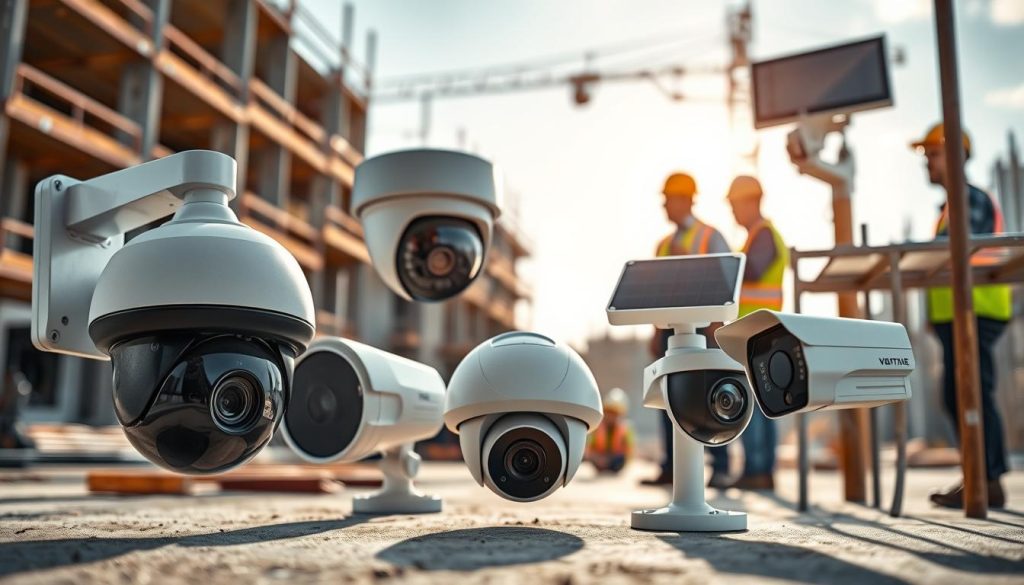
Dome units are common for covering wide indoor or sheltered areas. Their discreet shape makes the viewing angle hard to pinpoint. This adds an element of uncertainty for anyone with bad intentions.
Bullet cameras are designed for long-distance viewing. Their cylindrical shape often houses powerful lenses. They are ideal for monitoring perimeters, gates, and material storage yards from a distance.
Turret models offer flexible manual adjustment after installation. They provide a middle ground between fixed and fully motorized units. Fisheye lenses deliver a single, panoramic 360-degree view. They are perfect for monitoring large, open spaces with minimal hardware.
Fixed vs. PTZ (Pan-Tilt-Zoom) Cameras
Fixed devices are the workhorses of any CCTV setup. They are cost-effective and reliable for constant viewing of a specific scene. Once aimed, they provide unwavering coverage of entry points or high-value zones.
PTZ units bring operator-controlled versatility. They can pan left and right, tilt up and down, and zoom in optically. This allows a guard or manager to track activity across a wide area with a single camera.
The strategic mix is important. Use fixed cameras for always-on coverage of critical spots. Deploy PTZ models to patrol large, open zones like storage yards. This combination ensures both constant watch and flexible investigation.
Wired vs. Wireless Systems
Wired systems transmit video and power through physical cables. They offer maximum reliability with no signal interference. This makes them a robust choice for permanent installations where running cables is feasible.
The installation is more invasive but results in a stable connection. It is unaffected by radio frequency noise from other site equipment.
Wireless solutions provide great flexibility and easier setup. They use Wi-Fi or cellular networks to transmit data. This is ideal for temporary sites or locations where cabling is impractical.
Potential drawbacks include signal interference from heavy machinery. Battery-powered models also need regular recharging or replacement. For dynamic projects that change layout, wireless offers adaptable monitoring.
Specialized Cameras: Thermal Imaging and ANPR
Some security threats require specialized detection capabilities. Thermal imaging devices detect heat signatures rather than visible light. They can spot an intruder in complete darkness, fog, or light foliage.
This technology is also useful for safety monitoring. It can identify overheating machinery or electrical components before they fail. It adds a powerful layer to both asset protection and operational efficiency.
Automatic Number Plate Recognition (ANPR) cameras automate vehicle access control. They read license plates in real-time and compare them to an approved list. This automates gate entry logs and alerts management to unauthorized vehicles.
It streamlines logistics and enhances perimeter security dramatically. For large projects with many deliveries, it’s a game-changer.
Environmental durability is non-negotiable in Singapore’s climate. Look for an IP66 or IP67 rating. This ensures the product is dust-tight and protected against heavy rain.
Varifocal lenses offer another advantage. They allow you to adjust the focal length remotely. This customizes the field of view without needing to physically move the camera.
Match device types to site zones. Fixed units with varifocal lenses are perfect for gates. PTZ models are best for yards. Thermal units should cover remote perimeter sections.
A hybrid system combining multiple types yields the best results. It delivers comprehensive coverage tailored to each unique area’s risks. This approach maximizes your investment in site protection.
Professional Installation Guidelines for Maximum Coverage
The physical setup of your visual monitoring network is just as critical as the technology itself. A haphazard installation creates gaps that criminals can exploit. Following expert guidelines ensures your security investment delivers complete protection.
Proper placement maximizes visibility and deters trouble. It also keeps your operations within Singapore’s strict legal framework. This process turns hardware into a reliable management tool.
Strategic Placement for Optimal Visibility
Begin with a thorough site survey. Walk the entire project zone with a security expert. Identify all entry points, exits, and high-traffic areas.
Mark the locations of high-value assets. This includes material storage yards, tool lockers, and equipment parking. These spots are prime targets for theft.
Next, map potential blind spots. Look for areas blocked by machinery, scaffolding, or temporary structures. A strategic plan eliminates these weak points.
Mounting height is crucial for clear views. Professionals recommend a height of approximately nine feet. This level provides a broad field of view while making tampering difficult.
Angles matter just as much. Tilt units slightly downward to capture faces and activities. Avoid pointing directly at bright lights or reflective surfaces that cause glare.
Protect the hardware from harsh conditions. Use housings with an IP66 or higher rating for dust and rain resistance. Secure mounts must withstand vibration from nearby machinery.
Integration with other layers boosts overall defense. Align your visual monitoring with fence lines, gate access points, and safety lighting. This creates a unified barrier.
Plans must adapt as the project evolves. New structures will appear, and old ones will come down. Schedule regular checks to test angles and adjust views.
This proactive approach keeps your coverage consistent. It ensures your system meets the project’s changing challenges.
Ensuring Legal and Ethical Surveillance Practices
Operating within the law is non-negotiable. Singapore’s Personal Data Protection Act (PDPA) governs video recording. About 80% of all CCTV systems must follow these rules.
Clear signage is your first legal duty. Post notices at all entry points stating that recording is in progress. This transparency fulfills the PDPA’s notification requirement.
Respect privacy at all times. Never point a device into neighboring homes, private offices, or public restrooms. Focus lenses solely on project-related zones.
Ethical oversight builds trust with workers and the community. It demonstrates responsible management.
Data handling requires strict protocols. Implement secure storage with encryption for all recorded video. Limit access to authorized personnel only.
Maintain logs of who views footage and when. This documentation is vital for compliance audits. It also protects against misuse of information.
Professional installation is key for reliable, legal operation. Experts ensure proper cable management and stable power supply. They configure networks to prevent unauthorized access.
A skilled team avoids common mistakes. They position units for maximum visibility without legal overreach. This safeguards your project from fines and reputational harm.
The benefits of correct setup are immense. Visible units and clear signs can cut incidents of theft and vandalism by half. You gain stronger deterrence and smoother operations.
Ultimately, proper installation is the foundation of your security return on investment. It transforms a collection of devices into a cohesive solution. This delivers peace of mind and project efficiency.
Choosing Between Temporary and Permanent Surveillance Setups
Selecting the right oversight setup hinges on understanding your project’s lifespan and specific threats. A six-month foundation job has different needs than a three-year high-rise development. Your choice between mobile and fixed systems impacts budget, flexibility, and long-term protection.
The core question is duration. Will the site be active for less than a year, or for multiple years? Your answer guides you toward the most cost-effective and capable security solutions.
Flexibility for Short-Term Projects
Temporary security solutions are designed for agility. These are often mobile, trailer-mounted, or rapidly deployable units. They are ideal for projects with a timeline under 12 months.
Their main advantage is lower upfront cost. You avoid major infrastructure investment. They also offer easy scalability. You can add or relocate units as work zones shift weekly.
Key benefits of a temporary setup include:
- Rapid Deployment: Units can be operational within hours, not days.
- Relocation Ease: Cameras move with the work, maintaining optimal visibility.
- Minimal Site Impact: No need for extensive cabling or permanent mounts.
This approach is perfect for land clearing, roadwork, or small commercial builds. It provides strong monitoring where and when you need it most.
Long-Term Security for Ongoing Sites
Permanent systems are built into the site‘s infrastructure. They involve fixed, hardwired units with dedicated power and data lines. This approach suits multi-year projects like hospitals, campuses, or large residential towers.
These setups offer superior reliability. They are less vulnerable to weather or accidental damage. Better integration with other building systems is another major plus.
Advantages of a permanent installation are clear:
- Higher Uptime: Stable connections and consistent power ensure 24/7 coverage.
- Deep Integration: Works seamlessly with access control, alarms, and building management.
- Lower Long-Term Cost: While initial investment is higher, operating costs drop over time.
They excel at protecting persistent high-risk areas. These include equipment storage yards and permanent scaffolding. A professional CCTV installation ensures this robust foundation is correctly laid.
Use a simple decision matrix to guide your choice. Weigh these four factors: project duration, total budget, security risk level, and future site use. Will the location become a permanent facility requiring the system afterward?
For many complex projects, a hybrid approach is optimal. A core network of permanent units covers main entrances and storage. Temporary cameras are then added for specific phases, like excavation or interior fit-out.
Future-proofing is critical for permanent installations. Choose scalable technology that can grow. Install conduit during construction for easy cable upgrades later. This protects your investment from rapid obsolescence.
Operational implications differ greatly. Temporary systems may need more manual checks and battery swaps. Permanent setups enable fully centralized, remote management and control. This boosts operational efficiency.
The most cost-effective choice always aligns with your timeline. Assess your specific project duration and security requirements. A clear match between needs and solutions delivers maximum value and peace of mind.
Your Decision Matrix: Selecting the Perfect System
Choosing the ideal protection system is less about finding the most advanced product and more about identifying the right fit for your specific environment. A structured selection process cuts through the noise of technical specs. It directs your investment toward a security solution that truly addresses your project’s unique challenges.
This framework turns a complex decision into clear, actionable steps. You will evaluate core factors like scale, cost, and long-term value. The goal is a system that delivers robust protection and enhances operational efficiency from day one.
Evaluating Project Size and Scope
Begin by mapping the physical dimensions and layout of your location. A compact urban plot has vastly different coverage needs than a sprawling industrial yard. The site‘s geography directly influences the type and number of units required.
Next, consider the project timeline. A short-term contract under twelve months favors flexible, temporary solutions. Multi-year developments benefit from the reliability of permanent, integrated systems.
Assess the value and mobility of assets on site. High-value materials and easily portable equipment represent significant theft risks. These zones demand prioritized, high-resolution monitoring.
Create a coverage map marking all critical areas. Include entry points, storage yards, equipment parking, and perimeter fences. This visual plan identifies potential blind spots and ensures comprehensive visibility.
This assessment forms the foundation of your selection. It ensures the security system’s scale matches the project’s actual challenges.
Balancing Budget with Feature Requirements
Establish a realistic financial plan that accounts for all cost components. The upfront price of hardware is just one part. You must also budget for professional installation, ongoing maintenance, and any subscription fees for cloud storage or advanced analytics.
Separate your needs from your wants. List non-negotiable features first. These often include high-definition video, reliable night vision, and remote access for live monitoring.
Desirable capabilities might include AI-powered person detection or two-way audio. Rank these extras by their potential impact on safety and loss prevention.
Understanding Total Cost of Ownership (TCO) is crucial. A higher initial investment in quality equipment often leads to greater long-term savings. Durable systems with high Ingress Protection (IP) ratings withstand dust and moisture, reducing repair costs.
More importantly, a robust system prevents larger losses. It can drastically cut incidents of theft and vandalism. This directly lowers replacement costs and avoids expensive project delays.
Many providers offer scalable packages. You can start with essential features and add advanced capabilities later as your budget allows. This phased approach manages cash flow effectively.
Future-Proofing Your Investment
Technology evolves rapidly. Your chosen system should adapt over your project’s lifespan and beyond. Look for hardware with upgradeable firmware. This allows the addition of new features through software updates, not costly hardware swaps.
Prioritize open architecture platforms. These systems are designed to integrate seamlessly with other technologies you may adopt later. Think about access control, alarm panels, or building management software.
Plan for scalable storage and network capacity. As your project grows, your data needs will too. Cloud-based solutions often provide the easiest path to expansion.
Consulting with a professional security integrator is a wise step. They conduct a detailed risk assessment and provide a tailored recommendation based on real-world experience.
Before finalizing your selection, request a live demonstration or trial. Test the user interface for reliability and ease of use. Ensure it performs well in your specific environment during both day and night time.
Evaluate the vendor’s support package thoroughly. Strong after-sales service includes a comprehensive warranty, readily available technical assistance, and a commitment to regular software updates. This support is vital for long-term system health.
The perfect security solution is not the one with the most bells and whistles. It is the system that aligns most closely with your project’s unique risk profile and operational goals. A thoughtful selection delivers lasting protection and tangible benefits for years to come.
Securing Your Site: From Purchase to Protection
Implementing the right visual monitoring solution transforms your project’s security posture from reactive to proactively resilient. This guide has walked you through assessing risks, understanding regulations, and selecting features that match your site‘s unique challenges.
A well-chosen system is a strategic investment. It delivers robust protection against theft and vandalism while providing powerful tools for improved management and operational efficiency.
To secure your assets, contact a reputable security provider in Singapore for a consultation. Plan early for compliance with upcoming deadlines. Maintain your system with regular lens cleaning and software updates.
Looking ahead, technology will evolve with AI and IoT integration. By acting now, you create a safer, more efficient environment for your project and workforce.