

Singapore’s surveillance landscape features nearly one million cameras monitoring public and private spaces. This extensive network helps maintain security across the city-state.
Understanding retention periods for surveillance recordings is crucial for compliance. Both residents and businesses must follow specific guidelines for storing personal data captured on camera systems.
Different rules apply to residential and commercial properties. Homeowners typically need to preserve recordings for two weeks. Companies generally maintain their CCTV footage for at least thirty days.
Proper management balances security needs with privacy concerns. Following data protection regulations prevents legal issues while ensuring effective monitoring.
Key Takeaways
- Singapore maintains an extensive surveillance network with nearly one million cameras
- Residential CCTV recordings typically require two weeks of storage
- Commercial establishments must keep footage for at least 30 days
- Retention periods help balance security needs with privacy protection
- Proper management ensures compliance with Singapore’s data protection laws
- Understanding requirements helps avoid legal penalties while maintaining security
- Different rules apply to residential versus commercial surveillance systems
Understanding CCTV Surveillance and Its Role in Singapore
Singapore’s security strategy relies heavily on surveillance technology throughout the nation. Modern cctv systems serve as both crime deterrents and investigative tools when incidents occur.
These cameras monitor residential areas, commercial spaces, and public locations. Their widespread presence demonstrates Singapore’s commitment to maintaining public safety.
Recent policy updates make installation easier for residents. HDB flat owners can now place cameras at their main doors without special approval. This change reflects evolving security needs in residential communities.
Singapore’s crime statistics show concerning trends. Theft rates increased by over 25% during the first half of 2023. This surge makes surveillance more valuable than ever.
Surveillance cameras capture various types of personal data. This includes images, behaviors, and movement patterns. Proper data protection measures become essential when handling this information.
Organizations must develop clear protocols for sharing recorded material. When authorities or individuals formally request cctv footage, companies must follow established procedures.
Surveillance serves multiple purposes beyond crime prevention:
- Traffic monitoring and management
- Crowd control during events
- Emergency response coordination
- General public safety oversight
Different surveillance setups serve distinct purposes. Basic residential monitoring differs from advanced commercial installations. Each system must balance security effectiveness with privacy considerations.
Understanding this broader context helps organizations implement appropriate solutions. Effective surveillance maintains security while respecting individual rights.
The Critical Importance of CCTV for Security and Crime Prevention
The implementation of surveillance solutions transforms how organizations approach security challenges. These systems provide constant vigilance across multiple environments.
Modern security cameras serve as powerful crime deterrents. Their visible presence creates psychological barriers that discourage illegal activities. Potential offenders think twice before committing crimes in monitored areas.
These systems offer continuous monitoring capabilities. They operate 24/7 to capture critical security events. This constant surveillance ensures no important moment goes unrecorded.
The recorded cctv footage becomes valuable evidence for investigations. Law enforcement agencies rely on this visual documentation. It helps solve cases more efficiently and accurately.
Surveillance technology protects diverse environments effectively:
- Office buildings and corporate campuses
- Retail spaces and shopping centers
- Residential complexes and private homes
- Public facilities and transportation hubs
Organizations must keep recorded material for appropriate durations. This ensures availability when investigative needs arise. Proper retention supports legal proceedings and insurance claims.
Advanced cctv systems incorporate sophisticated features for enhanced security:
- Motion detection technology triggers alerts
- Night vision capabilities maintain visibility
- Remote access enables monitoring from anywhere
- High-resolution imaging captures clear details
The importance of surveillance extends beyond crime prevention. It safeguards employee welfare and protects physical assets. Businesses benefit from comprehensive risk management through proper monitoring.
Effective security camera implementation contributes significantly to Singapore’s safety ecosystem. These systems work alongside other security measures to create protected environments. They represent essential components of modern security strategies.
Properly maintained cctv footage serves multiple protective purposes. Organizations should keep footage according to established guidelines. This practice supports both immediate security and long-term safety objectives.
How Long Are CCTV Kept For? Standard Retention Periods
Organizations across Singapore follow specific guidelines for maintaining surveillance recordings. These timelines vary based on property type and security needs.
Proper retention balances investigative requirements with storage limitations. Different sectors implement distinct policies for their monitoring systems.
Residential CCTV Footage Storage Duration
Homeowners typically preserve their surveillance material for about fourteen days. This period allows sufficient time to review incidents while managing storage space.
Most residential systems automatically overwrite older recordings. This approach maintains continuous monitoring without excessive data accumulation.
Commercial and Business CCTV Storage Requirements
Business establishments generally maintain surveillance material for thirty days or more. This extended duration supports thorough incident investigation and evidence preservation.
Financial institutions often implement ninety-day retention policies. Their heightened security protocols demand longer access to recorded material.
Smaller enterprises might opt for shorter periods around two weeks. However, the thirty-day standard remains the recommended practice.
Construction projects exceeding five million dollars must install monitoring systems. These sites preserve material for at least thirty days under normal circumstances.
Workplace safety incidents trigger special retention requirements. Companies must maintain relevant recordings for 180 days following such events.
These variations reflect different risk levels and operational needs. Each organization should establish clear policies matching their specific circumstances.
Legal Framework: The Personal Data Protection Act (PDPA)
Singapore’s legal framework for surveillance data management centers on the Personal Data Protection Act. This comprehensive legislation governs how organizations handle recorded material from monitoring systems.
The PDPA establishes clear rules for collecting, using, and disclosing personal information. Organizations must follow these guidelines when operating surveillance equipment.
Key PDPA Regulations for CCTV Usage
Consent stands as a fundamental requirement under the data protection act. Businesses must obtain permission before collecting personal information through monitoring systems.
Transparency measures include proper signage and privacy notices. These communications inform individuals about surveillance activities in specific areas.
The protection act mandates specific handling procedures for recorded material. Organizations must establish protocols for storage duration and access controls.
Proper disposal methods ensure compliance with privacy safeguards. Companies should implement secure deletion processes for outdated recordings.
Organizational Responsibilities Under the PDPA
Businesses must implement robust data protection measures for their surveillance systems. These include technical safeguards and administrative controls.
Organizations should develop clear response procedures for individual requests. People may ask about their personal information captured through monitoring.
Regular audits and policy reviews maintain ongoing compliance. Staff training ensures understanding of data protection principles.
Key organizational duties include:
- Implementing access controls to prevent unauthorized viewing
- Establishing retention schedules that comply with legal requirements
- Developing incident response plans for data breaches
- Maintaining documentation of compliance efforts
Non-compliance with the personal data protection regulations carries significant consequences. Financial penalties can reach substantial amounts for violations.
The legal framework balances security needs with privacy rights through structured requirements. Organizations must follow these rules to operate surveillance systems lawfully.
Guidelines from the Media Development Authority (MDA)
The Media Development Authority establishes crucial standards for visual monitoring systems. These regulations help organizations maintain proper surveillance practices.
Singapore’s media development framework includes specific retention requirements. The development authority mandates minimum storage periods for recorded material.
Commercial establishments must preserve surveillance recordings for thirty days. This duration supports thorough incident investigations and evidence collection.
Law enforcement agencies rely on accessible footage for criminal cases. The media development authority ensures critical evidence remains available when needed.
Organizations should implement these standards across various industries:
- Retail establishments and shopping centers
- Office buildings and corporate facilities
- Hospitality venues and entertainment spaces
- Educational institutions and public areas
Businesses must follow law enforcement requirements for evidence preservation. Proper compliance demonstrates organizational responsibility and legal adherence.
The media development authority guidelines work with PDPA regulations. This combination creates a comprehensive framework for data management.
Regular policy reviews ensure ongoing compliance with evolving standards. Organizations should monitor updates from the regulatory body.
These practices maintain Singapore’s security infrastructure while protecting individual rights. Proper implementation supports both public safety and privacy concerns.
Factors That Influence How Long CCTV Footage Is Kept
Multiple considerations determine appropriate surveillance recording durations across different environments. Organizations must balance various elements when establishing their retention policies.
These decisions involve both technical capabilities and operational requirements. Proper planning ensures effective security management.
Purpose of Surveillance and Operational Needs
The primary monitoring objective significantly affects storage duration. Crime prevention systems often require longer retention than operational monitoring setups.
Investigation timelines directly impact how long organizations might need keep recorded material. Incident response protocols may demand extended preservation for specific events.
Different purposes create varying retention requirements:
- Security monitoring typically needs longer accessibility
- Operational oversight may require shorter durations
- Safety compliance often mandates specific retention periods
- Quality control monitoring might need limited storage
Industry-Specific Requirements and Risk Levels
Various sectors face distinct regulatory obligations for their monitoring systems. Higher-risk industries generally implement longer retention policies.
Financial institutions typically preserve recordings for ninety days. Retail environments often maintain thirty days of accessible material.
Construction sites with significant project values must follow specific guidelines. These sites generally keep footage for at least one month.
Risk assessment outcomes help determine appropriate retention durations. Organizations evaluate threat levels when establishing their policies.
Recording quality represents another crucial consideration. High-definition material consumes more storage space than standard definition.
This technical factor can affect practical retention possibilities within system constraints. Organizations must balance image quality with storage capacity.
Legal and regulatory requirements establish minimum retention periods. Singapore’s data protection framework provides specific guidelines for different sectors.
Storage technology capabilities influence retention decisions. Modern systems offer greater capacity than traditional options.
Cloud-based solutions provide flexible storage options. On-premises systems have more fixed capacity limitations.
These diverse factors collectively shape organizational retention policies. Effective security management requires careful evaluation of all relevant considerations.
Proper implementation ensures compliance while maintaining operational effectiveness. Organizations should regularly review their policies as circumstances evolve.
CCTV Storage Options and Technologies
Modern surveillance systems offer diverse storage solutions to meet various security needs. Choosing the right technology impacts both operational efficiency and compliance with retention policies.
Organizations must evaluate their specific requirements when selecting storage methods. Factors include camera count, resolution needs, and accessibility preferences.
DVR and NVR Systems
Digital Video Recorders represent traditional storage solutions for analog camera systems. These devices connect through coaxial cables to capture and store surveillance material.
Network Video Recorders support modern IP cameras with wireless connectivity. NVR systems provide advanced features and greater flexibility than older DVR technology.
Both systems offer reliable local storage capabilities. They maintain recorded material on-site with varying capacity limits.
Cloud-Based Storage Solutions
Cloud storage solutions provide scalable capacity for growing surveillance needs. This technology enables remote access from any internet-connected device.
Modern businesses increasingly adopt cloud-based approaches for their monitoring systems. The flexibility and accessibility make cloud storage particularly attractive.
This method eliminates the need for extensive on-site hardware investments. Organizations can adjust their storage capacity based on changing requirements.
On-Premises vs. Cloud Storage: A Comparison
On-premises storage gives organizations complete control over their surveillance data. This approach requires significant hardware investment and ongoing maintenance.
Cloud-based solutions offer different advantages for modern security needs:
- Scalable capacity that grows with organizational requirements
- Remote accessibility from multiple locations and devices
- Reduced hardware maintenance and upgrade costs
- Automatic software updates and security patches
Hybrid approaches combine both local and cloud solutions. This balanced method provides performance optimization while maintaining cost efficiency.
Modern compression techniques like H.265 significantly reduce storage requirements. These advancements maintain video quality while optimizing space utilization.
Redundant storage configurations ensure data preservation through backup systems. Failover mechanisms provide additional protection against data loss.
Storage capacity planning must consider multiple factors:
- Retention period requirements based on organizational policies
- Number of cameras in the surveillance system
- Recording resolution and quality settings
- Motion detection versus continuous recording preferences
Proper technology selection directly impacts retention capabilities and system reliability. Organizations should carefully evaluate their options before implementation.
Developing a Compliant CCTV Data Retention Policy
Creating effective retention policies forms the foundation of proper surveillance management. Organizations need clear guidelines that balance security needs with legal requirements.
Well-structured data retention protocols prevent both excessive storage and premature deletion. They ensure material remains available when needed while respecting privacy concerns.
Every policy should specify different durations based on camera placement and purpose. Entry points might need longer storage than interior spaces. Security cameras require different handling than operational monitoring systems.
Companies must establish automated deletion systems for consistent enforcement. Manual processes often lead to errors and compliance issues. Automated systems follow the established retention period without human intervention.
Special circumstances demand extended preservation protocols. Legal investigations or safety incidents might require keeping specific recordings beyond normal timelines. Policies should outline these exception procedures clearly.
Proper documentation demonstrates compliance efforts to regulators. Organizations should maintain records of their retention practices and implementation. This documentation helps during audits or legal reviews.
Policy development requires input from multiple experts:
- Legal counsel ensures regulatory compliance
- Security professionals address operational needs
- Data protection officers focus on privacy considerations
Regular reviews keep policies aligned with changing regulations. Singapore’s legal landscape evolves, requiring periodic policy updates. Organizations should schedule annual reviews at minimum.
Employee training ensures consistent policy implementation across the organization. Staff members need clear understanding of retention requirements and procedures. Proper training prevents accidental violations.
Transparent communication builds trust with stakeholders. Clearly explaining retention practices shows respect for privacy concerns. This approach strengthens organizational reputation.
Developing comprehensive retention policies requires careful planning but delivers significant benefits. Effective data retention management supports both security objectives and legal compliance.
For guidance on storage system maintenance, consider reviewing our resource on CCTV camera storage limitations when systems experience technical issues.
Best Practices for Managing and Storing CCTV Footage
Effective surveillance data management requires implementing robust protocols that balance security needs with operational efficiency. Organizations should develop comprehensive strategies for handling recorded material throughout its lifecycle.
These best practices ensure proper data preservation while maintaining compliance with regulatory requirements. They help organizations maximize the value of their security investments.
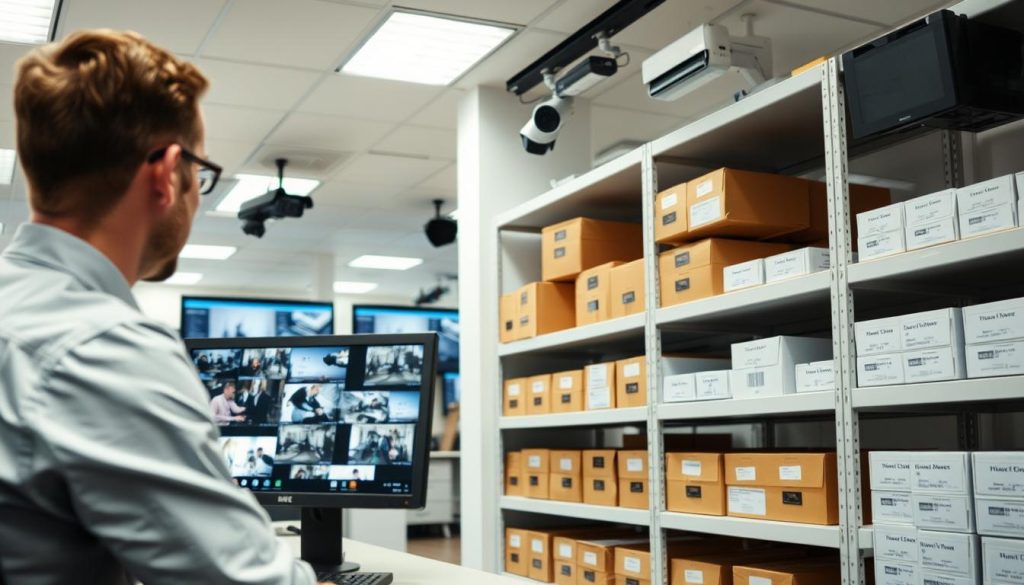
Regular data backups form the foundation of reliable surveillance systems. Automated backup procedures protect against system failures and potential data loss incidents.
Encryption protocols safeguard sensitive material from unauthorized access. Strong encryption methods prevent security breaches while maintaining data integrity.
Implementing Effective Data Deletion Protocols
Automated deletion systems enforce retention policies consistently across organizations. These systems prevent excessive data accumulation while ensuring compliance.
Organizations must keep deletion logs to demonstrate policy adherence. Proper documentation supports audit requirements and regulatory compliance.
Exception handling procedures address special retention needs. Legal investigations or safety incidents may require extended preservation beyond standard timelines.
Ensuring Data Security and Access Control
Access control mechanisms restrict viewing privileges to authorized personnel only. Role-based permissions ensure appropriate access levels throughout the organization.
Multi-factor authentication adds extra security layers for sensitive systems. This approach prevents unauthorized access attempts effectively.
Regular security audits verify that storage practices align with requirements. These assessments identify potential vulnerabilities before they become issues.
Key management strategies include:
- Implementing redundant storage configurations for backup protection
- Conducting regular system maintenance and monitoring activities
- Categorizing footage by incident type for efficient retrieval
- Providing comprehensive staff training on proper handling procedures
Organizations need keep their systems updated with latest security patches. Regular updates address vulnerabilities and maintain system integrity.
These comprehensive approaches ensure surveillance material remains secure and accessible when needed. They represent essential components of modern security management.
Risks and Consequences of Non-Compliance
Singaporean businesses must understand the penalties for improper footage management. Non-compliance with retention regulations brings significant financial penalties under local law.
Excessive data retention violates privacy principles and may trigger legal action. Organizations face damaged reputation and eroded stakeholder trust when practices fail.
Inadequate security measures for stored material can lead to serious breaches. Proper rules keeping ensures legal compliance while supporting operational needs.
Storage of unnecessary long footage increases costs and creates inefficiencies. Failure to follow established procedures impacts investigative effectiveness negatively.
Good CCTV management helps keep systems compliant while maintaining security. Comprehensive compliance programs avoid penalties and maintain organizational trust.
Implementing proper rules keeping helps keep operations smooth. Avoid storing long footage beyond required periods to prevent issues.
Good CCTV practices protect against both legal and operational risks. They ensure surveillance systems serve their purpose without creating additional problems.