
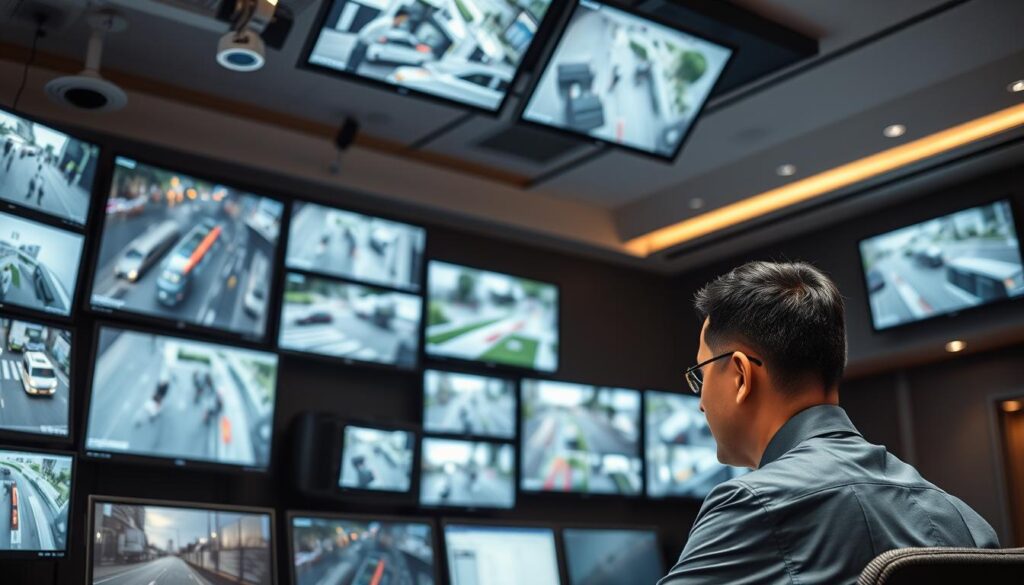
In Singapore, the question of how long CCTV footage is stored is crucial for both residential and commercial property owners. Typically, commercial systems retain recordings for a minimum of 30 days, while residential setups often keep footage for about 14 days. This retention period is not just a guideline; it plays a vital role in ensuring security and aiding law enforcement.
With over one million surveillance cameras operating across the city, the impact of retained footage is significant. In fact, properly stored video contributes to an impressive 89% of criminal convictions. The Personal Data Protection Act (PDPA) governs how personal data is handled, emphasizing the importance of consent before collecting data through cameras.
This guide will delve into the retention rules, explore the balance between security and privacy, and clarify the implications of footage retention on crime prevention and public safety. Understanding these factors is essential for maintaining compliance and enhancing security measures.
Key Takeaways
- Understand the standard retention periods for different property types in Singapore.
- Learn why a 30-day retention period is common for businesses.
- Discover how surveillance cameras aid in crime prevention and convictions.
- Explore the implications of the Personal Data Protection Act on CCTV usage.
- Gain insights into police recommendations for private CCTV footage retention.
Understanding the Importance of CCTV Retention in Singapore
The significance of retaining CCTV footage in Singapore cannot be overstated. This practice serves as a crucial element in the nation’s public safety strategy. With over one million cameras deployed nationwide, the presence of surveillance systems plays a vital role in deterring crime.
Visible cameras act as a powerful psychological deterrent. They discourage criminal activities such as theft and vandalism in both public and private spaces. When incidents do occur, recorded footage becomes essential. In fact, surveillance footage aids in securing 89% of criminal convictions.
Moreover, the Singapore Police Force has ambitious plans to expand its network. By 2030, they aim to deploy over 200,000 additional police cameras. This expansion underscores the importance of effective surveillance in maintaining safety.
Businesses that utilize monitored systems report a remarkable 56% reduction in theft incidents. This statistic highlights the operational benefits of effective surveillance. Modern IP cameras provide high-definition clarity and 24/7 remote access, enhancing real-time oversight.
However, the balance between security needs and privacy regulations is complex. Organizations must navigate Singapore’s privacy laws and data protection regulations carefully. These laws dictate how footage is handled and retained, ensuring respect for individual privacy rights.
Ultimately, proper CCTV retention policies reflect a commitment to both public safety and personal data protection principles. Organizations must weigh their legitimate security needs against the fundamental expectations of privacy.
How long are CCTV kept for? Typical Retention Periods Explained
Understanding the duration for which CCTV footage is stored is essential for property owners. Different settings have varying requirements for retaining recordings. This section outlines the retention guidelines for residential and commercial CCTV systems, as well as sector-specific regulations.
Residential CCTV footage retention guidelines
In Singapore, residential CCTV systems typically retain footage for up to 14 days. Many homeowners opt for cloud storage solutions to enhance accessibility. This approach allows users to view footage remotely, providing an added layer of convenience.
Commercial and business CCTV footage retention requirements
For commercial entities, the guidelines mandate a minimum retention period of 30 days. This requirement ensures that businesses can access recordings when needed for security assessments or investigations. The extended retention period aids in maintaining safety and addressing any incidents that may arise.
Sector-specific retention durations: Banks, retail, and construction
Different sectors have unique retention needs. Banks and financial institutions often keep CCTV footage for 90 days or more, with some retaining recordings for up to six months under Monetary Authority of Singapore guidelines. This extended duration is crucial for fraud prevention and regulatory compliance.
Retail stores typically balance loss prevention with storage costs by keeping footage for 30 to 90 days. This timeframe allows them to monitor theft and other incidents effectively.
Construction sites face a mandatory 180-day retention rule for workplace safety incidents, as stipulated by the Ministry of Manpower. This regulation is essential for ensuring compliance with safety standards and protecting workers.
Additionally, the Singapore Police Force recommends retaining private CCTV footage for up to 31 days. This guideline serves as a best practice for enhancing community safety.
Understanding these retention rules helps businesses and homeowners effectively manage their security needs while ensuring compliance with local regulations.
Legal Framework Governing CCTV Footage Retention in Singapore
Navigating the legalities of surveillance in Singapore is essential for businesses and individuals alike. The Personal Data Protection Act (PDPA) is the cornerstone of the legal framework governing CCTV systems. This act classifies recordings that identify individuals as personal data, thus requiring strict compliance with data protection rules.
The Personal Data Protection Commission (PDPC) enforces these regulations. Organizations face significant penalties, reaching up to $1 million, for violations. This enforcement underscores the importance of adhering to the data protection act to avoid severe consequences.
Additionally, the Media Development Authority influences how businesses manage their surveillance systems. It recommends a minimum retention period of 30 days for commercial CCTV footage. This guideline ensures that companies maintain adequate records for security assessments.
Organizations must also adhere to clear rules regarding camera placement. They are required to post visible notices in areas where cameras operate. Furthermore, obtaining consent before recording is crucial, especially in sensitive areas like bathrooms and changing rooms.
For HDB flat owners, approval is necessary for cameras facing corridors. Moreover, hidden cameras require explicit permission to operate legally. These permissions help safeguard individual privacy rights while allowing for effective surveillance.
Understanding these legal distinctions is vital. It clarifies the boundaries between overt surveillance in public areas and situations where explicit consent is necessary. This knowledge empowers companies to navigate privacy laws effectively, ensuring compliance while protecting personal data.
Factors Influencing CCTV Footage Retention Duration
Several factors dictate how long video recordings remain accessible in surveillance systems. Understanding these elements is essential for both businesses and homeowners. They play a crucial role in determining the optimal duration for retaining CCTV footage.
Purpose of surveillance and operational needs
The primary purpose of your surveillance system directly impacts retention duration. For instance, a camera monitoring for crime deterrence has vastly different operational needs than one used for process monitoring or quality control. Businesses might need to calculate their specific retention requirements based on their unique security objectives.
Type of recording devices: Analog, IP cameras, DVRs, NVRs
The type of recording device significantly affects how long footage can be stored. Older analog DVR systems offer lower quality and limited storage compared to modern IP cameras. Analog tapes degrade approximately 10% in quality every decade, making long-term retention impractical. In contrast, IP cameras provide superior resolution and flexible recording modes, allowing for more efficient storage.
Storage capacity and video compression technologies
Storage capacity directly determines how long footage can be kept. Systems equipped with larger hard drives can retain recordings for months. For example, a 1TB hard disk typically holds about 90 days of footage, depending on camera settings. Additionally, advanced video compression technologies like H.265 significantly reduce file sizes, allowing more footage to be stored without sacrificing quality.
Motion detection recording features can also dramatically reduce storage consumption by capturing only relevant security events. This efficiency ensures that businesses and homeowners can keep footage longer while optimizing their storage solutions.
Available CCTV Storage Options: Pros and Cons
When considering storage options for CCTV footage, various systems present distinct advantages and challenges. The right choice can enhance security and ensure compliance with data protection regulations. Below, we explore the most common storage methods available today.
Local storage systems: DVRs and NVRs
Local storage systems, such as DVRs (Digital Video Recorders) and NVRs (Network Video Recorders), offer complete physical control over your footage. These systems require a one-time capital investment without ongoing subscription fees. However, they come with certain vulnerabilities:
- Physical Damage Risks: Hardware can be susceptible to damage from fire, theft, or flooding.
- Limited Lifespan: Hard drives typically last between three to five years, necessitating eventual replacements.
SD cards and edge devices
SD cards provide a simple solution for edge storage, making them suitable for smaller surveillance setups. They are cost-effective and easy to use, but their capacity is limited. This makes them ideal for short-term storage or less critical surveillance needs.
Cloud-based storage solutions and hybrid models
Cloud storage solutions have gained popularity due to their scalability and off-site security. Key benefits include:
- Scalability: Near-unlimited storage capacity allows businesses to expand as needed.
- Remote Access: Authorized personnel can access footage from any internet-connected device, enhancing flexibility.
Hybrid models combine local NVR storage for recent footage with cloud archiving for older recordings. This approach balances performance and budget while ensuring compliance with regulations. By using affordable local storage for frequently accessed data and cloud resources for archival purposes, businesses can optimize costs.
Each storage option has implications for data protection and compliance with Singapore’s Personal Data Protection Act. Businesses must consider how these solutions align with legal requirements while ensuring efficient management of their CCTV footage.
Developing a Compliant CCTV Data Retention Policy
Creating a robust data retention policy is vital for organizations managing CCTV footage. Such policies define how long recordings will be stored, aligning with both business needs and legal requirements. The Personal Data Protection Act (PDPA) mandates that personal data should not be retained longer than necessary for surveillance purposes.
To begin, companies must define retention periods based on their specific business type and the applicable legal rules. Different industries may have unique requirements, so understanding these distinctions is crucial. This ensures that organizations not only meet operational needs but also comply with regulations.
Defining retention periods based on business type and legal requirements
Each business type has different operational surveillance needs. For instance, retail businesses may require longer retention periods to monitor theft, while other sectors might not need as extensive a duration. Companies must create documented policies that clearly specify how long they will keep CCTV footage before deletion.
Transparency and notifications to data subjects
Transparency is essential in building trust with individuals who may be recorded. Organizations should provide clear notifications about the purpose and presence of cameras. This not only informs data subjects but also complies with the PDPA, which allows individuals to request access to their captured personal data.
Regular audits and updates to retention policies
Regular audits are crucial for ensuring adherence to retention policies. These audits help identify potential gaps in compliance and ensure that data management practices remain aligned with evolving legal requirements. Non-compliance can lead to severe consequences, including financial penalties up to $1 million and reputational damage.
In summary, developing a compliant CCTV data retention policy involves defining appropriate retention periods, ensuring transparency, and conducting regular audits. By adhering to these principles, organizations can effectively manage their CCTV footage while protecting personal data and minimizing legal risks.
Best Practices for Storing and Managing CCTV Footage
Properly handling CCTV footage is essential for both security and legal compliance. Implementing effective strategies can safeguard your recordings and ensure they remain accessible when needed. Below are some best practices that organizations should adopt.
Implementing automatic backup and data encryption
Discover why implementing automatic backup routines is essential for preventing catastrophic CCTV footage loss from hardware failures or system crashes. Regular backups ensure that your data is safe and can be restored if needed. Additionally, strong data encryption protects sensitive surveillance recordings from unauthorized access both during transfer and at rest.
Access control and user permissions management
Understanding the critical importance of access control systems is vital. These systems assign tiered user permissions to restrict who can view specific footage. This ensures that only authorized personnel have access to sensitive recordings, enhancing overall security.
Organizing footage by incidents and utilizing smart recording features
Explore best practices for organizing CCTV recordings by incident type. This organization prevents accidental deletion of important security events. Furthermore, smart recording features like motion detection and scheduled recording dramatically reduce storage consumption and extend retention periods.
Regular system maintenance, including camera lens cleaning and firmware updates, ensures reliable footage capture and storage. Organizations should also monitor storage systems for unusual behavior that could indicate security breaches or hardware degradation.
By implementing these practices, businesses can maintain effective management of their CCTV footage, aligning with Singapore’s data protection regulations.
Understanding Consequences of Retaining CCTV Data Too Long
The implications of retaining CCTV data beyond necessary periods can be profound. Organizations that keep footage longer than required face significant legal and financial risks. Violations of data privacy laws can lead to severe penalties and loss of trust.
As data remains stored, the potential for breaches increases. Sensitive information might be misused, leading to costly consequences. Additionally, prolonged retention can inflate storage costs and complicate data management. Searching for specific footage becomes more time-consuming and inefficient.
Furthermore, companies risk damaging their reputation if over-retained footage is compromised. When personal data is exposed, public trust diminishes. This erosion of confidence can have lasting effects on a business’s success.
To avoid these pitfalls, organizations must balance their legitimate retention needs with the negative impacts of excessive data holding. Here are some key points to consider:
- Understand the serious legal and financial risks organizations face when retaining CCTV data long after its legitimate purpose has expired.
- Learn how over-retention directly violates the PDPA data minimization principle requiring personal data to be deleted when no longer necessary.
- Discover how keeping footage beyond required periods exponentially increases exposure to costly data breaches and unauthorized access incidents.
- Explore the operational inefficiencies created by excessive data accumulation, including slower search times and increased storage management complexity.
- Understand the significant reputation damage that can occur when over-retained CCTV footage becomes compromised in a security breach.
- Learn why companies must carefully calculate their actual retention needs rather than defaulting to indefinite storage of surveillance recordings.
- Discover how outdated long CCTV footage may provide inaccurate representations that lead to poor investigative or operational decisions.
- Understand the cascading costs of over-retention, including expanded storage hardware, increased energy consumption, and additional IT management.
- Learn how proper data protection practices require scheduled deletion protocols that prevent the accumulation of unnecessary personal data.
- Explore the complete risk profile that organizations face when they fail to implement disciplined CCTV footage retention limits.
Compliance Tips for Navigating CCTV and PDPA Regulations
Compliance with data protection regulations is critical for organizations utilizing surveillance systems. In Singapore, organizations must obtain necessary consents before collecting personal data through CCTV systems. This ensures that privacy rights are respected while maintaining security.
The concept of deemed consent applies in public areas like malls. Here, individuals agree to surveillance simply by entering. However, clear signage must state the purpose of collection before recording begins. This transparency is vital in fostering trust with the public.
Additionally, organizations must implement strict policies to restrict surveillance in sensitive areas. Locations such as bathrooms, changing rooms, and hotel bedrooms are strictly off-limits under the data protection act. This is crucial for respecting personal privacy and adhering to legal requirements.
Under the PDPA, individuals have the right to request access to their captured personal data. Organizations must respond to these requests within specified timeframes. This includes providing individuals with the option to request deletion of their data when it is no longer necessary.
The Personal Data Protection Commission (PDPC) provides detailed advisory guidelines on all these requirements. Companies must familiarize themselves with these guidelines to ensure compliance and mitigate risks associated with non-compliance.
Understanding the critical distinction between overt surveillance in public areas and situations requiring explicit permission for recording is essential. Organizations should adopt practical compliance tips to navigate the complex intersection of security needs and personal data protection rules.
- Learn the essential steps for obtaining necessary consents before deploying CCTV systems that collect personal data in any Singapore location.
- Understand the concept of deemed consent that applies when individuals enter public areas like shopping malls with visible surveillance.
- Discover the legal requirements for clear signage that must communicate the purpose of CCTV recording before any data collection begins.
- Learn why companies must implement strict policies restricting surveillance in sensitive areas such as bathrooms, changing rooms, and private spaces.
- Understand the absolute prohibition on camera placement in certain locations under Singapore’s data protection act and privacy regulations.
- Explore the proper procedures for handling access requests from individuals who want to view their captured personal data under the PDPA.
- Learn the mandated response timeframes and processes for handling deletion requests when individuals exercise their data protection rights.
- Discover how the Personal Data Protection Commission advisory guidelines provide detailed compliance roadmaps for organizations.
- Understand the critical distinction between overt surveillance in public areas and situations requiring explicit permission for recording.
- Learn practical compliance tips that help organizations navigate the complex intersection of security needs and personal data protection rules.
Technical Specifications and Quality Standards for CCTV Systems
Understanding the quality standards for surveillance systems is vital for ensuring reliable security. In Singapore, specific technical requirements are set to enhance the effectiveness of CCTV systems. These specifications are crucial for compliance with legal standards and for producing usable footage in various conditions.
Minimum resolution, frame rates, and low-light performance
From June 2024, large construction sites in Singapore must use cameras with at least HD 1080p resolution and color recording. This standard ensures that footage is clear and detailed, which is essential for monitoring activities effectively.
A minimum of 30 frames per second is often required for capturing clear video of fast-moving subjects in active surveillance zones. This frame rate helps in tracking movements accurately, providing better evidence if needed.
Effective systems also need superior low-light performance. Sensors must achieve 0.05 lux sensitivity to produce usable images in near darkness. This capability is vital for nighttime security and ensures continuous monitoring.
Additionally, infrared illumination capabilities enable true 24/7 surveillance, even in complete darkness, providing comprehensive security coverage.
Importance of accurate timestamps and metadata
Accurate timestamps synchronized to Singapore Standard Time are the bedrock of legally admissible CCTV footage in court proceedings. The use of Network Time Protocol ensures timestamp accuracy within ±500 milliseconds, which is crucial for legal validation.
Embedded metadata enhances the utility of recordings. This metadata should include the camera model, serial number, GPS coordinates, frame rate, and compression format. Such details transform raw video into robust evidentiary packages.
For high-security data, an encryption hash is essential for proving that CCTV recordings have not been tampered with or altered during storage. This feature adds an extra layer of security, ensuring the integrity of the footage.
Meeting these technical specifications directly impacts the forensic value and legal admissibility of your surveillance footage. Adhering to these standards ensures that CCTV systems produce court-ready recordings every day.
Special Retention Requirements for Workplace Safety and Investigations
Workplace safety regulations in Singapore impose specific rules regarding the retention of CCTV footage. The Workplace Safety and Health Act mandates a strict 180-day retention period for any CCTV footage related to reportable workplace incidents. This requirement is enforced by the Ministry of Manpower, ensuring that businesses maintain adequate records for safety compliance.
From June 2024, large construction sites valued over $5 million must install cameras with HD 1080p color recording. This enhancement is vital for comprehensive incident documentation, enabling clear and detailed footage that can aid in investigations.
When law enforcement issues a formal request, organizations must preserve relevant footage. This action suspends normal deletion schedules, ensuring that critical recordings remain accessible during investigations. Additionally, active litigation or anticipated legal action triggers a legal hold on recordings, which means companies must secure this footage until the matter is fully resolved.
Internal investigations related to fraud or serious misconduct also require that footage be secured. Companies must have clear procedures for identifying and isolating footage that falls under these special retention requirements. Failure to preserve footage that might need to be produced during official investigations can lead to serious consequences.
- Learn about the mandatory 180-day CCTV footage retention requirement for all Workplace Safety and Health incidents under Singapore law.
- Understand how the Ministry of Manpower enforces strict surveillance rules for construction sites valued over $5 million with specific camera requirements.
- Discover the June 2024 mandate requiring large construction sites to deploy HD 1080p color recording cameras for comprehensive incident documentation.
- Explore the legal hold procedures that organizations must implement when litigation or regulatory investigations require extended footage preservation.
- Learn how police-issued preservation notices immediately suspend normal deletion schedules for specific CCTV recordings relevant to investigations.
- Understand the protocols for securing footage related to internal investigations of fraud, misconduct, or serious workplace violations.
- Discover why businesses must have clear procedures for identifying and isolating footage that falls under special retention requirements.
- Learn how companies can prepare their storage infrastructure to accommodate the extended 180-day retention for workplace safety compliance.
- Understand the serious consequences of failing to preserve footage that might need to be produced during official investigations or legal proceedings.
- Explore the complete framework for managing long CCTV retention when workplace incidents, police inquiries, or legal actions demand it.
Optimizing CCTV Retention with Modern Technology
Modern technology is transforming the way organizations manage CCTV footage retention. Utilizing innovative solutions can greatly enhance the efficiency of storage and accessibility.
Using motion detection and video compression to extend storage time
Motion detection technology dramatically extends CCTV footage retention by only recording when activity is detected. This method eliminates hours of unnecessary static recording, significantly reducing storage consumption.
Additionally, advanced video compression codecs like H.265 reduce file sizes while preserving the image quality needed for investigations. This combination allows organizations to keep footage longer without incurring extra storage costs.
Integrating AI and smart analytics for efficient footage management
AI-powered smart analytics can automatically categorize surveillance footage and flag important security events for priority retention. This capability streamlines the process of managing vast amounts of data.
Furthermore, intelligent systems enable rapid searching through extensive archives of recordings to locate specific incidents in seconds. Modern cameras can dynamically adjust recording quality based on detected activity levels, optimizing footage storage utilization.
Integrating CCTV systems with access control creates comprehensive security ecosystems that improve overall surveillance effectiveness. These advancements not only enhance security but also offer cost-saving benefits by extending retention days without requiring proportional increases in storage hardware.
In summary, leveraging modern technologies can transform how organizations capture, store, and access their surveillance footage. This approach not only meets long CCTV retention requirements but also helps control storage infrastructure costs.

Maintaining and Upgrading CCTV Systems for Effective Retention
To optimize CCTV footage retention, businesses must prioritize system maintenance and upgrades. Regular upkeep is essential for preventing data loss and ensuring the reliability of surveillance systems.
Regular system maintenance includes tasks such as camera lens cleaning, firmware updates, and hard drive health monitoring. These practices help prevent catastrophic data loss and keep systems running smoothly. Hard drives typically have a lifespan of three to five years, making proactive monitoring and eventual replacement crucial.
Organizations should conduct periodic security audits of their surveillance infrastructure. This helps identify vulnerabilities before they lead to data loss. Signs that hardware needs replacement include frequent recording failures, degraded image quality, and storage capacity warnings.
Upgrading from analog to IP camera systems provides significant improvements in video quality and retention capabilities. Modern IP cameras offer higher resolution and more efficient storage options, making them ideal for businesses looking to enhance their security measures.
Professional security vendors can assess existing systems and recommend appropriate upgrades aligned with current regulations and operational needs. Understanding when to replace entire CCTV systems rather than maintaining aging equipment is vital for long-term security.
By implementing proper maintenance schedules, organizations can ensure that their surveillance footage remains reliable and admissible for the full retention period. This complete lifecycle management approach keeps CCTV systems operating at peak performance every day.
- Learn why regular CCTV systems maintenance including lens cleaning and firmware updates is essential for preventing catastrophic data loss.
- Understand the three to five year typical lifespan of surveillance hard drives and the importance of proactive monitoring and replacement scheduling.
- Discover the warning signs that indicate your storage hardware needs replacement including recording failures and degraded video quality.
- Explore the significant benefits of upgrading from legacy analog systems to modern IP cameras for improved footage quality and retention.
- Learn how periodic security audits of your surveillance infrastructure help identify vulnerabilities before they lead to data loss.
- Understand when businesses should consider replacing entire CCTV systems rather than continuing to maintain aging equipment.
- Discover how professional security vendors can assess existing installations and recommend upgrades aligned with current Singapore regulations.
- Learn the cost-benefit analysis framework for deciding between incremental hardware upgrades and complete system replacement.
- Understand how proper maintenance schedules ensure your surveillance footage remains reliable and admissible for the full retention period.
- Explore the complete lifecycle management approach that keeps your CCTV systems operating at peak performance every day.
Taking Action: How to Choose the Right CCTV Solution for Your Needs
Selecting the right surveillance solution is crucial for effective security management. Begin by assessing your specific security needs, property type, and regulatory obligations. Consider factors such as the number of cameras required, desired resolution, and storage capacity.
Professional consultation is invaluable. Experts can help determine the ideal retention period and system configuration. Modern IP CCTV solutions offer HD clarity, 24/7 remote access, and seamless integration with existing security infrastructure.
Brands like Axis, Panasonic, and ACTi provide enterprise-grade equipment suitable for various applications. Balancing your budget against the technical specifications and retention capabilities is essential. Take the first step toward implementing a solution that protects your property while respecting personal data and privacy rules.
For personalized advice on the latest CCTV solutions, contact Wen Hong at +65 60135960 or ED Viston at +65 8313 4578.