
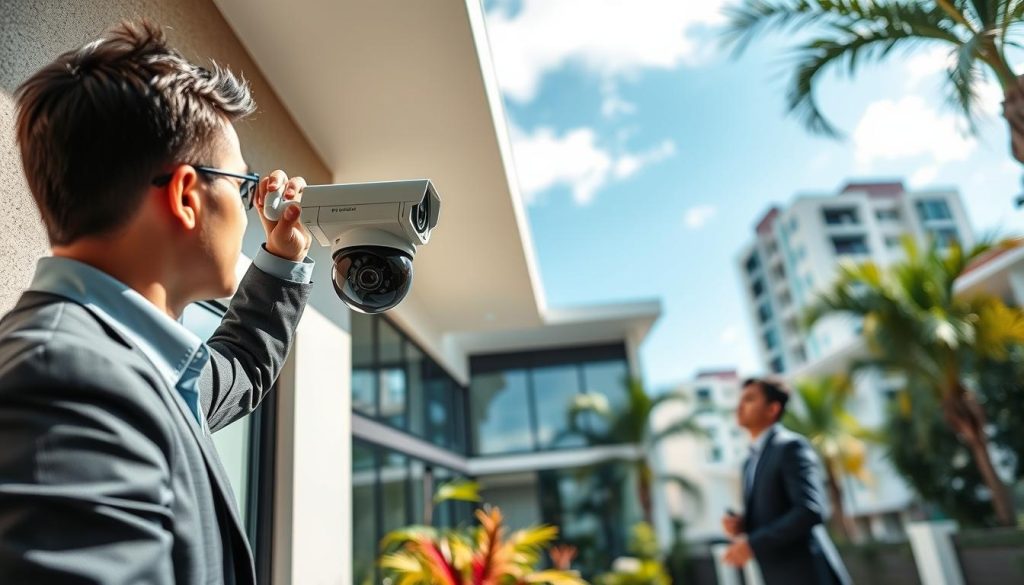
Home security is a top priority for many Singapore residents. Installing surveillance equipment offers peace of mind and property protection. However, navigating the legal landscape requires careful attention.
Singapore’s dense living environment creates unique challenges. Balancing personal safety with community privacy is essential. Specific regulations govern residential camera use across the island.
The Personal Data Protection Act (PDPA) sets national standards for data collection. Additionally, Housing & Development Board (HDB) guidelines address shared spaces in public housing. Recent 2023 updates simplified approval for certain installations.
This guide clarifies the rules for homeowners. Learn about compliant placement, neighbor consent, and equipment choices. Protect your home while respecting legal boundaries and community harmony.
Key Takeaways
- Singapore law permits residential security cameras with specific conditions.
- The Personal Data Protection Act (PDPA) governs data collection from surveillance footage.
- HDB has distinct guidelines for cameras in flats, especially those facing common corridors.
- Audio recording typically requires explicit consent, unlike video in many cases.
- Camera positioning must avoid intruding on neighbor privacy or public areas.
- Recent policy changes have streamlined approval processes for HDB residents.
- A proper installation balances security needs with legal and community obligations.
Introduction to Home Security Cameras in Singapore
Modern Singapore households increasingly view surveillance equipment as essential components of comprehensive property protection. The island nation now hosts over one million CCTV cameras, creating a complex balance between safety and personal privacy. This growth reflects changing attitudes toward residential monitoring in urban environments.
Residential surveillance addresses genuine security concerns while raising important questions about community boundaries. Homeowners must navigate both technological possibilities and social responsibilities. Understanding this landscape is crucial for effective, compliant home protection.
The Rising Importance of Residential Surveillance
Visible security systems deliver powerful crime prevention benefits. Statistics show these installations deter burglary attempts by 60%. Protected properties experience 40% fewer actual break-ins.
Modern surveillance technology offers remarkable capabilities. Today’s systems feature 4K resolution cameras and infrared night vision. AI-powered motion detection reduces false alerts. Secure cloud storage ensures footage preservation.
Video evidence dramatically improves law enforcement outcomes. Singapore authorities report 90% clearance rates for theft cases with available surveillance footage. This makes cameras valuable tools for justice.
Key advantages of modern residential surveillance include:
- Enhanced deterrence through visible presence
- Detailed evidence collection with high-resolution recording
- Remote monitoring capabilities via mobile applications
- Intelligent alerts that distinguish between people, vehicles, and animals
Balancing Deterrence with Community Living
Security benefits must align with Singapore’s dense living arrangements. High-rise HDB flats and landed properties present unique challenges. Camera placement requires careful consideration of sightlines and angles.
Cybersecurity represents a significant concern for modern systems. A 2023 security report indicates 13% of global home camera systems face hacking attempts. Proper setup and encryption are non-negotiable for protection.
Surveillance impacts neighborhood dynamics in measurable ways. While enhancing safety, cameras can affect trust between residents. Transparent communication about monitoring purposes helps maintain positive relations.
Successful implementation considers these community factors:
- Respecting neighbor privacy by avoiding direct views into windows
- Focusing camera angles on personal property rather than common areas
- Discussing installation plans with adjacent homeowners when possible
- Understanding that security needs must coexist with community harmony
Residential surveillance serves dual purposes in Singapore’s urban context. These systems act as both preventive measures and evidence-gathering devices. Their proper use requires balancing technological capabilities with social awareness.
Is It Illegal to Have Cameras Around Your House? The Direct Answer
The legality of residential surveillance hinges on adherence to a set of well-defined rules and ethical considerations. In Singapore, the use of such equipment is generally permitted. However, this permission is conditional upon strict compliance with local laws and community guidelines.
Authorities balance the legitimate need for property protection with the fundamental right to personal privacy. Successful, lawful installation requires understanding where these boundaries lie.
Legal When Compliant: The General Principle
Singapore’s legal system establishes a clear framework. The overarching principle is simple: security systems are lawful when they follow all applicable regulations. This means your setup must respect both statutory law and the unwritten social contract with your neighbors.
A landmark 2018 case cemented this principle. An executive was fined SGD 12,000 for installing a camera that surveilled a bathroom. This judgment sent a strong message about the inviolability of private spaces.
The courts consistently apply the “reasonable expectation of privacy” doctrine.
This legal doctrine protects areas where individuals have a strong expectation of being free from observation, such as bedrooms, bathrooms, and changing rooms.
Monitoring your own driveway or gate is typically allowed. Yet, even here, a key rule applies. You must display proper signage notifying people of the recording.
Key Factors That Determine Legality: Placement and Purpose
Two elements primarily dictate whether your surveillance setup is legal: where you point the equipment and why you are using it. Purpose must align with genuine security needs, not curiosity or intrusion.
Placement is critically important. For residents in multi-family housing like HDB flats, the 45-degree angle rule is a key guideline. Cameras should be positioned to avoid capturing the interiors of adjacent units or their private doorways.
Singapore’s approach differs from some international standards. Unlike California, which requires two-party consent for recording, Singapore law mandates notification. Since 2023, if your CCTV covers areas within 15 meters of a neighbor’s private space, you should inform them.
Key factors that authorities and courts examine include:
- Camera Field of View: Does it focus solely on your property or spill into a neighbor’s windows or garden?
- Nature of the Space: Is it a private bedroom (high protection) or a semi-public driveway (lower protection)?
- Presence of Signage: Are visitors and passersby adequately notified about video recording?
- Data Handling: Is the captured footage stored securely and used only for its stated security purpose?
Ultimately, the law supports your right to protect your home. It simultaneously demands that this protection does not infringe upon the privacy rights of others in the community. Careful planning ensures your security measures are both effective and fully compliant.
Understanding Singapore’s CCTV Regulations: HDB vs. Landed Property
Singapore’s residential surveillance landscape divides into distinct regulatory zones based on property type. Homeowners must navigate different frameworks for public housing versus private residences. Understanding these distinctions ensures full compliance with local laws.
The Housing & Development Board sets specific rules for flats. Landed property owners answer to different authorities. Condominium residents face yet another layer of governance through their management councils.
HDB Flat Guidelines: Corridors, Approval, and Angles
A significant 2023 policy update simplified HDB CCTV installation. Residents can now mount corridor-facing devices without seeking prior approval. This change recognizes the legitimate security needs of public housing residents.
Technical requirements maintain community harmony. Cameras must be mounted at least 2.4 meters high. This height prevents intrusive angles into neighboring units.
The equipment should face common walkways only. Direct views into private spaces like windows remain strictly prohibited. Proper positioning respects everyone’s reasonable expectation of privacy.
Mandatory signage placement is another key rule. Notices must appear within 4 meters of recording zones. These signs inform passersby about ongoing video surveillance.
Residents should understand that while approval isn’t needed, responsibility remains. Proper installation avoids legal disputes with neighbors. For specific questions about licensing requirements, homeowners can consult resources like this guide on CCTV licensing in Singapore.
Rules for Landed Properties and Condominiums
Landed property owners follow Urban Redevelopment Authority guidelines. The 45-degree angle restriction applies to street-facing devices. This rule prevents excessive monitoring of public areas.
Owners enjoy more flexibility within their property boundaries. Front gates, driveways, and garden perimeters are generally acceptable zones. The focus remains on protecting private premises rather than surveying the neighborhood.
Condominium regulations introduce another complexity layer. Management Corporation Strata Title boards typically govern shared spaces. Residents usually need MCST approval for any external camera installation.
Different developments maintain varying guidelines. Some condos prohibit all exterior equipment. Others allow discreet devices with specific placement rules.
Common prohibitions apply across all property types. Bedrooms and bathrooms represent absolute no-monitoring zones. Helper’s quarters and adjacent units’ interiors also receive maximum privacy protection.
The Role of the Personal Data Protection Act (PDPA)
The PDPA provides the overarching framework for all residential surveillance. This law governs how collected footage gets handled and stored. Compliance is mandatory regardless of property type.
Data retention limits represent a critical requirement. The PDPA caps storage at 30 days maximum for most residential footage. Extended retention requires legitimate security concerns and proper justification.
“Organizations shall cease to retain personal data as soon as it is reasonable to assume that the purpose for which that personal data was collected is no longer being served.”
Consent requirements vary between video and audio recording. Video surveillance in public areas often needs only notification. Audio capture typically demands explicit consent from recorded individuals.
Violations carry serious consequences. The Personal Data Protection Commission can impose substantial fines. These penalties underscore the importance of understanding and following all regulations.
Successful homeowners balance security objectives with legal obligations. They protect their property while respecting community boundaries. This approach ensures sustainable, complaint surveillance systems.
Privacy Laws and Your Security Cameras: What You Must Know
Singapore’s privacy framework establishes clear boundaries for residential monitoring systems. These regulations protect individuals while allowing legitimate security measures. Homeowners must understand how these laws apply to their surveillance equipment.
Three key concepts govern compliant camera use. The reasonable expectation of privacy defines protected spaces. Consent requirements differ for audio and video capture. Data retention rules ensure proper footage management.
Reasonable Expectation of Privacy in Singapore
Singapore courts recognize specific spaces deserve heightened privacy protection. This legal doctrine applies strongly to residential environments. Family activities and domestic workers’ quarters receive particular consideration.
A 2021 legal case established important boundaries. A landlord faced a SGD 7,500 fine for inappropriate surveillance. The equipment monitored tenants’ private living areas without justification.
This judgment clarified what constitutes reasonable privacy expectations. Bedrooms and bathrooms represent absolute no-monitoring zones. Changing rooms and helper’s quarters also receive maximum protection.
Even semi-private spaces like living rooms demand careful consideration. Cameras should never capture these areas without compelling security reasons. The principle balances individual rights with property protection needs.
Audio Recording vs. Video Recording: Stricter Consent Rules
Singapore law treats audio capture much more strictly than video monitoring. The Personal Data Protection Act Section 20 prohibits recording conversations without explicit consent. This creates different compliance requirements for homeowners.
Video surveillance in appropriate areas may only require notification. Proper signage often satisfies this obligation. Audio recording demands written permission from all recorded parties.
Microphone functions face additional restrictions in residential settings. These features are banned in bedrooms and living spaces regardless of signage. The law recognizes spoken words as particularly sensitive personal data.
The Evidence Act provides limited exceptions for crime-related recordings. Section 116 allows certain audio evidence in legal proceedings. This exception applies only to genuine security incidents, not routine monitoring.
Practical implications for homeowners include:
- Disabling microphone functions on residential security cameras
- Obtaining written consent if audio recording is absolutely necessary
- Understanding that video-only systems face simpler compliance requirements
- Recognizing that audio capture without consent violates PDPA regulations
Data Retention and Footage Management Requirements
The PDPA establishes clear rules for handling surveillance footage. Data retention represents a critical compliance area. Homeowners must implement proper storage and deletion practices.
Singapore law generally limits footage storage to 30 days maximum. This timeframe balances security needs with privacy rights. Extended retention requires legitimate justification like ongoing legal proceedings.
“Organizations shall cease to retain personal data as soon as it is reasonable to assume that the purpose for which that personal data was collected is no longer being served.”
Compared to international standards, Singapore offers a modified right to be forgotten. The GDPR provides broader deletion rights for European residents. Singapore’s approach focuses on purpose limitation and time-based retention.
Secure storage practices are essential for compliance. Homeowners should implement access controls and encryption. Regular system audits ensure ongoing adherence to data protection requirements.
Proper deletion procedures complete the compliance cycle. Automated systems can manage scheduled footage purging. Manual verification ensures no sensitive data remains beyond permitted periods.
Effective footage management involves:
- Implementing secure cloud or local storage with encryption
- Setting automatic deletion after 30 days for routine footage
- Creating separate storage for evidence related to security incidents
- Establishing access logs to track who views recorded material
- Conducting quarterly reviews of data handling practices
Understanding these privacy laws ensures surveillance systems protect homes without violating rights. Compliance creates sustainable security solutions for Singapore residents.
Common Legal Pitfalls and How to Avoid Them
Many property owners unintentionally violate privacy laws through simple installation oversights. Understanding these frequent mistakes helps maintain both security and compliance. Proactive prevention avoids disputes with neighbors and potential regulatory penalties.
Common violations include capturing adjacent properties beyond genuine security needs. Missing required signage within four meters of recording zones represents another typical error. Retaining surveillance footage beyond the thirty-day limit also creates compliance issues.
Pointing Cameras at Neighbors’ Windows or Doors
Directing surveillance equipment toward adjacent properties creates immediate legal problems. This practice violates the reasonable expectation of privacy doctrine. Even partial views into private spaces can lead to significant fines.
A 2022 legal case demonstrated these consequences clearly. Homeowners faced substantial penalties for overlooking bedroom windows during their CCTV installation. The court emphasized that security needs cannot justify privacy invasions.
Hidden monitoring devices in private areas remain completely prohibited. Singapore’s “peeping tom” laws carry potential two-year sentences for such violations. These regulations protect changing rooms, bedrooms, and other intimate spaces.
Practical solutions involve careful camera positioning and angle adjustments. The 45-degree rule helps avoid capturing neighboring properties. Regular visual checks ensure your equipment focuses only on your legitimate security zones.
Capturing Audio Without Consent
Audio recording faces much stricter regulations than video surveillance. The Personal Data Protection Act Section 18 prohibits capturing conversations without explicit consent. This requirement applies even in otherwise permitted recording locations.
“An organization shall not collect, use or disclose personal data about an individual unless the individual gives, or is deemed to have given, his consent for the collection, use or disclosure.”
Microphone functions on residential security systems often create compliance risks. Many homeowners activate these features without understanding the legal implications. Disabling audio capture represents the safest approach for most installations.
If audio recording becomes absolutely necessary, written permission is mandatory. All recorded parties must provide explicit consent before activation. Documenting this approval protects against future legal challenges.
Inadequate Signage and Notification
Proper notification represents a fundamental legal requirement for residential surveillance. Signage must appear within four meters of all recording zones. These notices inform visitors and passersby about ongoing video monitoring.
Effective signage includes specific technical specifications. Notices should measure at least twenty centimeters by thirty centimeters. Multilingual content (English, Chinese, Malay, Tamil) ensures broad understanding in Singapore’s diverse community.
The signage must clearly state the monitoring purpose and data handling practices. Contact information for the property owner should appear on each notice. Regular maintenance ensures signs remain visible and legible over time.
Neighbor notification represents another critical compliance step. Since 2023, homeowners must inform adjacent residents if surveillance covers areas within fifteen meters of their private spaces. This proactive communication prevents misunderstandings and disputes.
Implementing Preventive Measures
Regular self-audits help maintain ongoing compliance with surveillance regulations. These checks should examine several key system aspects every quarter. Consistent review prevents small issues from becoming major violations.
Essential audit components include:
- Camera angles and sightlines to ensure they focus only on your property
- Data encryption and storage security to protect captured footage
- Retention period settings to automatically delete footage after thirty days
- Neighbor notification records to document compliance efforts
- Signage condition and placement to verify proper notification
Professional compliance checks offer valuable protection against regulatory violations. Certified security experts provide comprehensive system evaluations. These services typically cost between SGD 150 and SGD 300.
Professional assessments can prevent fines exceeding SGD 5,000 for non-compliance. Experts identify potential issues before they escalate into legal problems. They also help resolve neighbor concerns through documented compliance verification.
For comprehensive system evaluation, consider consulting expert security camera installers who understand local regulations. Their expertise ensures your surveillance setup meets all legal requirements while providing effective protection.
Balancing security objectives with privacy rights requires continuous attention. Simple preventive measures maintain this balance effectively. Proper planning creates sustainable surveillance solutions that protect both property and community relationships.
Can Someone Legally Block or Tamper with My Security Camera?
Tampering with a neighbor’s surveillance system is not a legal method to address privacy concerns. Singapore’s legal framework strongly protects property owners who install compliant equipment. Deliberate interference triggers both criminal charges and civil liability for the offender.
Homeowners have clear rights to maintain operational security cameras. These rights are balanced against proper installation and respect for privacy. If your setup follows all rules, the law shields it from vandalism or blocking.
Common Methods of Camera Interference and Blocking
Individuals sometimes resort to various tactics to disable surveillance equipment. Physical vandalism remains the most frequent method. Spray painting lenses accounts for one in every five interference cases reported.
Technical attacks are becoming more sophisticated. Infrared lasers can disrupt about 38% of standard devices. These beams overwhelm the camera’s sensors, creating blinding glare in the video feed.
Signal jamming represents a serious illegal activity. The Infocomm Media Development Authority (IMDA) explicitly bans these devices. Jammers block wireless transmission, rendering the system useless.
Other common blocking techniques include using magnetic shields. These tools create a field that distorts the image. Planting obstructions like tall plants or banners also physically blocks the view.
Homeowners can implement legal deterrents. Motion-activated lights startle potential vandals. Protective metal cages make physical damage much more difficult.
The Legal Consequences of Tampering with Surveillance Equipment
Singapore’s Penal Code Section 426 imposes strict penalties for damaging property, including security devices. A convicted offender faces up to three years imprisonment. Recent court rulings show consistent enforcement of this statute.
“Whoever commits mischief shall be punished with imprisonment for a term which may extend to 3 years, or with fine, or with both.”
Fines are substantial and commonly applied. Courts have issued penalties of SGD 2,000 for spray paint vandalism. These amounts cover repair costs and act as a punishment.
Landmark rulings establish powerful precedents. In a Sembawang case, a neighbor received a six-month jail term for camera vandalism. This judgment sent a clear message about the boundaries of acceptable behavior.
Civil courts provide additional recourse for homeowners. Judges award compensation for equipment replacement. They also consider the value of system downtime during repairs.
Victims can claim for lost evidence potential. If a crime occurred during the outage, this factor influences compensation. The legal system recognizes the protective purpose of surveillance.
Proper channels for reporting are essential. Homeowners should contact the police immediately after discovering tampering. Providing footage of the incident itself strengthens the case.
Documentation proves crucial for legal resolution. Keep records of all repair invoices and communications. This evidence supports both criminal complaints and civil claims.
Understanding these consequences helps maintain community harmony. It discourages illegal self-help actions. Residents learn to use proper dialogue or mediation instead.
Legal Alternatives to Blocking: Resolving Camera Disputes
Singapore provides multiple formal channels for resolving disputes about property surveillance without legal escalation. Constructive approaches protect both security interests and community relationships. These methods prevent conflicts from worsening into vandalism or court battles.
Successful resolution begins with recognizing legitimate concerns on all sides. Homeowners want protection for their families and assets. Neighbors deserve respect for their personal privacy within shared living environments.
Effective Communication Strategies with Neighbors
A structured five-step process helps navigate difficult conversations about surveillance equipment. This approach moves from preparation to sustainable agreement. Most conflicts resolve during the early stages of this framework.
Begin by thoroughly documenting your current setup. Take photographs showing exact camera angles and coverage areas. Review this documentation against Singapore’s privacy regulations and HDB guidelines.
Initiate discussions using neutral, non-confrontational language. Focus on shared safety goals rather than personal grievances. Schedule a convenient time for both parties to talk without distractions.
The Singapore Law Society provides template letters for formal communication. These documents outline concerns while referencing applicable local laws. They establish a professional tone for resolving technical disagreements.
Reasonable compromises often bridge differences between security needs and privacy rights. Offering options demonstrates goodwill and practical problem-solving. Many disputes settle through mutually acceptable adjustments.
“Mediation transforms positional arguments into interest-based discussions. Parties discover shared values around safety and respect.”
Schedule follow-up reviews after implementing any changes. This confirms the solution works for everyone involved. Regular check-ins prevent misunderstandings from reemerging later.
Utilizing Mediation Services in Singapore
The Community Mediation Centre handles hundreds of camera-related cases each year. Their 2022 data shows a remarkable 78% resolution rate without court intervention. This success demonstrates the power of facilitated dialogue.
Sessions cost only SGD 50 and typically conclude within three weeks. Trained mediators help neighbors articulate concerns constructively. They guide discussions toward practical, lasting agreements.
Mediators achieved 68% success in adjusting camera angles through negotiation. This statistic highlights how technical solutions often resolve emotional disputes. Professional facilitation focuses discussions on measurable outcomes.
Several acceptable compromises emerge regularly in mediation sessions:
- Privacy filters on camera lenses block specific zones while maintaining overall surveillance coverage
- Schedule-based recording activates systems only during high-risk nighttime hours
- Joint security assessments identify alternative protection methods satisfying all parties
- Multi-party consent agreements formalize permissions for monitoring shared spaces
Grassroots leaders and Town Council representatives often facilitate preliminary discussions. These community figures understand local dynamics and building layouts. Their involvement builds trust before formal mediation begins.
The progression from informal talks to structured mediation prevents escalation. Most cases resolve through early intervention and compromise. Legal action becomes necessary only when all other options fail.
Singapore’s framework emphasizes community harmony alongside individual rights. This balanced approach has proven effective for residential surveillance conflicts. Homeowners maintain protection while respecting their neighbors’ reasonable expectations.
Preventing Security Camera Interference and Tampering
Homeowners can implement multiple layers of protection to safeguard their security systems from vandalism. Physical hardening and smart technology work together to create resilient surveillance setups. These measures ensure continuous monitoring while deterring potential interference.
Effective prevention requires understanding both equipment vulnerabilities and available solutions. Strategic placement forms the first line of defense against tampering. Advanced features provide additional security layers for comprehensive protection.
Optimal Physical Placement and Hardening Strategies
Mounting height significantly impacts a device’s vulnerability to physical interference. Professional installer Wen Hong recommends minimum 2.8-meter elevations for ground-accessible equipment. This height deters casual tampering while maintaining effective surveillance coverage.
Camera housing selection influences deterrence rates substantially. Dome models offer 67% higher protection than bullet cameras. Their enclosed design shields lenses from spray paint and physical damage.
Vandal-proof installation methods dramatically reduce tampering risks. Properly installed 3M mounts achieve 92% risk reduction. These specialized fixtures resist forceful removal attempts.
Essential placement considerations include several critical components:
- Conduit wiring prevents cable cutting and signal disruption
- Lockable junction boxes protect electrical connections
- Weather-resistant housings maintain functionality in Singapore’s climate
- Reinforced mounting brackets withstand physical force
Strategic positioning considers both security and privacy requirements. Equipment should monitor property boundaries without capturing private spaces. This approach maintains community harmony while providing effective protection.
Technological Solutions to Deter and Detect Tampering
Modern surveillance systems incorporate intelligent analytics for tamper detection. AI-powered features identify 98% of obstruction attempts. These systems trigger immediate mobile alerts when detecting unusual activity near devices.
Real-time notification enables rapid response to potential interference. Homeowners receive instant updates about suspicious movements. This proactive approach prevents successful tampering attempts.
Cybersecurity measures protect wireless systems from digital interference. WPA3 encryption provides robust protection against unauthorized access. VPN configurations add additional security layers for remote monitoring.
“Advanced analytics transform passive recording into active security systems. Real-time detection and alerts create responsive protection networks.”
Regular firmware updates address emerging security vulnerabilities. Manufacturers release patches for newly discovered threats. Consistent updates maintain system integrity over time.
Maintenance routines enhance long-term camera security and performance:
- Biweekly lens cleaning ensures clear video quality and accurate detection
- Monthly angle verification confirms proper field of view alignment
- Quarterly system checks identify potential vulnerabilities or malfunctions
- Annual professional inspections assess overall system integrity
Integrated systems combine physical and technological protection layers. This comprehensive approach addresses multiple tampering methods simultaneously. Homeowners achieve reliable surveillance through coordinated security measures.
Proper implementation balances protection needs with practical considerations. Systems should provide security without creating maintenance burdens. Well-designed installations deliver sustainable, effective monitoring solutions.
Securing Your Surveillance System: A Step-by-Step Guide
Building a compliant surveillance setup involves three critical phases: equipment selection, proper installation, and regular maintenance. Each stage requires specific attention to detail for optimal security and legal compliance. Following this systematic approach ensures your protection measures respect both privacy laws and community standards.
A comprehensive strategy addresses technical specifications and operational procedures. Homeowners must consider encryption standards, physical placement, and ongoing monitoring. This guide walks through each essential component for a robust system.
Choosing the Right Equipment for Compliance
Selecting appropriate equipment forms the foundation of any legitimate surveillance system. Not all cameras meet Singapore’s specific requirements. Your choices must balance technological capabilities with regulatory obligations.
Encryption represents the first defense layer for modern devices. AES-256 protocols protect stored footage from unauthorized access. TLS 1.3 secures live video feeds during transmission to your mobile devices.
Certification standards provide additional assurance of quality and safety. UL-certified equipment meets Singapore’s strict fire safety regulations. These products undergo rigorous testing for electrical safety and environmental durability.
Wen Hong’s security team recommends specific features for optimal performance:
- Weather-resistant housing for Singapore’s tropical climate
- Infrared night vision with adjustable sensitivity settings
- Wide dynamic range for clear images in bright sunlight
- Power-over-Ethernet capability for simplified wiring
“Monthly encryption audits ensure your system maintains optimal security. Regular checks verify that all data transmission remains properly protected against interception.”
PDPA-compliant features should guide your purchasing decisions. Look for systems with automatic data deletion schedules. These can be programmed for the standard 30-day retention period required by law.
Professional Installation vs. DIY: Ensuring Legal Setup
The installation method significantly impacts your system’s effectiveness and compliance. Professional services offer expertise that DIY approaches cannot match. Each option presents distinct advantages for different home situations.
Professional installers like Wen Hong’s team provide comprehensive installation services. Their technicians understand local regulations and building codes. They ensure proper camera angles avoid neighboring windows and private areas.
Key benefits of professional installation include:
- Compliance guarantees with Singapore’s data protection laws
- 24-month warranties on both equipment and workmanship
- Proper documentation for insurance and legal purposes
- Technical support for ongoing system optimization
DIY approaches may suit budget-conscious homeowners with technical skills. However, they carry higher risks of regulatory missteps. Incorrect placement could violate privacy boundaries and trigger neighbor disputes.
Critical security configurations require expert implementation. Two-factor authentication adds essential protection for remote access. Automated backup systems with 30-day cycles preserve footage without manual intervention.
Firmware updates demand immediate attention when released. Security patches should be applied within 72 hours of critical releases. These updates address vulnerabilities that could compromise your entire surveillance network.
Ongoing Maintenance and System Audits
Regular maintenance ensures continued system reliability and legal compliance. Scheduled audits identify potential issues before they become serious problems. A proactive approach maintains both security effectiveness and regulatory adherence.
Monthly routines should include encryption verification and storage checks. Quarterly assessments must examine camera angles and field of view alignment. Annual comprehensive reviews evaluate the entire surveillance infrastructure.
Recognizing signs of system compromise requires vigilance. Watch for these indicators of potential tampering:
- 15-degree angle shifts in camera positioning
- Abnormal IR reflection patterns during nighttime operation
- Unexpected system reboots or failed login attempts
- Gaps in recording timelines that suggest interference
Documentation provides legal protection during disputes or investigations. Maintain detailed records of all maintenance activities and system modifications. These logs demonstrate due diligence in managing your security infrastructure.
Essential documentation includes access logs showing who viewed recorded material. Incident response plans outline procedures for security breaches. Maintenance records prove regular system care and compliance efforts.
Professional consultation guarantees ongoing PDPA compliance. Experts like Wen Hong’s team (+65 60135960) offer annual audit services. Their assessments verify that your system meets all current regulations and rules.
A well-maintained CCTV system delivers reliable protection while respecting legal boundaries. Regular attention prevents minor issues from escalating into major problems. This disciplined approach ensures sustainable security for your property.
Implementing Compliant Home Security: Your Action Plan
A successful security strategy combines proper equipment with respectful community engagement. Begin by assessing your specific property needs and researching current HDB or URA regulations.
Select PDPA-compliant cameras with features like automatic data deletion. Plan placements using the 45-degree rule to avoid neighboring windows. Obtain necessary approvals from management corporations if required.
Install surveillance systems at proper heights with clear signage. Modern CCTV technology offers AI-powered face blurring for shared spaces. This maintains privacy while providing effective protection.
Schedule regular system audits and neighbor check-ins. Professional consultation guarantees ongoing compliance with Singapore’s data protection laws. Services like Wen Hong offer 24-month warranties on certified installations.
Balance your security objectives with community harmony. Responsible monitoring achieves both property safety and respectful neighborhood relations.