
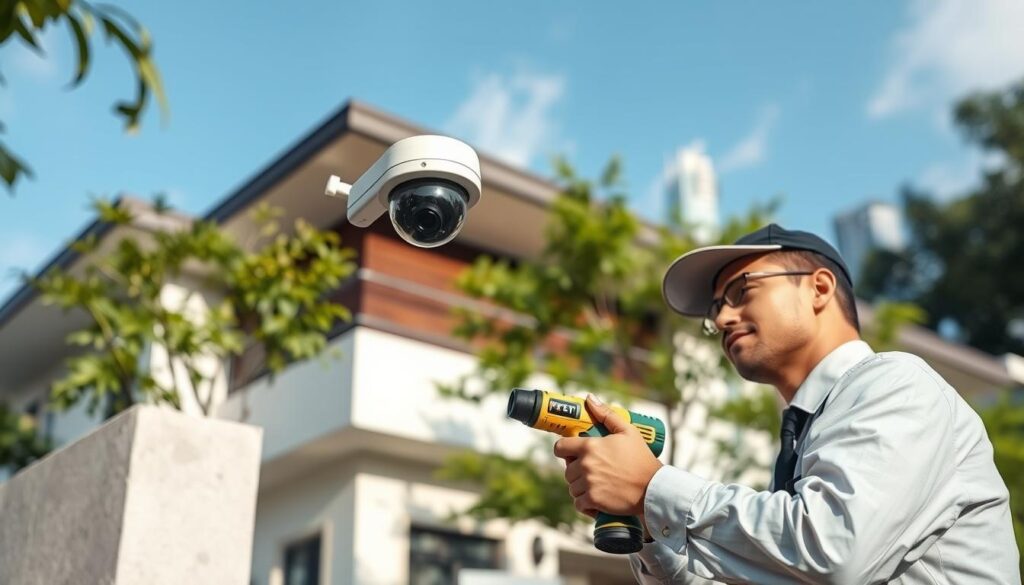
Understanding the regulations surrounding CCTV installation in Singapore is essential for homeowners. Recent updates have changed the landscape of outdoor surveillance, particularly for HDB residents. Since May 2023, those living in HDB flats can now install corridor-facing cameras without prior approval, provided they respect their neighbors’ privacy.
This guide aims to clarify the legal framework governing the use of security cameras in various property types, including condominiums and landed homes. It will delve into key laws such as the Personal Data Protection Act (PDPA) and the Community Disputes Resolution Act (CDRA). These laws outline the boundaries for using surveillance equipment while ensuring respect for others’ enjoyment of their property.
Additionally, the article will provide practical advice on camera placement, technical specifications, and compliance with Town Council requirements. By the end, readers will be equipped with the knowledge to make informed decisions about their home security.
Key Takeaways
- Homeowners can now install corridor-facing cameras in HDB units without prior approval.
- The PDPA mainly governs organizational use of surveillance, not personal use.
- Respecting neighbors’ privacy is crucial to avoid disputes.
- Town Council approval is necessary for cameras in common areas.
- Understanding the regulatory framework helps ensure compliance.
Understanding the User Intent Behind Installing CCTV Outside Your Home
Exploring the user intent behind outdoor CCTV systems provides insight into common security issues. Homeowners in Singapore are increasingly motivated to enhance their security measures. This trend is largely driven by rising concerns over theft, vandalism, and unauthorized entry.
Many residents wish to monitor their children, elderly family members, or domestic helpers while away. With the ability to view live footage remotely, homeowners find peace of mind knowing they can check in at any time.
Neighborhood disputes are also a significant factor. Issues such as harassment, noise complaints, and property damage have led many to install cameras. These devices serve as documentation tools, helping to gather evidence for potential legal proceedings or police reports.
However, there is often confusion about where the legal line is drawn. Homeowners seek clarity on the balance between protecting their property and respecting neighbors’ privacy rights. This creates a strong demand for clear guidance on compliant camera placement.
The rise of affordable smart doorbells and compact surveillance devices has made home security more accessible. Yet, this also brings challenges, particularly regarding audio recording consent and data protection. Many users may not fully understand these aspects before installation.
Balancing effective security coverage with harmonious neighbor relations requires careful consideration. Homeowners must think about camera angles, motion detection zones, and communicate transparently about the purpose of their surveillance.
Finally, residents often want to know the specific approval processes for their property type. Whether living in an HDB flat needing Town Council permission or a condominium governed by MCST bylaws, understanding these regulations is crucial.
Ultimately, the emotional aspect of feeling safe in one’s home drives much of the demand for outdoor CCTV. Homeowners must navigate a complex regulatory landscape that prioritizes community privacy alongside individual security needs.
An Overview of Singapore’s CCTV Legal Landscape
Navigating the legal framework for CCTV use in Singapore requires understanding several important regulations. The landscape is shaped primarily by two significant pieces of legislation: the Personal Data Protection Act (PDPA) and the Community Disputes Resolution Act (CDRA).
The PDPA governs how organizations handle personal data, but it explicitly exempts individuals using CCTV for personal or household purposes. This means homeowners generally do not need to display signage or obtain consent from individuals captured on their residential cameras.
On the other hand, the CDRA aims to prevent interference with a neighbor’s enjoyment of their home. Under this act, a “neighbor” is defined as anyone living in the same building or within 100 meters of the homeowner’s property. This broad definition allows for various complaints to be brought before the Community Disputes Resolution Tribunal.
When comparing residential and business surveillance laws, it’s clear that business regulations are significantly stricter. Commercial entities must display clear notification signs, implement secure data storage, and respond to access requests within 30 days. They must also justify that their camera coverage serves reasonable purposes.
A landmark policy update in May 2023 has altered the rules for homeowners, particularly those in HDB flats. Residents can now install corridor-facing cameras from within their units without prior approval, although they must still respect their neighbors’ privacy by not capturing private spaces.
Additionally, the Private Security Industry Act mandates that anyone installing CCTV cameras must hold a valid license. This regulation is crucial for maintaining standards in the installation process.
Recent enforcement actions by the Personal Data Protection Commission highlight the importance of compliance. For instance, a condominium management was fined for a security company’s unauthorized footage disclosure, underscoring that organizations remain responsible for PDPA compliance even when subcontracting security services.
Homeowners should also be aware that while residential use enjoys broad exemptions, the CDRA provides neighbors with legal recourse if camera placement unreasonably interferes with their property enjoyment. Compensation orders can reach up to $20,000 in such cases.
CCTV Installation Rules for Different Property Types in Singapore
The rules governing CCTV installation vary significantly based on property type in Singapore. Understanding these differences is essential for homeowners who want to enhance their security while remaining compliant with local regulations.
HDB flats: stringent controls and common property considerations
HDB flats represent the most regulated property type for outdoor CCTV installation. Common corridors, lift lobbies, and stairwells are classified as common property under Town Council jurisdiction. This means formal approval is required before any camera can be mounted in these shared spaces.
Since the May 2023 policy change, HDB residents can install corridor-facing cameras from inside their units without prior approval. However, these devices must be positioned carefully to avoid capturing neighbors’ doors, windows, or private living spaces to remain compliant.
Condominium units: MCST bylaws and restrictions
Condominium residents must navigate an additional layer of governance through their Management Corporation Strata Title (MCST). This establishes bylaws that may restrict camera types, placement locations, installation methods, and the duration that surveillance devices can remain operational in common areas.
Many MCSTs impose strict aesthetic standards that prohibit external cameras from being visible on building facades. Others require infrared models to minimize light pollution and maintain the visual harmony of the development during nighttime hours.
Landed properties: greater installation freedom with privacy obligations
Landed property owners enjoy the greatest degree of installation freedom. They have the legal right to mount cameras anywhere within their property boundaries, including perimeter walls, gates, driveways, and garden areas without seeking external approval from any authority.
Despite this flexibility, privacy obligations toward neighbors remain legally enforceable under the Community Disputes Resolution Act (CDRA). Cameras must not be positioned to capture activities within adjacent properties or record public sidewalks without legitimate security justification.
Understanding the specific rules applicable to each property type is essential. Violations can result in significant financial penalties. Unauthorized installations in HDB areas can carry fines up to $5,000, while breaches in condominiums may lead to MCST enforcement actions and mandatory removal orders.
How to Obtain Approval for Installing CCTV Outside HDB Flats
Gaining the necessary permissions for CCTV installation in HDB flats is crucial for compliance and community harmony. The process involves several steps, starting with the need for Town Council approval. This approval acts as a safeguard, ensuring that surveillance in shared spaces respects the privacy of all residents.
Why Town Council approval is necessary
Town Council approval serves as the primary legal mechanism ensuring that surveillance in shared HDB spaces does not infringe on the privacy rights of other residents. Councils evaluate whether proposed camera placements are justified and proportionate to documented security concerns.
Step 1: Filing a police report to justify installation
The first critical step in the approval process involves filing an official police report. This report should document specific security incidents such as theft, vandalism, harassment, or trespassing. Authorities generally prefer incidents reported within 30 days of the application to establish current and ongoing risk.
When preparing the police report, homeowners should include detailed descriptions of the incidents, dates and times of occurrence, and any evidence collected. A clear explanation of how CCTV surveillance would help prevent future incidents or aid in identifying perpetrators is also essential.
Step 2: Submitting your installation request to the Town Council
After filing the police report, residents must send an email to the Town Council responsible for their HDB estate. This submission must include a copy of the police report, site plans showing proposed camera positions, technical specifications of the equipment, and a signed declaration that the cameras will not capture neighbors’ private spaces or common areas beyond what is necessary.
Step 3: Installing cameras upon approval and renewal rules
Processing times vary across different Town Councils. Most applicants receive notification of the outcome via email within seven to ten working days. Approved installations are strictly temporary, limited to a six-month period. After this, residents must either remove the equipment completely or submit a renewal application at least 30 days before expiration.
During the approval period, Town Council inspectors may conduct site visits to verify that cameras are positioned according to the approved plans. Any deviations from the authorized placement can result in immediate revocation of permission and potential fines. Residents who fail to remove cameras after the approval period expires face progressive fines starting at $50 per week.
Condominium CCTV Installation: What You Need to Know
When considering the installation of CCTV cameras in condominiums, residents must navigate a set of specific rules and guidelines. These regulations are primarily dictated by the Management Corporation Strata Title (MCST), which governs how and where surveillance devices can be set up.
MCST rules and common restrictions
Condominium residents must first obtain and carefully review their development’s MCST bylaws. These governing documents establish the specific rules for surveillance equipment. They can vary dramatically between different developments, ranging from complete prohibition to permissive frameworks with detailed conditions.
Common MCST restrictions include:
- Prohibitions on recording in recreational facilities such as swimming pools, gyms, and function rooms.
- Angle limitations for balcony-facing devices.
- Mandatory approval requirements for any camera that monitors corridors or shared walkways.
Approval timelines and temporary installation limits
Many management corporations classify CCTV installations as “non-structural modifications.” This classification typically allows for faster approval timelines than structural changes. However, residents should still expect processing periods of two to four weeks, depending on the complexity of the proposed setup.
The temporary installation model prevalent in condominiums mirrors the HDB approach. Most MCSTs grant approval for renewable six-month periods. Residents must submit formal reapplications before expiration, with processing fees typically ranging from $50 to $150 per renewal request.
Ensuring compliant camera placement in shared spaces
Ensuring compliant camera placement in shared spaces requires careful attention to coverage angles. Devices should monitor only the resident’s immediate entry point or designated parking space while avoiding views into neighboring units’ windows, balconies, or private outdoor areas.
Infrared camera models are increasingly required by MCSTs for nighttime operation. These devices minimize light pollution and reduce the visual impact of surveillance equipment on the development’s overall aesthetic appearance during evening hours.
Residents should maintain thorough documentation of all approvals, correspondence with the management corporation, and professional installation records. This documentation provides essential evidence of compliance if disputes arise with neighbors or if the MCST conducts compliance audits.
When renewal applications are denied, residents must remove equipment within the specified timeframe. They should store devices off-site during any dispute resolution process, as MCSTs maintain digital logs that track all device timeframes for audit and enforcement purposes.
Rules and Considerations for Installing CCTV on Landed Properties
The installation of CCTV cameras on landed properties involves a balance of freedom and privacy obligations. Homeowners in Singapore enjoy the most extensive rights to set up surveillance systems within their property boundaries. This includes areas like perimeter walls, entrance gates, driveways, and gardens. Importantly, no prior approval from government authorities is required for these installations.
Freedom within property boundaries
Landed property owners have significant freedom to install CCTV cameras. They can place these devices almost anywhere within their compound. However, this freedom comes with certain responsibilities. For instance, cameras must not record public sidewalks or neighboring homes without consent. Violating this rule can lead to legal repercussions.
Privacy responsibilities towards neighbors
The Community Disputes Resolution Act (CDRA) enforces privacy responsibilities. Homeowners must ensure their cameras do not invade the privacy of others. A notable case in 2023 involved a Bukit Timah homeowner who was fined $5,000 for surveillance that extended beyond their property boundaries. This serves as a reminder that privacy violations can have serious consequences.
Recommended technical and positioning standards
For effective and compliant installation, consider the following technical standards:
- Use cameras with high resolution for clear facial identification at perimeter distances.
- Incorporate infrared capabilities for nighttime monitoring without disturbing neighbors with visible lighting.
- Choose weatherproof housings rated IP66 or higher to withstand Singapore’s tropical climate.
Optimal positioning is also essential. Mount cameras at heights between 2.5 and 3 meters to prevent tampering while ensuring clear sightlines. Careful angle calculations will help maintain coverage within property boundaries, avoiding views into neighboring homes or outdoor living spaces.
Residents of gated communities should be aware of additional guidelines. These may impose further requirements regarding camera visibility and installation methods that go beyond Singapore’s general legal framework for landed properties.
Lastly, professional installation is highly recommended. The complexity of wiring across larger areas, the need for proper weatherproofing, and precise camera alignment are crucial for maximizing security coverage while respecting legal privacy boundaries. Regular maintenance checks on outdoor camera systems are also vital. This includes lens cleaning, firmware updates, and alignment verification to prevent unintended privacy violations.
Is It Legal to Install CCTV Outside My House? Understanding Smart Doorbells and Peephole Cameras
Homeowners are increasingly considering the use of smart doorbells and peephole cameras as alternatives to traditional surveillance systems. These devices offer unique advantages, especially within the framework of HDB guidelines.
Smart doorbells and digital peephole cameras are generally viewed as less intrusive compared to traditional CCTV cameras. According to HDB guidelines, residents can install smart doorbells and digital door viewers inside their flats without needing prior approval. This allows for enhanced security while maintaining a degree of privacy.
HDB guidelines for smart doorbells and peepholes
Installing these devices in common areas, however, may still require Town Council permission. For example, Ang Mo Kio Town Council has confirmed that approval is required for both CCTV cameras and smart doorbells installed in common areas. This ensures that community standards and privacy concerns are respected.
Permission requirements for common areas
Peepholes installed on the door are considered part of the private unit, so no Town Council approval is necessary. This distinction allows homeowners to enhance their security without navigating complex approval processes.
Balancing convenience with privacy
Audio recording capabilities built into modern smart doorbells introduce additional legal considerations under the PDPA. Capturing conversations without consent can lead to privacy violations, even in residential contexts. Experts recommend disabling microphone functions unless specific security threats justify audio monitoring.
The compact and discreet nature of smart doorbells makes them an attractive option for homeowners seeking security without the visual impact of traditional cameras. However, positioning these devices to avoid capturing areas beyond the owner’s immediate entrance is crucial to prevent neighbor concerns.
Peephole cameras installed within the door itself offer the most privacy-compliant option. Their fixed forward-facing perspective naturally limits coverage to the immediate visitor area without the ability to pan, tilt, or zoom into neighboring units or common walkways.
Residents using smart doorbells should regularly review motion detection zones through the device’s companion app. Adjusting sensitivity settings to exclude public corridors or neighboring doorways is essential. Being prepared to demonstrate these privacy-conscious configurations can help address any concerns neighbors may raise about surveillance overreach.
Compliance with Singapore’s Personal Data Protection Act (PDPA) and Community Disputes Resolution Act (CDRA)
The landscape of personal data protection and neighbor privacy in Singapore is shaped by two critical laws. These laws are essential for homeowners to understand, especially when considering the use of surveillance systems.
PDPA’s role in protecting personal data
The Personal Data Protection Act (PDPA) establishes comprehensive rules for how organizations must handle personal data collected through surveillance. However, it explicitly exempts individuals using CCTV for personal or household purposes from these compliance burdens.
Residential users benefit from this exemption, meaning they are not required to:
- Display notification signs.
- Obtain consent from individuals captured on camera.
- Respond to access requests for footage.
- Adhere to specific data retention periods.
CDRA and neighbor privacy enforcement
The Community Disputes Resolution Act (CDRA) serves as the primary legal mechanism for addressing neighbor privacy concerns related to residential surveillance. It allows affected parties to seek mediation and pursue binding orders through the Community Disputes Resolution Tribunal.
Under the CDRA, a “neighbor” is defined as anyone living in the same building or within 100 meters of the camera owner’s property. This broad definition significantly expands the pool of potential complainants who can challenge surveillance practices.
Potential legal consequences of violations
The CDRA’s enforcement powers are substantial. The Tribunal can issue orders requiring:
- Compensation payments of up to $20,000.
- Mandatory camera removal.
- Adjustments to installation angles or coverage areas.
- In serious cases, prohibitions on future surveillance installations.
Homeowners should be aware that while the PDPA provides broad residential exemptions, the CDRA operates independently. It can impose significant legal consequences for surveillance practices that unreasonably interfere with neighbors’ property enjoyment. Thus, careful camera placement and neighbor communication are essential risk management strategies.
Hiring a Licensed Professional for CCTV Installation
To ensure proper installation of CCTV systems, homeowners should prioritize hiring licensed professionals. According to the Private Security Industry Act, anyone who performs CCTV installation must hold a valid Security Service Provider license. This requirement ensures that installations are done safely and legally.
Security Service Provider licensing requirements
Licensed security service providers must complete rigorous training. This includes 67 hours of specialized instruction covering technical installation standards and legal compliance obligations. They must also pass evaluations by the Police Licensing Office. This ensures that only qualified individuals handle your CCTV installation.
Risks of DIY installations without certification
Homeowners who attempt DIY installations without proper licensing face significant risks. Not only do they risk legal penalties, but they also void important protections. Unlicensed work typically voids manufacturer warranties on equipment. This leaves homeowners without recourse if installation errors cause damage or system failures.
Benefits of professional installation and documentation
Engaging a licensed professional offers several advantages:
- Professional installers carry liability insurance of at least $1 million, providing financial protection against installation errors.
- Documentation from licensed professionals serves as crucial evidence of compliance during inspections or audits.
- Certified providers achieve an 83% reduction in violation risks compared to DIY installations.
- Professional installation includes post-installation services, such as alignment verification and maintenance checks.
With 215 PSI-licensed companies in Singapore, homeowners have access to a competitive market of qualified installers. This ensures that they can find specialized expertise tailored to their property type, whether it’s an HDB flat or a landed property.
Technical and Placement Best Practices for Outdoor CCTV Cameras
Adhering to technical guidelines for outdoor CCTV cameras ensures compliance and effective monitoring. Homeowners in Singapore should consider several factors when installing these devices to maximize security while respecting neighbor privacy.
Optimal mounting heights and angles
The optimal mounting height for outdoor CCTV cameras in Singapore is a minimum of 2.4 meters above ground level. This height prevents casual tampering while maintaining clear sightlines for facial recognition and activity monitoring within the property’s immediate vicinity.
The 45-degree angle rule serves as a practical guideline for HDB corridor-facing cameras. This rule requires devices to be angled downward sufficiently to capture activity at the owner’s doorstep while avoiding horizontal views that could record neighbors entering or exiting their units across the corridor.
Professional installers often use laser measurement tools and field-of-view calculators to verify camera angles before permanently fixing mounting brackets. This ensures that coverage stays within legal boundaries and does not inadvertently capture neighboring windows, balconies, or private outdoor spaces.
Ensuring cameras do not invade neighbor privacy
Privacy is a significant concern when installing surveillance devices. Homeowners must ensure that their cameras do not record areas beyond their property lines. Modern camera systems offer privacy masking features that allow homeowners to digitally block out specific areas within the camera’s field of view, such as neighboring properties or public walkways. This ensures that even if the physical camera angle captures these areas, no footage is actually recorded or stored.
Recommended camera features and data storage guidelines
When selecting CCTV cameras, homeowners should look for models with weatherproof ratings of IP66 or higher. This rating protects cameras from heavy rainfall, high humidity, and intense sun exposure, which can degrade equipment performance and image quality over time.
Additionally, anti-glare housings and proper positioning relative to sun angles can prevent backlight interference during dawn and dusk hours. Night vision capabilities should operate below the 850nm wavelength threshold to avoid creating a visible red glow that could disturb neighbors or attract unwanted attention to camera locations.
Data storage practices for residential CCTV should follow the principle of retention limitation. Footage should typically be kept for no more than 30 days unless specific incidents require preservation for police investigations or legal proceedings. After this period, recordings should be securely deleted.
Lastly, the Cyber Security Agency mandates quarterly firmware updates for all internet-connected surveillance devices. Homeowners should establish regular maintenance schedules to apply security patches that protect against emerging cyber threats and prevent unauthorized access to camera feeds or stored footage.
Penalties and Consequences for Illegal CCTV Installations in Singapore
Homeowners must be aware of the serious consequences tied to illegal surveillance practices. Understanding these penalties is crucial for maintaining compliance and ensuring the safety of your property.
Financial fines and legal repercussions
Financial penalties for illegal CCTV installations in Singapore follow a tiered structure based on violation severity. HDB residents face fines up to $5,000 under Town Council bylaws for unauthorized common area installations. Organizations can be penalized up to $10,000 under the Personal Data Protection Act (PDPA) for improper handling of surveillance footage.
Criminal liability represents the most serious consequence of surveillance violations. Offenses involving voyeurism or the placement of cameras in private areas, such as bathrooms, can lead to imprisonment of up to three years. Such actions are treated as serious criminal matters under Singapore law.
Case studies illustrating enforcement actions
Several notable cases highlight the enforcement of these laws:
- The 2025 case of an unlicensed installer who was penalized $8,000 for bypassing approval processes demonstrates that enforcement actions target not only property owners but also service providers who facilitate illegal installations.
- An MCST enforcement case established important precedent by holding a condominium management corporation responsible for a security company’s unauthorized disclosure of CCTV footage via WhatsApp. This resulted in a $5,000 fine and mandatory implementation of data protection policies.
- The Bukit Timah case illustrates that even homeowners with broad installation rights face significant penalties. A homeowner was fined $5,000 for capturing areas beyond their private space.
How to avoid violations through proper compliance
To avoid penalties, homeowners should adopt a proactive compliance approach. This includes:
- Thorough research of property-specific regulations before installation.
- Engagement of licensed professional installers.
- Maintenance of complete documentation records.
- Timely renewal of temporary approvals.
- Open communication with neighbors about surveillance purposes and coverage areas.
Being informed and compliant not only protects your property but also fosters a harmonious neighborhood environment. Remember, unresolved compliance issues can lead to a decrease in property values by an estimated 5-8% during sale due diligence.
Taking Informed Steps Towards Secure and Compliant CCTV Installation
For homeowners, understanding the rules around surveillance devices is vital for peace of mind. CCTV cameras offer significant security benefits, but their installation is subject to various legal regulations in Singapore. Homeowners should verify current guidelines before mounting any surveillance equipment. Professional consultations can help optimize existing setups within legal frameworks.
Regular security audits are essential for maintaining the balance between effective protection and neighbor privacy. Here are some key steps to consider:
- Make informed decisions by synthesizing information from multiple regulatory frameworks.
- Verify property classification and research applicable guidelines, especially after recent updates.
- Engage licensed professional installers early to prevent costly mistakes.
- Maintain organized documentation of all approvals and correspondence with authorities.
- Conduct regular audits to ensure compliance and alignment of camera systems.
- Communicate openly with neighbors about surveillance purposes to prevent disputes.
- Investing in compliant CCTV installations can lead to peace of mind and potential insurance premium reductions.
As Singapore balances individual security needs with community privacy rights, homeowners who take proactive steps toward compliance can enjoy the benefits of surveillance technology while fostering harmonious neighbor relations.