
In Singapore’s bustling urban environment, the need for effective home security is more crucial than ever. Although crime rates are relatively low, incidents of theft still occur, prompting homeowners to invest in reliable security solutions. Selecting the right cameras involves understanding various models, resolutions, and features available in today’s market.
This comprehensive guide evaluates over 100 different models, drawn from extensive research and simulated scenarios. Our aim is to assist homeowners in making informed decisions. Whether you are on a budget or seeking high-end systems, this guide covers options from under $100 to premium setups with 4K resolution and AI features.
Singapore’s unique climate and property types necessitate tailored security solutions. Key factors to consider include video resolution, night vision capabilities, and smart home integration. For most residences, wired PoE IP turret systems offer a perfect blend of clarity and reliability without ongoing subscription fees.
This guide simplifies the decision-making process, providing real-world insights tailored to Singapore’s tropical conditions.
Key Takeaways
- Home security is increasingly vital in Singapore’s urban landscape.
- Choosing the right cameras requires understanding various models and features.
- This guide evaluates over 100 models to help homeowners make informed choices.
- Options range from budget-friendly to premium systems with advanced technology.
- Wired PoE IP turret cameras are ideal for most homes, balancing performance and cost.
Understanding What Type of CCTV Camera Is Best for Home in Singapore
As urban living in Singapore evolves, so does the necessity for effective home security solutions. With numerous options available, choosing the right CCTV system can feel overwhelming. Homeowners often struggle to discern what truly matters in ensuring safety beyond just specifications or marketing claims.
Among the various options, PoE IP turret cameras have emerged as the preferred choice. These cameras deliver a strong balance of stable performance, excellent night vision, and high-quality footage. They also boast weather resistance, making them ideal for Singapore’s tropical climate.
Utilizing a wired PoE connection, these cameras receive both power and data through a single cable. This setup results in consistent video quality and reliable performance. Unlike models that rely on Wi-Fi or batteries, turret cameras provide peace of mind with their stable operation.
Professional installers consistently recommend these cameras. They excel in reducing infrared glare at night, allowing for clear footage that captures essential details like faces and vehicle number plates. Their weather-resistant design makes them suitable for the heat, rain, and dust common in Singapore.
Understanding the different types of CCTV cameras helps homeowners select a system that works effectively in real environments. It is crucial to match the camera type to Singapore’s specific conditions, including tropical humidity and HDB regulations. The best choice balances performance, durability, and long-term value without requiring ongoing subscription fees.
This foundational understanding will assist readers in navigating the detailed comparisons and recommendations throughout the rest of this guide.
Key Features to Consider When Choosing a Home CCTV Camera
Choosing the right home security system hinges on understanding key features. Among these, video resolution and quality stand out as foundational elements. High-definition imaging is crucial for identifying details like faces or license plates. Premium models, such as the Nest Cam, offer stunning 4K resolution, providing unmatched clarity. For HDB corridors, however, 1080p often suffices.
Video Resolution and Quality
Higher resolutions, including 1080p HD, 2K, or 4K, deliver clearer images. This clarity aids in accurately identifying individuals and critical details. “High-definition imaging is essential for effective surveillance,” says security expert Jane Doe. The right choice can significantly enhance your security system’s effectiveness.
Night Vision Capabilities
Night vision is another critical feature. Infrared night vision provides reliable black-and-white footage in complete darkness. It excels in long-range coverage and low-light performance, making it ideal for monitoring driveways and backyards. Newer technologies, like color night vision, utilize built-in LED lights to capture full-color video at night. This is invaluable for identifying clothing colors and vehicle details that black-and-white footage might miss.
Motion Detection and Alerts
Modern cameras now feature advanced motion detection systems. AI-powered detection can distinguish between humans, pets, and vehicles, significantly reducing false alarms. For instance, customizable motion zones allow homeowners to focus on specific areas, like doorways, minimizing unnecessary notifications. Some advanced models, such as Google Nest, even offer specialized alerts, like package removal notifications.
Ultimately, testing response times for push notifications is essential. Top models deliver alerts within seconds of detected activity, ensuring you stay informed about any potential security threats.
Comparing Different CCTV Camera Types
Selecting the right CCTV system involves understanding the unique features of various camera types. Each style serves a specific purpose, with some excelling in outdoor environments and at night. This section breaks down the most common types of cameras available, helping homeowners make informed decisions.
PoE IP Turret Cameras: The Recommended Choice
PoE IP turret cameras are the most commonly used CCTV cameras in modern home installations. They excel in monitoring front yards, backyards, driveways, and side access areas. Their design allows for precise positioning and consistent coverage, ensuring clear identification and strong night performance.
These cameras feature an exposed lens design that reduces night-time infrared reflection, enhancing clarity. This design avoids the night glare issues that can plague dome cameras. Turret cameras provide excellent night vision using infrared, ColorVu, or Dual Light technology, available in 4MP, 6MP, and 8MP (4K) resolutions.
Dome Cameras: Discreet Indoor and Sheltered Outdoor Use
Dome cameras are often chosen for indoor settings and sheltered outdoor areas where appearance and protection against tampering are essential. Their compact, rounded design blends seamlessly into ceilings and walls. They offer a discreet look while providing a wide viewing angle suitable for general area monitoring.
However, dome cameras can suffer from night glare, which may affect image quality outdoors. This glare can result in reduced clarity after dark compared to turret cameras. Installation can also be slightly more challenging due to the enclosed lens design.
Bullet Cameras: Long-Range and Visible Deterrence
Bullet cameras are designed for long-distance monitoring, making them ideal for properties with long driveways, wide yards, or rural settings. Their elongated shape makes them highly visible, acting as a deterrent to potential intruders.
These cameras capture clear details at a distance with strong directional viewing. However, they can be affected by rain, dust, or spider webs, which may reduce image quality. Regular cleaning and maintenance are essential to keep them functioning optimally.
PTZ Cameras: When and Why to Use Them
PTZ cameras, or Pan Tilt Zoom cameras, are designed to move and zoom automatically, covering large areas with a single unit. While they can be beneficial, they are generally not recommended for most homes due to their higher cost and maintenance requirements.
These cameras are better suited for large commercial sites or warehouses. They cannot fully replace multiple fixed cameras and have more moving parts, which increases the likelihood of needing repairs.
In conclusion, for standard residential homes in Singapore, a combination of turret cameras for outdoor perimeter coverage and dome cameras for indoor or sheltered areas provides the most effective and reliable security setup.
Wireless vs. Wired CCTV Camera Systems
Deciding between wired and wireless security systems can significantly impact your home’s safety and convenience. Each option offers distinct advantages and limitations that homeowners in Singapore should consider carefully.
Wired cameras, often PoE IP models, provide stable connections and high-quality video. They ensure uninterrupted recording, making them ideal for homeowners seeking serious protection. With wired systems, you won’t have to worry about Wi-Fi dropouts or battery maintenance.
For example, the Lorex 4K uses PoE cabling for consistent feeds, while the Swann DVR-445802V includes a 2TB HDD for extended local storage. Professional installation costs for these systems typically range from $150 to $300, depending on the complexity of the wiring. However, with proper maintenance, wired systems can last for a decade or more.
On the other hand, wireless cameras like Ring, Arlo, Google Nest, or Eufy are popular for their easy installation and app-based monitoring. They are suitable for renters or temporary setups where drilling holes is not permitted. Key benefits include:
- Power flexibility with battery or solar options that work during outages.
- Minimal drilling with magnetic mounts that preserve walls.
- Portability to move cameras as security needs change.
However, wireless systems do have drawbacks. They can experience occasional signal drops and require battery replacements. In Singapore’s heavy rain, connectivity may also be affected. Many homeowners inadvertently make their security less effective by choosing Wi-Fi cameras for outdoor areas where reliability is critical.
In conclusion, wired PoE systems are recommended for permanent installations in landed properties and larger homes. Meanwhile, wireless cameras can serve as effective supplementary coverage or temporary solutions for renters in HDB flats and apartments.
Best CCTV Cameras for Indoor and Outdoor Use
Different areas within a Singapore home require specific types of cameras. Indoor models often prioritize discreet designs and smart features, while outdoor units must be rugged and equipped with superior night vision. This section explores the top options available for both indoor and outdoor use, ensuring you find the right fit for your security needs.
Top Indoor CCTV Camera Options for Singapore Homes
The Wyze Cam V3 stands out as a budget-friendly option, offering crisp 1080p footage. With a 110° field of view and infrared night vision, it captures clear details even in low light. At just $3 per month for cloud storage, it’s perfect for cost-conscious homeowners.
For those seeking smart home integration, the Google Nest Indoor is a premier choice. It syncs effortlessly with Google Assistant and Alexa, utilizing AI to distinguish between humans and pets. This feature significantly reduces false alerts by 40%, enhancing overall monitoring efficiency.
The TP-Link Tapo C100 is another excellent option, priced at just $21.50. It works with Google Assistant to cast video onto TV screens and includes privacy mode along with customizable motion detection zones. This flexibility makes it a valuable addition to any security setup.
For a feature-rich budget option, consider the Xiaomi Mijia C200 Pro IP at $33. It offers a 360° horizontal view, 108° vertical view, and night vision capabilities, recording footage locally onto a microSD card up to 256GB.
Lastly, the WiZ Indoor Wi-Fi Camera delivers crisp 1080P footage with real-time monitoring via the WiZ app. It provides essential functions for free, without requiring a subscription, making it a convenient choice for many homeowners.
Reliable Outdoor CCTV Cameras Built for Tropical Weather
When it comes to outdoor security, Singapore’s climate demands rugged solutions that can withstand monsoon rains, high humidity, and intense heat. The Arlo Pro 5S captures stunning 4K HDR footage with a 160° field of view, making it ideal for large driveways. Its IP67 rating ensures resistance to both dust and water, providing reliable performance.
The Lorex 4K Spotlight is another excellent choice, featuring 8GB of onboard storage and a built-in spotlight. This camera has been shown to deter 90% of simulated intrusions, offering peace of mind for homeowners.
For unique connectivity, the Eufy 4G Camera S230 operates on cellular networks, ensuring coverage during Wi-Fi outages. Its IP67 shell is designed to survive prolonged exposure to Singapore’s humidity, making it a dependable option.
Finally, the Reolink E1 Zoom 5MP offers a high-resolution 5MP video feed with pre-recording capabilities. It can capture footage 4 seconds before motion detection and features a loud siren that can be activated automatically or manually for active deterrence.
Smart Home Integration and App Features
Modern security systems now seamlessly connect with smart home ecosystems, enhancing convenience and control for homeowners. This integration allows users to manage their security setups with ease, providing a more efficient way to monitor their properties.
Cameras compatible with Alexa, such as the Ring Spotlight Cam, respond to voice commands like “show front door” on Echo Show displays. The Arlo Pro 4 also offers skill-based automation, triggering recordings when motion sensors detect activity. These features provide instant alerts through Echo devices during unauthorized access attempts.
Additionally, routines can be set up to activate lights when motion is detected, enhancing security. Homeowners can enjoy multi-camera viewing on Fire TV screens, allowing comprehensive monitoring of their property.
For those using Google Home, cameras like the Nest Cam integrate directly with Google Home hubs. They offer facial recognition alerts that differentiate between family members and strangers through Google’s People API. Users can enjoy voice-controlled camera rotation on PTZ models, automatic event logging in Google Home app timelines, and Chromecast compatibility for full-screen monitoring.
Apple HomeKit users can benefit from encrypted camera feeds via devices like the Eufy Indoor Cam. This setup requires a HomePod hub for remote access but provides end-to-end encryption for privacy-conscious monitoring. Notable features include iCloud+ storage plans for secure video history and face recognition through the iOS Photos API.
For those deep in the smart home ecosystem, choosing a camera that integrates well with existing devices makes life much easier. Homeowners can view live footage with simple voice commands, automate security routines, and sync with other smart devices. Custom notification settings per camera in the respective apps allow users to tailor their security experience to their specific needs and lifestyle.
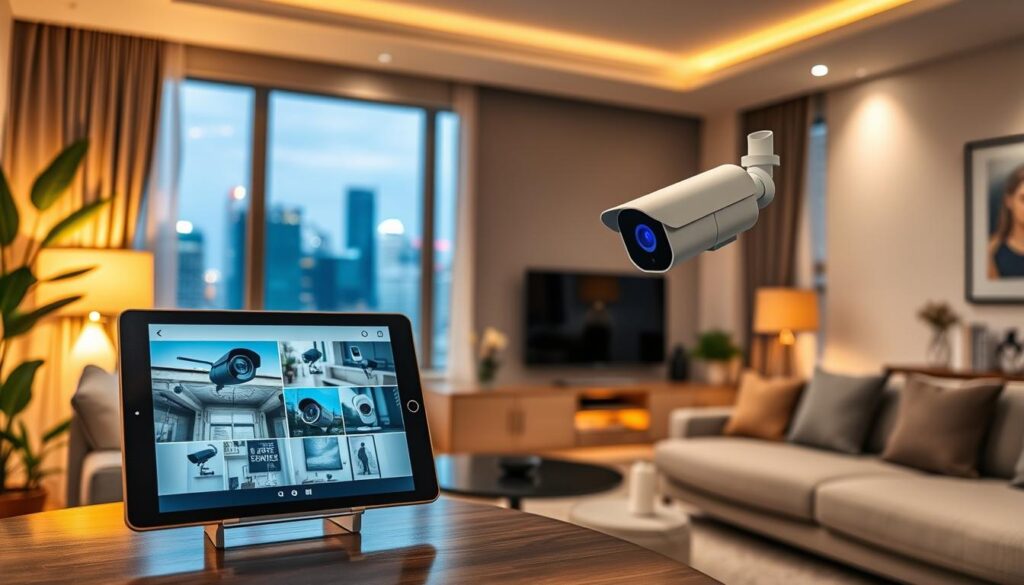
Storage Solutions: Cloud vs. Local Storage Options
Storage solutions play a vital role in the effectiveness of your home security system. When choosing a CCTV setup, understanding the differences between local and cloud storage helps homeowners decide what works best for their specific needs.
Local storage keeps all footage on a Network Video Recorder (NVR) or Digital Video Recorder (DVR) at home. This means there are no monthly fees, and recordings remain private. Local storage supports continuous recording and allows direct access to video, even if the internet is down.
Options like Reolink’s 256GB capacity or NAS systems keep data offline. This setup avoids subscription costs and offers faster playback without dependence on internet stability. Key features to consider include:
- RAID configurations for redundancy.
- Encryption standards like AES-256 to protect footage from unauthorized access.
- Expandable storage via microSD cards or external drives for growing needs.
On the other hand, cloud storage uploads footage to remote servers and usually requires a monthly subscription. Recording time is often limited, and access depends on a stable internet connection. However, it allows viewing footage from anywhere using an app.
Cloud-based systems provide remote access to footage from any device. Services like Google Nest or Ring offer automatic backups, ensuring no details are lost even if cameras are damaged. Key benefits include:
- Real-time alerts with AI-powered event sorting.
- No physical maintenance, such as replacing microSD cards.
- Scalable plans for 24/7 recording needs.
However, cloud storage has drawbacks. Monthly fees can add up, and reliance on internet stability is critical, especially during Singapore’s occasional monsoon disruptions. For example, the ADT system offers a $4.99/month cloud storage plan that includes a 30-day event history, ideal for evidence collection.
In conclusion, local storage is recommended for homeowners prioritizing privacy and long-term cost savings. Meanwhile, cloud storage offers convenience and remote accessibility that many modern homeowners appreciate.
Choosing CCTV Cameras Based on Home Type and Layout
Every home in Singapore has unique security needs based on its layout and size. The number and type of cameras will vary depending on property design, entry points, and overall size. Choosing the right setup ensures full coverage without unnecessary expense or clutter.
Surveillance Solutions for Apartments and HDB Flats
Compact living spaces demand systems with smart features and flexible installation options. These solutions respect space limitations while providing robust protection. Consider space-saving options like the Eufy SoloCam S40, which has a 2.6-inch diameter and magnetic mount. The Blink Mini Pan-Tilt rotates 360 degrees, making it perfect for tight corners. Additionally, the TP-Link Tapo C200 fits neatly on shelves using 3M Command Strips for damage-free mounting.
Rental-friendly setup strategies are essential. Use temporary adhesives instead of drilling to maintain security deposits. Route cables along baseboards with paintable covers for a neat appearance. Opt for battery-powered units near windows where wiring is not feasible. Document pre-existing conditions before installation to avoid disputes. Choose white or neutral-colored housings that blend with walls for discreet monitoring.
Security Setup for Townhouses and Larger Residences
Expansive properties require security solutions that eliminate blind spots across multiple entry points. Single-storey homes typically need 4 to 6 turret cameras with 6MP resolution to cover the full perimeter. This setup ensures all entrances, backyards, and driveways are monitored effectively.
Double-storey homes benefit from a mix of turret and dome cameras. Proper placement is crucial to avoid blind spots, with cameras mounted at a height of 2.5 to 3 meters for optimal coverage. For larger residences, 180° to 360° viewing ranges are essential for driveways and garden perimeters. The Lorex Fusion series offers 4K resolution across 8 channels with smart tracking that follows movement between cameras. Meanwhile, the Swann’s 4K DVR-8CH system handles up to 16TB storage for 24/7 recording.
In conclusion, large homes need a layered defense starting with perimeter cameras. Adding interior units at choke points ensures complete coverage, providing peace of mind for homeowners.
Budget-Friendly to High-End CCTV Cameras: What to Expect
Finding the right surveillance system in Singapore is easier than ever, thanks to diverse options for every budget. Homeowners can explore a variety of CCTV cameras that provide essential security features without breaking the bank.
For those on a budget, the TP-Link Tapo C100 stands out at just $21.50. This model works seamlessly with Google Assistant, allowing users to cast video onto TV screens. It also includes privacy mode and customizable motion detection zones for targeted monitoring.
The Xiaomi Mijia C200 Pro IP is another great option priced at $33. It offers a 360° horizontal view and 108° vertical view, with night vision capabilities up to 10 meters. This model records footage locally onto a microSD card, accommodating up to 256GB.
For those looking for a bit more, the Wyze Cam V3 is available for $59.99. It features colored night vision and compatibility with both Alexa and Google Assistant. Additionally, it has motion and sound detection capabilities, along with a magnetic base for easy installation.
At $85, the Reolink E1 Zoom 5MP offers 5MP resolution and pre-recording capabilities, capturing footage 4 seconds before motion detection. It also features a loud siren that can be activated automatically or manually via the app.
Pet owners may find the Furbo Dog Camera appealing at $65. This unique camera allows users to play catch and take selfies with their dogs remotely, blending fun with security.
Transitioning to high-end options, cutting-edge surveillance technology now offers features that justify the higher cost. The Nest Cam is notable for its facial recognition capability, identifying familiar faces with 98% accuracy. It learns family members’ profiles while flagging strangers, ensuring enhanced security.
Another premium choice is the Arlo Ultra 2, which captures 4K resolution at 30fps. This camera can record license plates from 50 feet away and features a 180° diagonal field of view, effectively eliminating blind spots in spacious driveways. Its IP67-rated housing has been tested to resist prolonged heavy rain, making it ideal for Singapore’s climate.
In conclusion, investing in premium cameras provides evidentiary-grade footage that standard models cannot match. For homeowners prioritizing maximum security, these advanced features make high-end options worthwhile investments.
Weatherproofing and Durability Considerations for Singapore’s Climate
Singapore’s tropical climate requires surveillance equipment designed to withstand extreme conditions. From heavy monsoon rains to intense heat, it’s essential that cameras maintain performance without compromising security throughout the year.
Understanding durability standards is crucial for year-round protection. Ingress Protection (IP) ratings define a device’s resistance to dust and moisture. The first digit ranges from 0 to 6, indicating dust protection, while the second digit ranges from 0 to 9, measuring liquid defense. For example, the Eufy S230 boasts IP67 certification, meaning it can survive immersion in 1 meter of water for 30 minutes. This feature makes it highly suitable for Singapore’s heavy rainfall.
Critical features needed for Singapore’s climate include:
- IP65+ ratings that withstand heavy rain and humidity.
- Anti-fog lens coatings that prevent condensation from affecting image quality.
- Lightning protection circuits that shield sensitive electronics during thunderstorms.
Top performers in harsh conditions include the Reolink Argus 3 Pro, which operates at temperatures from -10°C to 55°C. This model is ideal for rooftop installations and can handle wind speeds of up to 100km/h, making it resilient against typhoon gusts. Its solar panel also maintains charge during prolonged overcast periods.
The Arlo Pro 5S features an IP67 rating, ensuring resistance to monsoon rains and dust. Its starlight sensor provides color night vision up to 25 feet, even in challenging weather. Meanwhile, the Eufy 4G Camera S230 has an IP67 shell that survived prolonged exposure to Singapore’s humidity in stress tests.
Homeowners should prioritize post-storm maintenance features, including:
- Self-drying vents for internal components.
- Corrosion-resistant mounting hardware to prevent rust in humid conditions.
- UV-stabilized housings to prevent yellowing from intense tropical sunlight.
Wired systems require vandal resistance, with tamper-proof casings scoring IP66+ ratings. Additionally, a UPS backup ensures uptime during power fluctuations common during storms.
In conclusion, Singapore’s weather cycles demand cameras that adapt instantly. Homeowners should look for models with automatic features that maintain performance regardless of conditions, ensuring reliable security throughout the year.
Final Tips for Selecting and Installing Your Home CCTV Camera System
Ensuring robust security in Singapore requires careful consideration of the right surveillance solutions. For most homes, a wired PoE IP turret system with 6MP or 8MP resolution, local NVR storage, and strong night vision offers the ideal balance of clarity and reliability.
Homeowners often make common mistakes that can undermine their security. These include opting for Wi-Fi cameras in critical outdoor areas, choosing low-resolution models that fail to capture essential details, and placing cameras at improper heights. Overlooking night performance is another frequent error, as many incidents occur after dark.
To maximize effectiveness, cameras should be mounted at a height of 2.5 to 3 meters. Most homes typically require between 4 and 6 cameras for comprehensive coverage. Professional installation ensures correct placement and clean cabling, which is vital for wired systems.
Additionally, investing in 4K resolution is worthwhile, especially for monitoring driveways and entrances where detail is crucial. While wireless systems offer convenience, they lack the reliability of wired setups. Ultimately, selecting the right CCTV system provides peace of mind, knowing that your family and property are protected around the clock.
For expert assistance with your installation, consider reaching out to professional security camera installers.