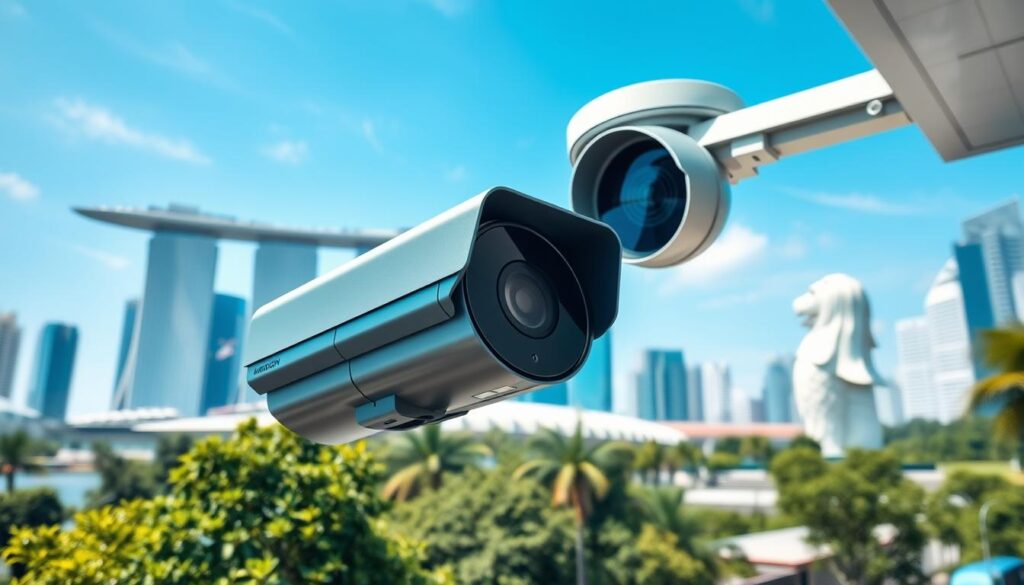
In the realm of video surveillance, one name stands out as a leader: Hikvision. This company commands an impressive 27% share of the global security market, generating over $12.42 billion in revenue in 2021. With a presence in more than 190 countries, it has solidified its reputation as the largest manufacturer of security equipment worldwide.
Focusing on Singapore, Hikvision holds a remarkable 38% of the CCTV market, surpassing notable competitors like Bosch and Hanwha. The brand’s growth trajectory remains strong, boasting a 35% year-over-year increase in the APAC region for 2023. This guide will delve into the reasons behind its popularity, particularly in Singapore, where adoption rates continue to rise.
From strategic pricing to cutting-edge technology, Hikvision’s success stems from its ability to meet the unique security needs of both government agencies and private businesses. This comprehensive analysis will explore how the company’s origins, R&D investments, and tailored solutions contribute to its market dominance.
Key Takeaways
- Hikvision leads the global video surveillance market with a significant share.
- The company operates in over 190 countries, reinforcing its international presence.
- In Singapore, Hikvision dominates the CCTV market, outpacing major competitors.
- The brand recorded impressive growth in the APAC region in 2023.
- This guide will explore Hikvision’s innovative technology and strategic pricing.
- Readers will gain insights into the brand’s deep institutional trust and tailored solutions.
Introduction: Understanding Hikvision’s Market Dominance and Popularity
Hikvision’s rise illustrates a significant transformation in the global surveillance market. Founded in 2001 as a spin-off from the China Electronics Technology Group Corporation, the company began as a modest manufacturer of video capture cards. Over the years, it has evolved into the world’s largest provider of surveillance equipment.
In response to the post-9/11 surge in demand for advanced security systems, Hikvision capitalized on the opportunity to expand rapidly. This strategic growth has allowed the company to establish a presence in nearly every country worldwide.
Today, Hikvision controls more than a quarter of the global video surveillance market. The company employs over 58,000 professionals and operates 11 dedicated research centers globally. This impressive scale enables Hikvision to innovate continuously and adapt to various market needs.
The company’s success can be attributed to its balanced approach to serving both commercial and government clients. Approximately 62% of deployments cater to private businesses, while 28% come from government contracts. This diversification supports stable long-term growth.
Moreover, Hikvision maintains a strong commitment to research and development. The company invests a consistent 10% of its annual revenue into innovation, resulting in over 7,792 active patents. This dedication ensures a continuous pipeline of cutting-edge security products.
In Singapore, Hikvision plays a pivotal role as the ASEAN hub for its regional operations. A dedicated research facility focuses on developing localized solutions that address the unique challenges posed by tropical climates and dense urban environments.
Understanding Hikvision’s market dominance requires examining the interplay between its aggressive pricing strategy, technological superiority, and government backing. The company adapts its products to meet the specific safety and quality standards demanded by Singaporean authorities and consumers.
This introduction sets the stage for a deeper exploration of how Hikvision has built profound institutional trust while navigating controversies and intense competition from Western security industry rivals.
Hikvision’s Founding and Historical Growth
Founded in 2001, Hikvision embarked on a transformative path that would reshape the surveillance landscape. This company originated as a spin-off from the China Electronics Technology Group Corporation (CETC). Initially, it focused on manufacturing video capture cards for analog security systems.
The company’s initial expertise in video capture cards laid the groundwork for future innovations. In 2004, Hikvision launched its first digital video recorder systems, which quickly gained traction in a market eager for advanced recording capabilities.
By 2007, a pivotal year, Hikvision released its first IP camera. This marked a decisive shift from analog components to network-based surveillance systems, setting a new industry standard worldwide.
In 2010, Hikvision made a significant move by listing on the Shenzhen Stock Exchange. This provided the capital necessary for aggressive global expansion and helped establish it as the world’s largest digital video recorder provider by the end of that year.
Over the years, the company’s workforce grew dramatically, from just 200 employees in 2003 to over 58,000 professionals today. This expansion illustrates the scale of Hikvision’s operational growth.
Several key technological milestones have defined Hikvision’s trajectory:
- 2012: Introduction of thermal imaging cameras for low-visibility environments.
- 2018: Debut of the AI Cloud platform, integrating deep learning capabilities into security products.
- 2020: Release of 5G-enabled devices, positioning the company at the forefront of next-generation surveillance technology.
Each phase of Hikvision’s expansion was strategically timed to capitalize on emerging market trends. From the post-9/11 security boom to the current era of artificial intelligence and smart city integrations, the company has consistently stayed ahead of its competitors.
The Product Range and Innovation
Hikvision has developed an extensive catalog of security solutions that cater to diverse needs. With over 5,000 distinct products, the company organizes its offerings into three performance tiers. This structure ensures that customers can find suitable surveillance solutions without compromising essential features.
AI and Advanced Surveillance Features
The entry-level EasyIP series provides reliable 1080p resolution at accessible price points. This makes professional-grade security attainable for small businesses and homeowners who previously could not afford comprehensive CCTV coverage.
For those seeking more advanced options, Hikvision offers pro-grade products featuring 4K resolution and vandal-proof designs. These are engineered for commercial environments where durability and image clarity are paramount.
Innovative technologies like the Darkfighter series and ColorVu enable full-color image capture at an astonishing 0.0005 lux—brighter than moonlight. This capability allows surveillance cameras to produce detailed footage even in near-total darkness without relying on traditional infrared illumination.
Additionally, AcuSense technology uses deep learning algorithms to distinguish between humans, vehicles, and false triggers. This significantly reduces unnecessary alerts by up to 90% in residential deployments, enhancing the efficiency of security monitoring.
DeepInMind NVRs process video analytics locally, which results in faster response times and reduced bandwidth consumption. This system maintains robust facial recognition and detection capabilities, ensuring a high-quality security experience.
Affordable Options Tailored for Various Security Needs
Hikvision also adapts its products for specific regions. In Singapore, tropicalized housings are designed to withstand heavy rainfall and high humidity, ensuring reliable long-term operation in challenging environmental conditions.
For instance, an AI-powered dome camera is priced at approximately $180, significantly lower than comparable Axis models priced at $310. This pricing strategy illustrates how the company delivers advanced features and superior quality at a fraction of the cost charged by Western competitors.
Government Ties and Their Influence on Hikvision’s Success
The intricate relationship between government support and Hikvision’s growth cannot be overlooked. As a state-owned enterprise under the China Electronics Technology Group Corporation (CETC), Hikvision benefits from substantial financial backing and preferential access to essential resources.
This connection grants the company a unique advantage over private competitors. The Chinese government’s military-civil fusion development strategy provides Hikvision with approximately 15% annual R&D subsidies. This effectively allows the company to invest nearly double what Western competitors can allocate toward innovation.
Additionally, preferential loans from state-owned banks and tax incentives for export-oriented production create an economic environment where Hikvision can maintain competitive pricing while achieving healthy profit margins. This support is crucial for Hikvision’s strategy to undercut rivals in the global market.
Hikvision plays a central role in China’s domestic surveillance infrastructure. The company implements 78% of all Safe City projects and serves as the primary technology provider for the expansive Skynet network. This network integrates millions of cameras into a unified national security apparatus, further solidifying Hikvision’s market position.
A notable example of government contracts is a $125 million deal to install 45,000 cameras in Xi’an. Such contracts account for 28% of Hikvision’s total revenue, providing a reliable financial foundation that insulates the company from market fluctuations.
These contracts enable long-term strategic planning, which publicly traded Western competitors often cannot pursue. The combination of state ownership, direct financial support, and substantial domestic government contracts allows Hikvision to achieve economies of scale in production.
This translates into a competitive pricing strategy that drives its popularity in markets like Singapore.
Technological Advancements Driving Hikvision’s Popularity
Technological advancements are reshaping the landscape of video surveillance, significantly impacting Hikvision’s growth. The company’s commitment to innovation is evident in its substantial investment in research and development.
Robust Investment in Research and Development
Hikvision dedicates nearly 10% of its annual income to research and development. This extraordinary commitment supports a team of over 19,000 engineers who collectively hold more than 7,792 active patents across various domains of surveillance technology.
The company operates a global network of 11 dedicated research centers, including a strategically important facility in Singapore. This center focuses on developing tropical climate adaptations and smart city integrations tailored to the unique environmental and urban challenges of Southeast Asian markets.
Cutting-Edge AI and Smart Analytics Capabilities
Recent technological breakthroughs include custom deep learning chips capable of processing 12 tera operations per second. These chips enable cameras to perform real-time analysis of complex scenarios such as:
- Crowd behavior patterns
- Unattended object detection
- Anomalous movement identification
Hikvision’s facial recognition systems achieve an impressive 99.7% accuracy in controlled environments and maintain 98.6% accuracy even in crowded settings. This level of precision makes the technology suitable for high-security applications, such as airport perimeter protection and border checkpoint monitoring.
Moreover, their automated license plate recognition systems operate at a 99.1% success rate. These systems process over 4.2 million license plate scans daily at Singapore’s border checkpoints, contributing to a 37% reduction in smuggling incidents along the Johor-Singapore corridor in 2023.
Hikvision introduces 3 to 5 significant product upgrades annually, ensuring that customers have access to the latest advancements in detection algorithms, image processing, and analytics capabilities. This rapid pace of innovation directly correlates with Hikvision’s popularity, creating a compelling value proposition for security professionals who require reliable, feature-rich systems that can adapt to evolving threats and operational requirements.
Strategic Pricing and Market Accessibility: Why is Hikvision so Popular?
The strategic pricing model employed by Hikvision has played a crucial role in its market success. This approach allows the company to offer high-quality security solutions at competitive prices. As a result, businesses and homeowners can access professional-grade surveillance systems without breaking the bank.
Cost-Effectiveness Compared to Western Competitors
Hikvision’s vertical integration enables the company to manufacture about 70% of its components in-house. This significantly reduces supply chain costs. Consequently, Hikvision can price its products 20-40% lower than comparable offerings from Western brands like Axis Communications and Bosch.
In Singapore, entry-level cameras start at just $89. This price point is approximately 65% cheaper than similar Western models. For example, the DS-2CD1021G0 offers 1080p resolution and reliable motion detection, proving that affordability does not compromise essential features.
Localized Pricing Strategies for Emerging and Developed Markets
Hikvision emphasizes long-term value for its customers. Maintenance costs for their products run about 40% below industry averages. This is largely due to the use of standardized components that are easily serviceable by local technicians in Singapore.
Five-year total ownership cost analyses consistently show savings of 28-42% compared to European brands. These savings highlight that the initial purchase price advantage is compounded by lower ongoing operational expenses.
Local distributors in Singapore offer financing options, including 0% interest installment plans. This support is designed to help small and medium enterprises invest in essential surveillance solutions without financial strain.
Moreover, trade-in programs can reduce upgrade costs by 30%. Government contracts may also benefit from volume discounts of up to 15%. Such strategies ensure that Hikvision’s pricing remains accessible to various market segments, addressing diverse security needs.
Global Presence with a Focus on Singapore
Hikvision’s global presence underscores its dedication to addressing security needs across diverse markets. Operating in more than 190 countries, the company has established itself as a leader in the surveillance industry. With approximately 4.8 million devices actively deployed worldwide, Hikvision is the most widely distributed brand in the realm of video surveillance.
In Singapore, Hikvision serves as the strategic ASEAN hub for its operations. Here, a dedicated team of over 100 engineers focuses on developing localized solutions. These efforts ensure that the company’s products meet the specific safety requirements and climatic conditions of the region.
Adoption in Singapore’s Security Landscape
Hikvision commands a significant 38% share of Singapore’s competitive CCTV market. This leads its closest competitors, Bosch at 22% and Hanwha at 18%. Such dominance reflects deep institutional trust and widespread adoption across both public and private sectors.
Localization Efforts and Regulatory Compliance in Singapore
The Tuas data center plays a critical role in ensuring that all surveillance footage remains localized. This complies with Singapore’s stringent data sovereignty policies, addressing concerns about cross-border data transfers. Since 2018, all products sold locally meet the Personal Data Protection Act (PDPA) standards through IMDA-certified firmware adaptations.
Key installations showcase Hikvision’s integration into Singapore’s security infrastructure. Notable projects include:
- The comprehensive perimeter protection system at Changi Airport.
- Advanced loss prevention systems at Marina Bay Sands.
- Integration with Singapore’s Smart Nation initiative, coordinating over 110,000 cameras with sophisticated analytics capabilities.
Combining global scale, local engineering talent, and regulatory compliance creates a compelling case for Hikvision’s continued dominance in Singapore’s rapidly evolving security industry.
Consumer Adoption and Institutional Trust in Singapore
The integration of advanced security solutions in Singapore reflects a growing trust in surveillance technology. This trust is evident through strategic partnerships and significant installations that enhance the effectiveness of security systems across various sectors.
Key Partnerships and Large-scale Installations
Hikvision has established key partnerships with organizations like Certis Group and SIA Engineering Company. These collaborations enhance system integration capabilities and provide local technical support for large-scale deployments. Such partnerships ensure that businesses receive the necessary assistance to implement effective surveillance solutions.
In Singapore’s public housing sector, Hikvision’s security systems have achieved remarkable penetration. Approximately 85% of Housing and Development Board estates utilize Hikvision cameras and analytics for common area monitoring. This represents one of the most comprehensive urban surveillance networks globally.
At the Mustafa Centre, the introduction of analytics-driven patrols led to a significant 62% reduction in shoplifting incidents within just six months. This case illustrates the tangible return on investment that drives continued adoption among businesses.
Tailored Sector-specific Surveillance Solutions
Marina Bay Sands has also implemented perimeter monitoring enhanced with AcuSense technology. This installation has decreased false alarms by 73%, improving the speed and accuracy of genuine threat identification. Such advanced detection capabilities translate into operational efficiency for high-traffic commercial venues.
According to a 2023 report from the Singapore Police Force, retail heat mapping analytics along Orchard Road led to a 40% reduction in shoplifting incidents. This technology guides security staff deployment during peak hours based on real-time customer movement patterns.
Furthermore, SkillsFuture Singapore supports workforce development initiatives. They offer certified training courses that equip local technicians with the expertise needed to install, maintain, and optimize Hikvision systems. This builds a sustainable ecosystem of professional support for the brand’s growing installed base.
In a Tanjong Pagar condominium development, Hikvision surveillance solutions achieved a remarkable 91% reduction in unauthorized entries. This example highlights the compelling value proposition for residential communities seeking to enhance safety and quality of life through technology.
Concerns and Controversies Surrounding Hikvision
Concerns regarding Hikvision’s operations have sparked intense discussions globally. The company faces significant scrutiny over its alleged involvement in mass surveillance programs, particularly in China’s Xinjiang region. These actions have drawn condemnation from various human rights organizations and heightened scrutiny of the company’s ethical practices worldwide.
International sanctions have also impacted Hikvision’s market position. Since being included on the U.S. Entity List in 2019, the company has faced restrictions on accessing American components. This has contributed to a measurable 14% decline in its European market share, as both government and commercial clients reassess their relationships with the brand.
The political and ethical implications of deploying advanced surveillance technology cannot be ignored. There are growing concerns that facial recognition and analytics capabilities, initially designed for legitimate security purposes, could be repurposed for population monitoring and social control. Such practices may undermine individual privacy and civil liberties.
In response to these pressing issues, Hikvision established an independent review panel in 2022. This panel is tasked with evaluating ethical concerns and compliance standards. Additionally, the company has partnered with KPMG to conduct rigorous cybersecurity audits of its systems and practices.
Hikvision now publishes quarterly transparency reports. These documents detail vulnerability resolutions, security improvements, and ongoing efforts to address the concerns raised by critics. This represents a shift toward greater corporate accountability in response to international pressure.
Singapore maintains a balanced approach to these controversies. Authorities require all deployed systems to comply with the Personal Data Protection Act (PDPA) standards. This allows the continued use of Hikvision technology for legitimate public safety applications while protecting citizen privacy.
These ongoing issues represent a significant factor in the global discourse surrounding Hikvision. The company’s ability to address these concerns will play a crucial role in determining its long-term viability in markets where ethical considerations increasingly influence purchasing decisions.
Challenges from International Sanctions and Market Adaptation
International sanctions have significantly impacted the operational landscape for Hikvision. Since being included on the U.S. Entity List in 2019, the company has faced considerable challenges. These restrictions limit access to essential components and hinder its ability to compete effectively in Western markets.
Moreover, export controls now exist in 32 countries, creating a complex regulatory environment. Navigating these restrictions is crucial for maintaining Hikvision’s global presence and serving customers in affected regions.
In response to these challenges, Hikvision has developed alternative supply chains. This strategy reduces dependence on Western components and diversifies sourcing to include manufacturers from various regions. Additionally, the company has localized firmware to comply with specific regulatory requirements.
Regional hubs like Singapore play a vital role in this adaptation strategy. Partnerships with third-party auditors and the implementation of enhanced security measures have helped maintain customer confidence and regulatory compliance. This approach is essential in the current international climate.
Furthermore, the Belt and Road Initiative continues to drive the adoption of Hikvision systems across Asia and Africa. This expansion partially offsets the revenue losses experienced in Western markets. It demonstrates the company’s ability to pivot toward regions where geopolitical tensions are less pronounced.
Looking ahead, Hikvision may need to focus more on domestic Chinese market opportunities. Expanding its product range beyond traditional surveillance could also be necessary for sustaining growth. Investing in wholly self-developed components will help eliminate dependency on foreign suppliers.
While sanctions present significant obstacles, Hikvision’s adaptability and the ongoing demand for affordable surveillance solutions suggest it will remain a formidable force in the global security industry.
Hikvision’s Future Outlook and Innovation Path
Looking ahead, the trajectory of Hikvision will be influenced by its ability to adapt to a rapidly changing global landscape. The company faces significant challenges, particularly from international sanctions. However, its established commitment to investing 10% of annual revenue in research and development ensures a continuous pipeline of innovation.
Hikvision is expected to expand its product range beyond traditional surveillance. This includes ventures into adjacent technology sectors such as smart home integration and industrial automation. The demand for IoT-integrated devices and edge computing capabilities presents significant opportunities for growth.
In Singapore, ongoing smart city projects and new HDB estate developments will drive adoption. Security systems will increasingly be integrated during the construction phase rather than retrofitted afterward. This proactive approach enhances the effectiveness of security measures.
The Singapore research center will play a crucial role in developing next-generation solutions tailored to tropical urban environments. This could serve as a model for deployments in other Southeast Asian cities facing similar challenges.
Maintaining the company’s aggressive R&D investment rate will be vital in navigating regulatory pressures. Continued technological leadership is essential for justifying customer trust and differentiating Hikvision products from both Western competitors and emerging Chinese rivals.
In conclusion, Hikvision’s prospects remain robust despite challenges. The company has demonstrated resilience and adaptability. There is an enduring global demand for affordable, feature-rich security solutions, positioning Hikvision well for the future.
Hikvision’s Continuing Influence on Singapore’s Security Ecosystem
The impact of Hikvision on Singapore’s security landscape is profound and ongoing. The brand has become integral to the nation’s Smart Nation infrastructure and public housing security framework. With a 38% market share, Hikvision reflects a high level of institutional trust built over years of reliable performance.
Localized investments, such as the Tuas data center and PDPA-compliant firmware adaptations, showcase the company’s commitment to addressing Singapore’s specific security needs. As the nation advances its smart city ambitions, Hikvision’s wide range of AI-powered analytics, thermal imaging, and edge computing solutions will likely play an expanding role in urban management and public safety initiatives.
From entry-level cameras for residential use to enterprise-grade systems for critical infrastructure, Hikvision remains relevant across every segment of Singapore’s security market. The answer to the brand’s enduring popularity lies in its competitive pricing, technological innovation, and localized adaptation. While challenges exist, Hikvision’s integration into Singapore’s security infrastructure suggests its influence will continue to grow.