
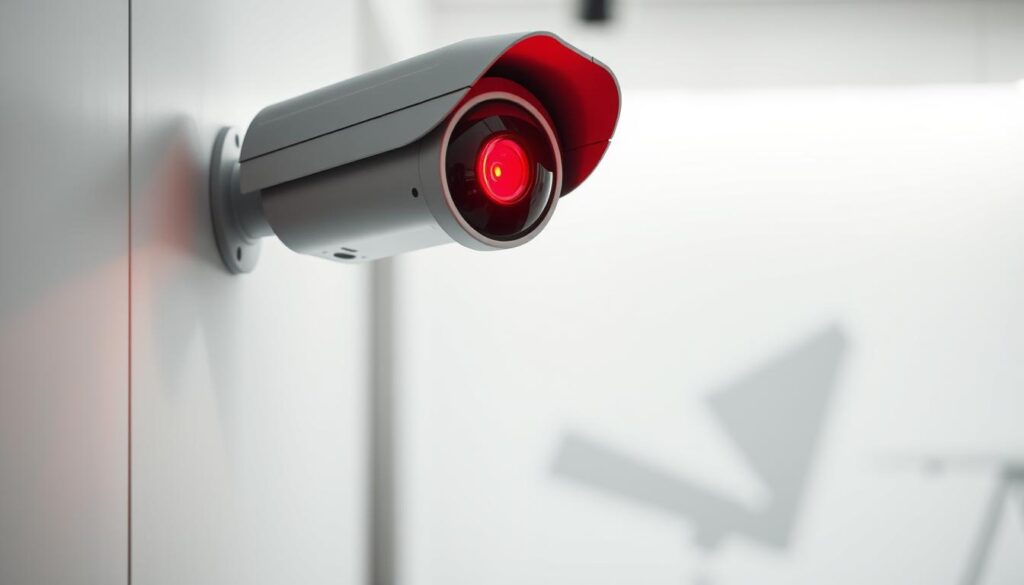
In today’s world, security cameras are everywhere, especially in Singapore. A common sight in public spaces, these devices often feature a red light that raises questions about surveillance. Many people assume that a glowing red indicator signifies active monitoring. However, the truth is more complex.
This guide aims to clarify what the red light on security cameras truly indicates. Understanding these signals is crucial for privacy and safety. A red light may simply mean that the camera is recording, not that someone is actively watching.
With over 320 red light cameras operating in Singapore for traffic enforcement, curiosity about their function is understandable. We will explore the technical aspects of these indicators, legal frameworks, and common misconceptions surrounding surveillance.
By the end of this article, you will have a clearer understanding of what these red lights signify and how they relate to your privacy rights.
Key Takeaways
- Red lights on security cameras often lead to misconceptions about real-time monitoring.
- Not all red indicators mean someone is watching; many cameras simply record.
- Understanding camera functions helps navigate privacy concerns.
- Legal frameworks govern surveillance practices in Singapore.
- Public curiosity about surveillance technology is growing in Singapore’s Smart Nation initiative.
Understanding the Intent Behind Camera Red Lights
In modern Singapore, security cameras are prevalent in various public spaces. Many individuals assume that a red light on these devices indicates active monitoring. This belief is often fueled by portrayals in popular media, where a glowing red dot suggests that someone is watching closely.
However, the reality is more nuanced. A steady red light typically signifies that the camera is operational and recording, rather than that a person is actively observing the feed. This distinction is crucial for understanding how these systems function.
What Users Commonly Think About Red Camera Lights
The most common assumption among the general public is that a red light on any camera automatically indicates active live monitoring. Many believe that this means a person is watching the feed in real-time from a control room or security office. This misconception arises from a general lack of technical education about how modern security cameras operate.
In Singapore, the dense deployment of cameras in public housing estates, MRT stations, and commercial buildings has heightened sensitivity to these indicator lights. Many residents report feeling constantly observed whenever they notice a red glow.
Why Clarifying This Matters For Privacy and Security in Singapore
Clarifying the intent behind red lights is vital for privacy and security awareness. Misunderstanding these indicators can lead to unnecessary anxiety and false assumptions about surveillance coverage. Additionally, it may foster misplaced trust in non-functional or fake cameras.
Under Singapore’s Personal Data Protection Act, organizations must inform individuals when they are being recorded. Thus, accurately interpreting the visual signals that cameras provide is essential for citizens’ legal rights to transparency.
As the Singapore Police Force and Land Transport Authority operate thousands of cameras across the island, public understanding of these indicators contributes to the overall effectiveness of the surveillance ecosystem. When users believe that red means they are being watched, they may alter their behavior in monitored spaces. This can be beneficial for public safety but raises ethical questions about the psychological impact of perceived constant surveillance.
By understanding the intent behind camera red lights, individuals can make informed decisions about their privacy. They can engage more effectively with building management regarding surveillance policies and contribute to the broader public discourse on security technology in Singapore.
The Importance of Camera Indicator Lights in Surveillance Systems
Security cameras play a vital role in our daily lives, especially in urban environments like Singapore. Understanding the function of camera indicator lights is crucial for effective surveillance systems. These lights serve as visual signals, informing us whether cameras are operational and recording.
Status indicators provide immediate feedback about a camera’s state. A red light typically indicates that recording is in progress, while yellow or orange lights show that the camera is ready but not actively recording. Green lights signify that everything is functioning correctly. Recognizing these signals enhances our security awareness.
Purpose and Functions of Status Indicators
Camera indicator lights serve as the primary communication interface between surveillance hardware and users. This includes security personnel, business owners, and the public passing through monitored areas. The fundamental purpose of these indicators is to offer at-a-glance information about the operational state of a camera.
In Singapore’s commercial and government facilities, standardized color protocols are followed. Red typically signals active recording, while green indicates normal powered-on status without recording. Amber or yellow suggests system warnings or maintenance needs. These visual cues enhance security awareness by making the presence and operational status of cameras obvious to everyone nearby.
How Indicators Enhance Security Awareness
For security personnel managing extensive camera networks, such as those in integrated resorts or airports, indicator lights allow for rapid visual checks of equipment. This helps identify any devices that may have malfunctioned or lost connectivity.
The evolution of indicator technology has progressed from simple power lights to sophisticated multi-color LEDs. Modern IP cameras can communicate network status, data transmission activity, and storage capacity warnings through distinct patterns and color changes. In Singapore’s Smart Nation initiative, the ability of indicator lights to convey complex system states through simple visual language is increasingly important.
Ultimately, these indicators not only enhance the functionality of surveillance systems but also contribute to public trust. They help ensure that individuals are aware of their surroundings, balancing security and privacy in Singapore’s urban environment.
Types of Camera Lights and Their Meanings
Surveillance technology has become an integral part of urban life, particularly in bustling cities like Singapore. Understanding the different types of camera lights and their specific meanings is essential for accurately interpreting what a surveillance device is doing at any given moment. Manufacturers use distinct colors and patterns to communicate various operational states.
Steady Red vs Blinking Red Lights
A steady red light on most modern security cameras typically indicates that the device is actively recording footage. This applies whether the recording is to local storage, a network video recorder, or a cloud-based platform. This is the most common interpretation across brands like Hikvision, Dahua, and Axis Communications.
In contrast, a blinking red light often signals something entirely different. It may indicate motion detection activation, a system alert for low storage capacity, or a network connectivity issue. In some cases, it may even signify that a firmware update is in progress, temporarily disrupting normal recording functions.
This distinction between steady and blinking red indicators is particularly important in Singapore’s residential contexts. For instance, HDB corridor cameras may use blinking patterns to indicate maintenance needs rather than active surveillance, preventing unnecessary alarm among residents.
Other Indicator Lights: Green, Blue, Yellow, and Orange
Beyond red, modern IP cameras incorporate a range of other indicator colors. Green lights typically confirm that the device is powered on and functioning normally but not necessarily recording. This serves as reassurance that the system is operational.
Blue indicator lights have become increasingly common on wireless and smart home cameras. They often signify network connectivity status or data transmission activity. In some models, a blue light may indicate that the camera is currently being accessed remotely via a mobile app or web interface.
Yellow or orange indicator lights generally serve as warning signals across most camera brands. They alert users to issues such as storage problems, network interruptions, or the need for firmware updates that could compromise the camera’s recording capabilities.
Some advanced surveillance systems deployed in Singapore’s commercial buildings and government facilities use multi-color LED arrays. These can cycle through different hues to communicate complex status information, such as alternating green and amber during system initialization or rapid blue pulses during cloud synchronization.
Understanding these signals enhances security awareness. It is essential for users to recognize that the specific meanings of these light patterns can vary significantly between manufacturers. Security professionals in Singapore recommend consulting the user manual for the exact camera model installed, rather than relying on generalized assumptions about what each color represents.
How Red Lights Function in Modern Surveillance Cameras
In the landscape of modern surveillance, understanding the function of red lights is essential for users. These lights are not merely decorative; they serve significant purposes in both traditional CCTV systems and advanced IP cameras.
A steady red light typically indicates that a camera is operational and may be recording. This visual cue is crucial in surveillance, as it reassures both security personnel and the public that the area is being monitored. The presence of a red light can significantly enhance awareness of surveillance activities.
Signals of Active Recording
When a camera displays a steady red light during normal operating hours, it usually means the device is capturing and storing video footage. This could either be continuous recording or triggered by motion detection. Such indicators help users understand that they are under recorded surveillance.
- Modern surveillance cameras utilize red lights as multifunctional indicators, often associating them with active recording.
- In commercial settings, these red lights help businesses comply with the Personal Data Protection Act by notifying customers about surveillance.
- Advanced IP cameras from brands like Bosch and Axis Communications feature refined red light functions, including solid and pulsing red lights to indicate different recording states.
Infrared Mode and Night Vision Indicators
In addition to indicating recording status, red lights also play a role in infrared mode. When ambient light levels drop, cameras equipped with infrared technology activate their red LEDs. This illumination is not a recording indicator but rather a signal that the camera is functioning in low-light conditions.
Most consumer and commercial security cameras use 850nm wavelength infrared LEDs. These create a faint red glow around the camera lens in darkness, which can often be mistaken for a recording signal. Understanding this distinction is vital for accurately assessing whether a camera is actively capturing footage or simply operating in night vision mode.
In Singapore’s urban environment, where lighting conditions can vary, the red glow serves as a reminder that surveillance continues, even when visibility is low. Thus, users must differentiate between a recording indicator and an infrared illumination signal.
Exploring Red Light Cameras and Infrared Technology
In the realm of urban surveillance, understanding red light camera technology is essential. These devices have evolved significantly, enhancing their functionality in traffic enforcement. At the core of this advancement is infrared detection, which allows these systems to operate effectively in varying light conditions.
Red light cameras are designed to capture vehicles and traffic violations, even in low-light environments. When a vehicle crosses a stop line, these cameras can take pictures or videos of the infraction. In Singapore, the Land Transport Authority oversees a network of over 320 red light cameras, covering approximately 92% of major intersections.
These cameras utilize specialized LEDs that emit a faint red light during nighttime operations. This is a crucial feature, as it allows for continuous monitoring. The infrared illuminators activate automatically when ambient light levels drop below 10 lux, ensuring that the cameras capture clear evidence of violations regardless of the time of day.
Role of Infrared Cameras in Low-Light Surveillance
The role of infrared cameras extends beyond mere traffic enforcement. They are also employed for perimeter security in critical infrastructure, wildlife monitoring in Singapore’s nature reserves, and coastal surveillance at port facilities. These applications highlight the versatility of red light cameras in various contexts.
Unlike traditional visible light cameras, infrared systems can produce clear monochrome images even in complete darkness. This capability makes them ideal for discreet surveillance where bright lights would be impractical. The integration of infrared technology with automated violation detection systems means that red light cameras can operate continuously without human intervention.
Visibility of Red Lights in Infrared Systems
The visibility of red lights in infrared systems varies based on the wavelength used. For instance, 850nm LEDs produce a subtle red glow that can be seen by anyone looking directly at the camera. In contrast, 940nm LEDs operate at a wavelength that is invisible to the human eye and are often used in specialized covert applications.
In Singapore’s urban landscape, the faint red glow of infrared traffic cameras serves as a visual reminder to drivers that enforcement is active, even during nighttime hours. This serves an important secondary function as a deterrent against traffic violations.
Understanding the distinction between the infrared illumination glow and a status indicator light is crucial. The infrared function focuses on image capture capabilities rather than indicating whether the camera is actively recording or being monitored.
The Role of Recording Indicators in Promoting Privacy and Ethics
In an age where surveillance is ubiquitous, understanding the implications of recording indicators is crucial. These indicators serve a fundamental ethical purpose in surveillance systems. They inform individuals when and where video capture is occurring, allowing for informed decisions about their behavior in monitored spaces.
Recording indicators not only promote transparency but also act as a psychological deterrent. Research shows that the presence of an active recording light can reduce opportunistic criminal behavior by approximately 31 percent in retail environments. This is because potential offenders recognize that their actions are being documented and could serve as evidence.
Transparency and Deterrence Through Visual Signals
In Singapore, the regulatory framework under the Personal Data Protection Act requires organizations to provide notice when personal data is collected through video surveillance. Visible recording indicators align with this legal requirement, serving as both a compliance mechanism and an ethical practice.
- Recording indicators help address privacy concerns in highly surveilled urban environments like Singapore.
- They provide clear visual cues about when individuals are being recorded, enhancing public awareness.
- Nearly 90% of residents support visible status lights, according to recent surveys.
Building Public Trust Through Proper Use of Indicators
Building public trust in surveillance systems requires consistency and honesty. Deceptive practices, such as using fake cameras or displaying active recording indicators on non-functional equipment, can erode community confidence. The ethical dimension of recording indicators also considers vulnerable populations, including children and the elderly.
In Singapore’s multicultural society, where written notices may need to be in multiple languages, visual signals transcend linguistic barriers. They ensure that all residents and visitors understand when they are being recorded.
Furthermore, the proper implementation of recording indicators supports the principle of data minimization under privacy laws. Cameras that clearly show when they are recording allow individuals to choose alternative routes or adjust their behavior if they prefer not to be captured on video.
Organizations that maintain accurate and functional recording indicators demonstrate a commitment to ethical surveillance practices. This can differentiate them from competitors and build stronger relationships with customers and the broader community. Ultimately, the role of recording indicators in promoting privacy and ethics contributes to the sustainability of public surveillance programs.
Does it Mean Someone is Watching if the Camera is Red? Debunking Common Myths
In Singapore, many individuals have misconceptions about the implications of red lights on surveillance cameras. A common belief is that a steady red light indicates that someone is actively watching the footage. This idea often stems from a lack of understanding regarding how different camera systems operate.
A red light often means the camera is on and functioning. It’s a signal for users and passersby that the device is active. However, this does not always imply that someone is monitoring the feed live. The variations in camera types and their configurations can lead to confusion.
According to Singapore’s Personal Data Protection Commission, only 35% of systems with red lights actually have live monitoring capabilities. Police statistics reveal that only 20% of devices displaying red lights have operator access. Most cameras operate automatically, recording footage for later review when triggered.
When a Red Light Indicates Active Watching
There are specific scenarios where a red light does indicate that someone is actively watching. For instance:
- In casino surveillance rooms, trained operators monitor multiple feeds continuously.
- Airport security operations centers utilize red lights to confirm which cameras are currently being viewed.
- Police command facilities often have operators watching feeds in real-time.
In integrated resorts like Marina Bay Sands, security personnel monitor thousands of cameras, and the red lights on those cameras indicate that a human operator could be watching the feed at any moment.
When It Does Not Mean Live Monitoring Is Happening
In contrast, the majority of cameras with red lights in everyday environments, such as HDB void decks and shopping malls, are set to automated recording mode. This means there is no live human observation of the footage. Understanding this distinction is vital for residents.
Factors contributing to the misconception that a red light equals live monitoring include:
- The use of dummy cameras with blinking red lights to mimic active surveillance.
- Infrared illuminators that glow red in low light, often mistaken for recording indicators.
- A general lack of public education about modern automated surveillance systems.
When a camera’s red light is blinking rather than steady, it typically signals motion detection activation or system alerts, not live monitoring. Recognizing these differences can help Singapore residents assess their privacy situation more accurately and reduce unnecessary anxiety about constant surveillance.
The key takeaway is that while a red light always indicates the camera is doing something, whether that involves real-time human observation depends on the specific system’s configuration and operational practices.
Variability Among Camera Models: Why Red Light Meanings Differ
In the complex world of surveillance, understanding how different camera models function is essential. The meaning of a red light can vary dramatically between different camera models and manufacturers. This variability can lead to incorrect conclusions about surveillance activity.
Traditional closed-circuit television (CCTV) systems are still widely used in older HDB estates and commercial buildings throughout Singapore. These systems typically employ simple indicator configurations. A steady red light may indicate nothing more than that the camera is receiving power, with no correlation to recording or monitoring status.
Modern IP cameras represent a significant technological evolution from traditional CCTV. They incorporate sophisticated multi-color LED systems that can communicate various statuses. These include network connectivity, data transmission rates, storage capacity, firmware status, and recording activity through distinct light patterns and color combinations.
The variability between manufacturers is substantial. For instance, Bosch security cameras typically use a steady red light to confirm active recording. In contrast, Hikvision models may use the same steady red to indicate that infrared night vision mode is engaged rather than recording status. This creates potential confusion for users familiar with one brand but encountering another.
Axis Communications cameras, commonly deployed in Singapore’s commercial and government facilities, use blinking red patterns during firmware updates. They display solid red during normal recording operations, demonstrating how even within a single manufacturer’s product line, the meaning of red lights can change based on the camera’s current operational state.
Dahua Technology, another major brand in the Singaporean market, employs color-coded indicators. In this case, red may signify storage status rather than recording activity, with separate green or blue lights handling the recording indication function. This further illustrates the importance of consulting model-specific documentation.
The shift from analog CCTV to digital IP cameras has introduced new layers of complexity in indicator interpretation. Network-connected devices can display lights related to data transmission, cloud synchronization, and remote access that have no equivalent in traditional wired systems.
Some modern cameras, particularly those designed for discreet surveillance or aesthetic integration into architectural environments, have eliminated visible indicator lights entirely. This means the absence of a red light provides no information about whether the camera is recording or being monitored.
Interpreting indicator lights correctly requires consulting the specific user manual or technical documentation for the exact camera model in question. Even cameras from the same manufacturer but different product generations may use entirely different light signaling protocols.
For Singapore residents and business owners who want to understand the surveillance equipment in their environment, the variability among camera models underscores the importance of requesting information from building management or system administrators. This approach is more reliable than relying on generalized assumptions about what red lights mean.
Legal Considerations for Recording Indicators in Singapore
Understanding the legal framework surrounding surveillance is crucial for residents in Singapore. Surveillance laws are designed to protect privacy while ensuring safety in public spaces. These regulations cover both video and audio recording, outlining when and how surveillance can occur.
In Singapore, there are specific rules regarding the use of surveillance signs. For instance, certain locations must clearly indicate that they are recording. This transparency is essential for maintaining trust and awareness among the public.
It’s also important to recognize that the rules can vary based on the type of recording being conducted. Companies must comply with these laws to avoid legal repercussions.
The Personal Data Protection Act (PDPA) requires visible notices within five meters of any recording device. This law ensures that individuals are informed when they may be captured on camera. Additionally, commercial properties must adhere to guidelines from the Urban Redevelopment Authority, which specify the brightness and placement of indicator lights.
- Singapore’s legal framework governing surveillance indicators is primarily established under the Personal Data Protection Act, which sets clear requirements for organizations that collect personal data through video recording systems, including the obligation to provide adequate notice to individuals.
- The PDPA mandates that visible notices must be placed within five meters of any recording device, informing individuals that video surveillance is in operation, and these notices serve as the primary legal mechanism for ensuring that people are aware they may be captured on camera.
- Under Section 18 of the PDPA, organizations are limited to collecting only the personal data that is necessary for their stated security purposes, which means surveillance systems must be configured appropriately and their recording indicators should accurately reflect when data collection is actually occurring.
- The legal requirement for visible recording notices works in conjunction with camera indicator lights to create a comprehensive transparency framework, where written signage provides the formal legal notice and visual indicators provide real-time confirmation of recording status.
- Non-compliance with PDPA surveillance requirements can result in significant financial penalties, with fines reaching up to S$1 million for organizations that fail to meet their obligations regarding transparency, consent, and proper notification about video recording activities.
- The Building and Construction Authority provides additional guidelines that specify technical requirements for indicator placement and brightness in commercial and residential properties, ensuring that recording lights are visible enough to serve their notification purpose without causing light pollution or nuisance to neighboring properties.
- Special legal considerations apply to audio recording, which is subject to stricter consent requirements than video recording under Singapore law, and organizations must be particularly careful about whether their surveillance systems capture sound in addition to images.
- Law enforcement agencies operating under the Protection from Harassment Act enjoy certain exemptions from standard PDPA requirements for covert operations, but these exemptions are narrowly defined and do not extend to commercial or residential surveillance applications.
- The Urban Redevelopment Authority has established specific guidelines for surveillance indicator implementation in different types of properties, recognizing that the appropriate level of visibility for recording lights may differ between a shopping mall, a residential condominium, and an industrial facility.
- For businesses and property owners in Singapore, understanding and complying with these legal requirements is essential not only to avoid penalties but also to build trust with customers, tenants, and the public by demonstrating a commitment to lawful and ethical surveillance practices.
Benefits of Active Recording Indicators in Surveillance Systems
Active recording indicators are essential components of surveillance systems, enhancing their effectiveness. These indicators not only signal that surveillance is occurring but also provide numerous benefits that contribute to a safer environment.
When individuals are aware that they are being recorded, it fosters a sense of accountability. This awareness can lead to improved behavior and a safer community overall. The presence of surveillance encourages the public to understand its purpose, enhancing their awareness of security measures in place.
Recording indicators are particularly effective at deterring unlawful behavior. Research indicates that visible red lights can reduce opportunistic crimes by approximately 31% in retail environments. This deterrent effect is crucial in preventing incidents like shoplifting and vandalism.
- Active recording indicators provide a powerful deterrent effect against unlawful behavior, as potential offenders who can clearly see that a camera is recording are significantly less likely to commit crimes in that area, knowing that their actions will be captured as evidence.
- Research conducted in retail environments has demonstrated that visible red recording lights can reduce opportunistic crimes such as shoplifting and vandalism by approximately 31 percent, making indicator lights a cost-effective security measure that complements the actual recording functionality of the camera system.
- The psychological impact of seeing an active recording indicator extends beyond hardened criminals to influence the behavior of ordinary individuals, encouraging greater adherence to social norms and rules in public spaces where surveillance is visibly operational.
- In Singapore’s community spaces such as void decks, playgrounds, and park connectors, the presence of cameras with active recording indicators helps create an environment where residents feel safer and more secure, knowing that antisocial behavior will be documented and can be addressed by authorities.
- The enhancement of community safety through recording indicators is not limited to crime prevention but also includes benefits such as faster emergency response times, as security personnel monitoring systems with clear status indicators can quickly identify and respond to incidents as they unfold.
- Active recording indicators contribute to a broader culture of safety awareness, where the visible presence of functioning surveillance reminds people to remain vigilant about their personal security and to report suspicious activity, creating a collaborative approach to community protection.
- For businesses in Singapore’s competitive retail and hospitality sectors, the visible demonstration of active security measures through recording indicators can serve as a market differentiator, attracting customers who prioritize safety and reassuring them that the establishment takes their protection seriously.
- The transparency provided by active recording indicators also helps organizations avoid accusations of covert surveillance or privacy violations, as the clear visual signal that recording is occurring satisfies the ethical and legal obligation to inform people about data collection.
- In residential contexts such as condominiums and landed property estates, active recording indicators on perimeter cameras and common area surveillance systems provide residents with peace of mind and a tangible sense that their living environment is protected against unauthorized access and criminal activity.
- The cumulative effect of widespread active recording indicators across Singapore’s urban landscape contributes to the nation’s reputation as one of the safest cities in the world, where the visible presence of functional security infrastructure reinforces both actual safety and the perception of safety among residents and visitors alike.
Can Cameras Record Without Visible Indicator Lights?
Recent advancements in surveillance technology have enabled many cameras to operate without visible indicators. This capability is significant, as it allows for discreet recording in various situations. Understanding how these hidden cameras work is essential for privacy and security awareness.
Some cameras are so well-hidden that they might not be noticed at all. They are designed to monitor spaces while maintaining a low profile. It’s crucial to remember that just because you can’t see lights, it doesn’t mean the camera isn’t functioning.
When it comes to hidden cameras, the quality can vary significantly. Knowing this helps individuals choose the right camera for their needs, balancing security and privacy effectively.
Advances in Hidden and Covert Surveillance Technologies
Modern surveillance technology has advanced to the point where many cameras can record high-quality video footage without displaying any visible indicator lights whatsoever. This makes it impossible for the average person to determine whether they are being recorded simply by looking at the device.
- This capability is particularly prevalent in IP cameras and smart home devices, where manufacturers often include settings that allow users to disable all status LEDs through the camera’s software interface.
- The development of covert surveillance technologies has produced cameras that are intentionally designed to be inconspicuous, including models disguised as everyday objects like smoke detectors and motion sensors.
- In Singapore, the use of hidden or covert cameras is subject to strict legal limitations under the Personal Data Protection Act, requiring organizations to provide notice when surveillance is occurring.
Implications for Privacy and Security Awareness
The implications for privacy awareness are significant. Individuals can no longer rely on the presence or absence of a red light to determine whether they are being recorded. This necessitates a more sophisticated understanding of surveillance technology and a greater reliance on official notices and signage.
For security professionals, the ability to record without visible indicators offers advantages in specific scenarios, such as investigations into internal theft. However, these applications must be balanced against privacy obligations.
Ultimately, the capability of modern cameras to record without visible indicator lights reinforces the principle that privacy protection cannot depend solely on visual detection of surveillance equipment. Robust legal protections, ethical standards, and public education about surveillance technology are essential.
Distinguishing Real versus Fake Cameras Through Indicator Behavior
Recognizing the difference between authentic and imitation surveillance cameras is essential for enhancing personal security. Spotting these devices correctly can greatly affect how safe a security system seems. Real cameras exhibit clear signs, while fake ones might trick us with misleading features.
To tell real from fake cameras, look for certain signs:
Signs of Authentic Surveillance Equipment
- Light Behavior: Real cameras maintain a steady light. This indicates they are operational. In contrast, fake ones often have blinking or flickering lights that serve no real purpose.
- Build Quality: Genuine cameras are constructed from strong materials. They feel sturdy and are designed to withstand various conditions. Fake cameras, however, tend to seem weak and flimsy.
- Brand Reliability: Trusted brands provide clear specifications and support for their products. This adds to their credibility.
Authentic devices reveal themselves through light behavior. Genuine security systems display consistent indicator patterns. For example, Axis Communications cameras maintain steady red lights during recording but blink rhythmically during firmware updates. This contrasts with cheap replicas that either lack lights entirely or show erratic patterns.
Common Features of Decoy or Fake Cameras
- Fake cameras often reveal themselves through erratic or overly simplistic indicator behavior, such as constant rapid blinking.
- These devices might mimic popular brands but lack internal components entirely, using lightweight plastic bodies.
- Fake cameras usually do not perform any actual recording functions, making them ineffective for security.
For Singapore residents and business owners evaluating the security of their environment, understanding these distinctions between real and fake cameras enables a more accurate assessment of actual surveillance coverage. This knowledge helps avoid the false sense of security that dummy cameras can create.
Understanding Other Camera Lights Beyond Red and Their Significance
Modern surveillance systems utilize a variety of light indicators to convey crucial operational information. These indicators play a vital role in informing users about the status of their cameras. Understanding what these lights signify can enhance awareness and responsiveness to any issues that may arise.
Color Codes for Status, Connection, and Alerts
While red lights receive the most attention in discussions about surveillance indicators, modern camera systems employ a sophisticated color-coding system. Each color communicates specific information about the device’s operational state.
- Green lights are among the most common beyond red. They typically signify that the camera is powered on and functioning normally. A steady green often indicates that the device is ready to record but not actively capturing footage at that moment.
- Blue indicator lights have become increasingly prevalent with the rise of wireless and smart home cameras. They commonly indicate network connectivity status, with a steady blue showing a stable connection. A blinking blue suggests data transmission or cloud synchronization in progress.
- Yellow or amber indicator lights serve as universal warning signals across most camera brands. They alert users to conditions that require attention, such as storage capacity reaching its limit or network interruptions.
- Orange indicator lights often indicate a more serious condition than yellow. They may signal system errors or critical failures that require immediate technical intervention.
How to Read Blinking Patterns and Color Changes
The ability to read blinking patterns adds another layer of information beyond simple color recognition. The speed, rhythm, and duration of blinks can communicate different messages. For instance, rapid blinking often indicates urgent alerts, while slow pulsing may suggest normal background processes.
Color changes that occur in sequence, such as a light transitioning from green to amber to red, typically indicate escalating system conditions that require progressively more urgent attention. Understanding these progressions helps users respond appropriately before complete system failure occurs.
In Singapore’s commercial and government surveillance installations, standardized color protocols help security personnel quickly assess the status of multiple cameras across large facilities. This consistency enables efficient monitoring of extensive camera networks.
For members of the public in Singapore, understanding that camera lights beyond red carry specific meanings helps provide a more complete picture of surveillance activity in their environment. This knowledge reduces the tendency to focus exclusively on red indicators while ignoring other important visual signals.
Red Light Cameras in Singapore’s Security and Traffic Enforcement
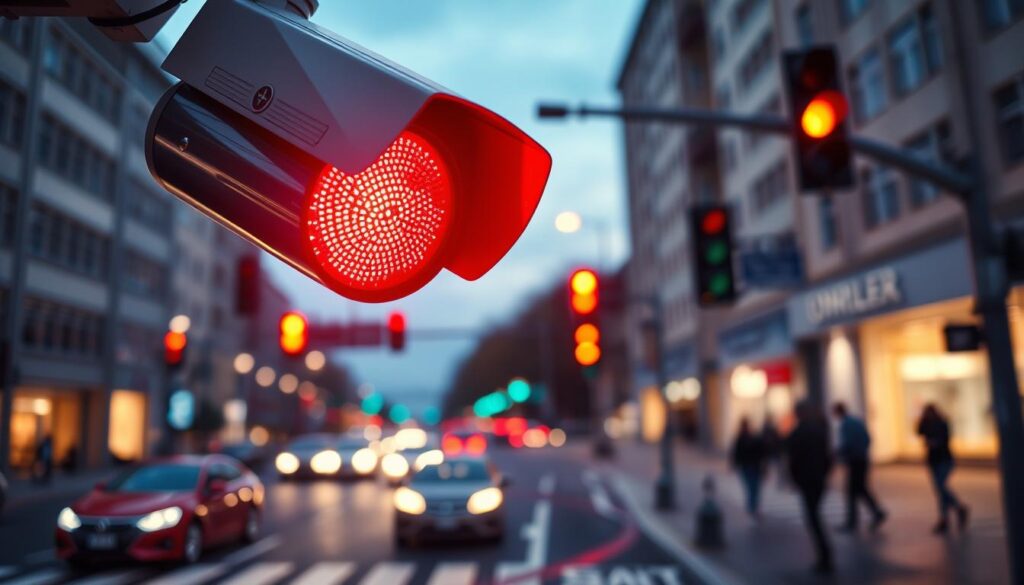
Red light cameras are pivotal in ensuring road safety and compliance with traffic laws in Singapore. With over 320 of these devices installed across the island, they play a significant role in tackling traffic violations. Their presence acts as a strong deterrent against offenses such as running red lights, contributing to safer driving for everyone.
These cameras help reduce risky driving behaviors by monitoring intersections closely. The Land Transport Authority has strategically positioned these cameras to cover approximately 92% of major intersections. This extensive network ensures that drivers are aware they are being monitored, which encourages adherence to traffic rules.
Recent developments in Singapore’s traffic law enforcement have expanded the functionality of red light cameras. Now, they also check for speeding in certain areas. This dual-function capability highlights a commitment to road safety, reinforcing the importance of following traffic regulations.
- Singapore’s red light camera network represents one of the most comprehensive traffic enforcement systems in the world.
- The deployment of these cameras covers approximately 92 percent of major intersections, creating a dense enforcement grid.
- Red light cameras automatically detect and capture evidence of vehicles entering intersections after the signal has turned red.
- Studies show significant reductions in red-light running incidents and associated accidents at monitored intersections.
- Recent enhancements allow red light cameras to monitor for both red-light violations and speeding offenses.
- This integration reflects Singapore’s data-driven approach to traffic safety.
- The visible presence of these cameras serves a broader public safety purpose, encouraging cautious driving.
- Red light cameras employ sophisticated infrared illumination systems for effective operation in all lighting conditions.
- The ongoing development of this program demonstrates Singapore’s commitment to leveraging surveillance technology for public safety.
In conclusion, the implementation of red light cameras in Singapore is a testament to the nation’s proactive approach to traffic safety. By continuously evolving and enhancing these systems, Singapore aims to create a safer community with fewer serious accidents.
The Technology Behind Red Light Cameras and Their Indicators
The evolution of red light camera technology has introduced remarkable advancements in traffic enforcement. At the core of these systems is infrared detection, which enables them to function effectively in any lighting condition. This capability allows red light cameras to capture vehicles and traffic violations, even in darkness.
When a vehicle crosses a stop line, the cameras take pictures or videos of the violation. This technology is essential for tracking and documenting traffic offenses, enabling law enforcement agencies to act quickly and effectively.
Modern security systems integrate multi-functional indicators that combine status and diagnostic functions. For example, a single LED might pulse green during normal operation but switch to amber when detecting network latency exceeding 50ms.
Singapore’s Smart Nation initiative has accelerated the adoption of IP cameras. These cameras use lighting patterns to convey various statuses, such as:
- Data transmission status via rhythmic blue pulses.
- Storage errors through rapid red flashes.
- Firmware updates with alternating color sequences.
Infrared Detection and Illumination Mechanisms
Infrared detection mechanisms form the foundation of red light camera operation. They utilize specialized sensors to detect the presence and movement of vehicles through intersections, ensuring consistent enforcement capability around the clock.
When a vehicle crosses the stop line after the traffic signal has turned red, the infrared detection system triggers the camera’s imaging components. This captures a series of high-resolution photographs and video footage documenting the violation from multiple angles for evidentiary purposes.
Integration With Data Transmission and System Diagnostics
Modern red light cameras integrate sophisticated data transmission capabilities. This allows captured violation evidence to be automatically uploaded to central enforcement databases. This eliminates the need for manual retrieval of storage media and enables faster processing of violation notices.
Additionally, system diagnostics capabilities built into contemporary red light cameras allow for remote monitoring of device health and performance. Indicator lights play a crucial role in communicating operational status to maintenance technicians, enabling them to assess camera functionality without physical inspection.
In conclusion, the technology behind red light cameras is a sophisticated integration of multiple systems. These include high-resolution imaging sensors, infrared illumination arrays, automated violation detection algorithms, and secure data transmission networks that work together seamlessly to enforce traffic laws.
Using Your Knowledge of Camera Indicators to Increase Safety and Privacy Awareness
Awareness of camera indicators can greatly enhance personal safety in Singapore. By understanding the different lights, individuals can navigate monitored spaces with greater confidence. This knowledge ensures they act appropriately and follow community rules. Daily use of surveillance best practices reflects respect for shared environments.
Knowing how cameras operate allows users to choose the right systems for their needs. This understanding also aids in protecting personal privacy and safety. Here are some key points to consider:
- Comprehending what different camera indicator lights mean helps residents make informed decisions about their privacy and security.
- A steady red light typically indicates recording, which can reduce unnecessary anxiety about being monitored.
- Distinguishing between real surveillance equipment and fake cameras empowers individuals to assess actual security coverage accurately.
- Awareness of legal requirements under Singapore’s Personal Data Protection Act helps citizens recognize compliance in surveillance practices.
- Parents can evaluate the safety of environments for their children by observing camera functionality.
- Community knowledge about camera indicators fosters a culture of safety and encourages discussions about security policies.
- Ultimately, understanding camera indicators supports both individual and community safety, enhancing the balance between effective security measures and personal privacy.