
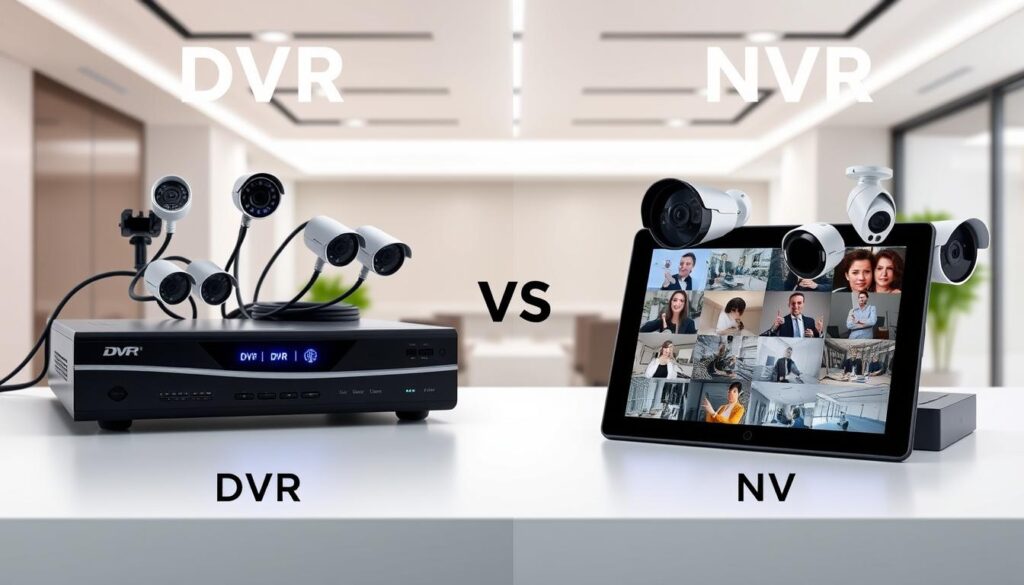
Understanding the core question of what sets DVR apart from NVR is essential for anyone looking to enhance their security systems. A Digital Video Recorder processes analog signals directly at the recorder, while a Network Video Recorder utilizes IP cameras that handle video processing at the source. This fundamental distinction influences various aspects of video surveillance.
In Singapore, where both residential and commercial security needs are on the rise, making the right choice can significantly impact your setup. Factors such as existing infrastructure, budget, and specific security requirements play a crucial role in this decision.
Both DVR and NVR are integral components of modern surveillance systems, yet they adopt different approaches to capturing and storing video footage. While DVR systems tend to be more budget-friendly, NVR systems provide superior image quality and flexibility. This guide will walk you through every aspect of choosing between these systems, ensuring you have the knowledge needed to make an informed decision.
Stay tuned as we explore everything from basic definitions to advanced features like remote viewing and facial recognition, guiding you step-by-step through the decision-making process.
Key Takeaways
- Understanding DVR and NVR is crucial for effective security.
- DVR systems use analog cameras, while NVR systems work with digital IP cameras.
- Choosing the right system depends on your specific security needs and budget.
- NVR systems generally offer better image quality and easier installation.
- This guide provides a comprehensive comparison to help you make an informed choice.
Understanding the Difference Between DVR and NVR Systems
To truly grasp the nuances of security technology, it’s essential to explore how DVR and NVR systems operate. Both systems serve the same purpose of video surveillance but do so in distinct ways. Understanding these differences can help you make an informed choice for your security needs.
Definition and Basic Functionality
A DVR system is a security setup that uses analog cameras connected via coaxial cables to a recorder. This recorder digitizes and stores the footage for later viewing. On the other hand, an NVR system is a network-based setup where IP cameras capture and process video independently before sending it to a recorder for storage.
The term “DVR” stands for Digital Video Recorder, while “NVR” stands for Network Video Recorder. These names reflect their core operational differences—one digitizes at the recorder, while the other relies on network-capable cameras.
How Video is Processed and Recorded
The critical distinction lies in how video is processed. In DVR systems, raw analog video travels over coaxial cables to the recorder. Here, an AD encoder processes the video into a viewable format. Conversely, in NVR systems, IP cameras come equipped with built-in chipsets that encode and process video at the source before transmission.
This difference in processing location significantly impacts image quality, system flexibility, and cable requirements. For instance, NVR systems can support advanced features like video analytics and audio recording more effectively than DVR systems.
Main Components and Technology Overview
Each system has its essential components. For DVR systems, the main components include:
- Analog cameras
- Coaxial BNC cables
- DVR recorder with an AD encoder
In contrast, NVR systems consist of:
- IP cameras
- Ethernet cables (Cat5e or Cat6)
- NVR recorder, which serves purely for storage and viewing
NVR technology represents a more modern approach, allowing for both wired and wireless configurations. Meanwhile, DVR systems remain inherently wired, relying on older yet reliable analog technology.
In Singapore, many modern homes and offices are pre-wired with Ethernet, making NVR systems easier to install. Older properties with existing coaxial cabling might benefit from a DVR upgrade. Understanding these fundamental differences is the first step toward choosing the right security system for any property.
How DVR Security Systems Work: Components and Characteristics
Exploring the mechanics of DVR security systems reveals their unique components and functionalities. Understanding these elements is vital for anyone considering a DVR setup for their security needs.
Analog Cameras and Their Role
DVR systems exclusively utilize analog cameras, also known as CCTV cameras. These cameras capture raw video footage but do not process it. Instead, they rely entirely on the recorder for digitization. This simplicity makes them more affordable compared to IP cameras.
The lower cost of analog cameras is a primary reason why DVR systems are budget-friendly. However, this affordability comes with trade-offs in features and image quality when compared to NVR setups.
Coaxial Cable Connections and Limitations
Coaxial BNC cables transmit unprocessed video signals from cameras to the DVR recorder. These cables have a wider diameter and greater rigidity, making installation in tight spaces more challenging than with Ethernet cables.
A critical limitation of coaxial cables is that they do not carry power. Each camera requires a separate power cable and connection to a power outlet, complicating installation and limiting placement options.
Additionally, standard coaxial cables do not transmit audio natively. To add audio capabilities, you would need RCA connections or proprietary technologies like Swann’s audio-over-coax (AoC). Even then, only a limited number of cameras can support audio due to restricted audio input ports on the DVR.
Signal degradation begins at approximately 300 feet (90 meters) over coaxial cable. Lower-quality cables may experience loss at even shorter distances, which can restrict camera placement on larger properties.
DVR Recorder Functionality and Processing
The DVR recorder relies on a hardware chipset called an AD encoder to convert raw analog data into viewable digital video footage. All processing occurs at the recorder level, meaning every camera must be physically connected directly to the recorder.
Importantly, the recorder does not supply power to the cameras, necessitating splitters at each connection point to manage power distribution.
Installation and System Flexibility Considerations
While DVR systems are stable and cost-effective, they are less flexible than NVR alternatives. They only support wired cameras, have more cumbersome cabling, and require a power source for each camera. This setup can make installation more complex.
However, recent advances in analog high-definition technology have significantly narrowed the resolution gap between DVR and NVR systems. Modern DVR setups can be a viable option for users who prioritize budget without sacrificing too much image quality.
How NVR Security Systems Work: Components and Characteristics
Diving into the world of NVR technology reveals a sophisticated approach to video surveillance. NVR systems leverage advanced components to deliver high-quality footage and flexible installation options. Understanding these elements can help you appreciate the benefits of adopting an NVR system for your security needs.
IP Cameras and Video Processing at the Source
NVR systems utilize IP (Internet Protocol) cameras, which are standalone devices equipped with onboard chipsets. These cameras capture, encode, and process video data independently before sending it to the recorder. This represents a fundamental shift from traditional DVR architecture.
Because processing occurs at the camera, IP cameras can support higher resolutions and superior image quality. They also enable advanced smart features like facial recognition, license plate recognition, and video analytics, which are not possible with basic analog cameras. Additionally, IP cameras typically support audio recording natively, capturing both video and sound without requiring extra hardware.
Ethernet Cabling and Power over Ethernet (PoE)
NVR systems connect using standard Ethernet cables, such as Cat5e and Cat6. These cables are thinner, more flexible, and generally cheaper than coaxial cables. This flexibility makes them easier to route through tight spaces, enhancing installation options.
One of the standout features of NVR systems is Power over Ethernet (PoE). This technology allows a single Ethernet cable to deliver video data, audio data, and electrical power to the camera simultaneously. This eliminates the need for messy splitters and nearby power outlets, greatly simplifying installation.
Ethernet cables can extend up to 328 feet (100 meters), but network switches can be used to increase this distance without any degradation in image quality. This provides greater reach than traditional coaxial setups.
Role of the NVR Recorder in Storage and Viewing
Unlike a DVR, the NVR recorder does not process video data. Its primary functions are to store recorded footage on internal hard drives or network-attached storage and to provide an interface for live viewing and playback. This division of labor allows the NVR to manage larger numbers of cameras and higher resolutions more efficiently, contributing to better overall system scalability.
Flexibility in Wireless and Wired Configurations
NVR systems are inherently more flexible. IP cameras only need to connect to the same network as the recorder, not be physically wired to it. This enables wireless camera options and allows for placement in locations far from the recorder.
This network-based architecture means cameras can theoretically be located anywhere with network access, even across different buildings or remote sites. This makes NVR systems ideal for large or multi-location properties in Singapore.
While NVR systems are generally more expensive than DVR systems and require a robust network infrastructure and higher internet bandwidth, the investment pays off in superior image quality, easier installation, and future-proof scalability.
Pros and Cons of DVR and NVR: Comparing Features and Performance
A detailed examination of the strengths and weaknesses of both DVR and NVR systems reveals key insights for potential users. Each system has unique features that cater to different security needs, making it essential to weigh their advantages and disadvantages carefully.
Image and Audio Quality Differences
NVR systems consistently deliver better image quality because IP cameras transmit a clean digital signal. They support high resolutions up to 4K, which enhances clarity. In contrast, DVR systems process analog signals that are inherently susceptible to quality loss and typically max out at lower resolutions.
Advancements in analog HD technology over the past five years have significantly narrowed this resolution gap. However, NVR still holds the edge in clarity, especially for detailed surveillance tasks like identifying faces or license plates.
When it comes to audio, NVR systems natively carry sound over Ethernet cables. This allows every camera with a microphone to record audio. DVR systems, on the other hand, require separate RCA connections or proprietary audio-over-coax technology, limiting the number of audio input ports on the recorder.
Cost, Installation Complexity, and Scalability
Cost is a significant factor for many buyers. DVR systems are generally more budget-friendly due to cheaper analog cameras, coaxial cables, and recorders. This makes them attractive for cost-conscious buyers in Singapore. In contrast, NVR systems demand a higher initial investment for IP cameras and network equipment.
Installation experiences also differ. DVR installation can be labor-intensive due to thick, rigid coaxial cables that are hard to route. Additionally, separate power is needed at each camera location. NVR installation is streamlined by thin, flexible Ethernet cables and Power over Ethernet (PoE), which combines power and data in one cable.
Scalability is another important consideration. NVR systems are inherently more scalable because adding cameras only requires connecting them to the same network, not directly to the recorder. This allows systems to grow easily to cover larger properties or multiple sites. In contrast, DVR systems are constrained by the number of physical ports on the recorder and the complexity of running additional coaxial cables.
Advanced Features: Video Analytics and Remote Viewing
NVR systems support cutting-edge capabilities like facial recognition, license plate recognition, motion detection analytics, and cloud storage integration. These features are enabled by the processing power of IP cameras. DVR systems typically lack these smart features due to the limitations of analog technology and the centralized processing model.
Remote viewing is another area where NVR systems excel. Users can access live and recorded footage from anywhere via smartphone apps or web browsers. This is particularly beneficial for Singaporeans who travel frequently or manage multiple properties. In contrast, DVR systems generally require a direct connection to a monitor or TV for viewing.
In summary, DVR systems win on cost and simplicity for basic needs. However, NVR systems outperform in image quality, audio support, advanced features, scalability, and remote access. This makes NVR the better long-term investment for most modern security requirements.
Key Considerations for Choosing Between DVR and NVR Systems
Navigating the choice between DVR and NVR systems calls for a thorough assessment of your circumstances. Several key factors will help you determine which system aligns best with your security needs.
Security Needs and Property Size
First, evaluate the scale of your surveillance requirements. For small apartments, HDB flats, or single shops, a straightforward DVR system may suffice. However, larger landed properties, multi-story commercial buildings, or multi-site businesses will benefit from the scalability and advanced features of an NVR system.
Consider the level of detail you need in your footage. If identifying faces or license plates is critical, an NVR system with higher resolution and video analytics is the better choice. Conversely, general monitoring of a small area may not require such precision.
Additionally, take into account the crime rates in your neighborhood. Higher-risk areas in Singapore may justify the investment in an advanced NVR system, which offers superior image quality and smart detection features for enhanced peace of mind.
Budget and Infrastructure Readiness
Next, assess your budget and existing infrastructure. DVR systems typically have a lower upfront cost for cameras, cables, and recorders, making them accessible for budget-conscious users. In contrast, NVR systems require a larger initial investment but offer greater long-term value through durability, scalability, and advanced capabilities.
Evaluate your existing infrastructure as well. Properties already wired with coaxial cables from a previous security system can save significantly by reusing that cabling for a new DVR system. Meanwhile, modern homes and offices pre-wired with Ethernet are primed for an easy NVR installation.
Keep in mind that NVR systems depend on a reliable high-speed internet connection for optimal performance, especially for remote viewing and cloud storage features. Users with limited or unstable connectivity may find a DVR system more dependable.
Importance of Installation Environment and Future Scalability
Consider the physical installation challenges. Coaxial cables are thicker and more rigid, making them difficult to run through tight conduits or aesthetically sensitive areas. In contrast, Ethernet cables are thinner, more flexible, and easier to conceal.
Distance is another important factor. DVR systems using coaxial cables can support connections up to 500 meters (1,640 feet) without significant signal loss, which is advantageous for sprawling properties. NVR systems, however, are limited to 100 meters per Ethernet cable but can extend reach using network switches without quality degradation.
Finally, think about future scalability. If there is any possibility of expanding the security system later, an NVR system’s network-based architecture makes adding cameras far simpler than with a DVR system, which requires running new coaxial cables directly to the recorder.
In summary, the decision comes down to balancing current needs with future ambitions. Choose a system that not only meets today’s requirements but can adapt to tomorrow’s challenges.
Making the Right Choice: Tailoring Your Security System to Your Needs
Choosing the right security system requires careful consideration of individual needs and preferences. Both DVR and NVR systems are reliable technologies for recording video footage. Neither is inherently superior; the right choice depends on your specific circumstances.
DVR systems offer a cost-effective solution, ideal for budget-conscious users or properties with existing coaxial infrastructure. In contrast, NVR systems deliver superior image quality, easier installation via Power over Ethernet, and advanced features like facial recognition and remote viewing.
For smaller properties or basic surveillance needs, a modern DVR system can provide adequate security without unnecessary expense. However, for larger properties, those valuing high-resolution footage, or users wanting smart features, an NVR system is the clear winner.
As you consider your options, revisit the key factors: property size, budget, existing infrastructure, and future scalability. In Singapore, where high-speed internet is widely available, NVR systems are increasingly practical. Regardless of your choice, investing in a quality security setup enhances safety and peace of mind.
The information in this guide equips you to make an informed decision. The best security system is the one that fits your unique needs. Take stock of your property’s layout and security goals, and explore specific DVR or NVR models that align with your criteria.